Download

Sinorock Launches Industry–University–Research Partnership with Henan University of Science and Technology on Self-Drilling Micropile Systems
Time:2026-07-03From:sinorock View:
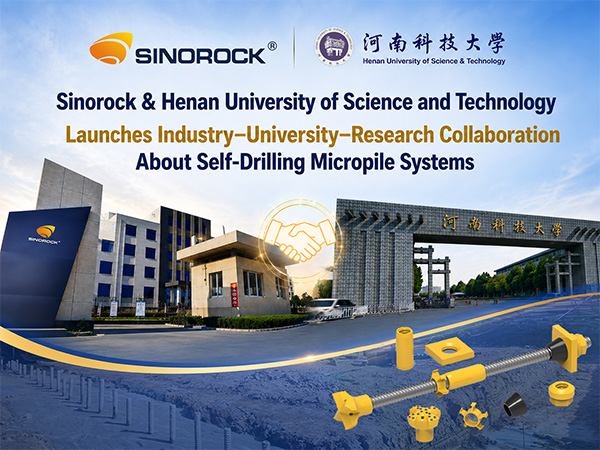
Sinorock welcomed a research delegation from Henan University of Science and Technology for an in-depth technical exchange. During the visit, both parties officially launched a joint industry–university–research program focused on Self-Drilling Micropile Systems.
This collaboration is rooted in real engineering practice. By combining Sinorock’s extensive field construction expertise with the university’s strong research capabilities, the project aims to systematically investigate the mechanical behavior of single and group self-drilling micropiles, optimize construction methodologies, and study ground settlement mechanisms. A comprehensive research framework integrating theoretical analysis, laboratory testing, field monitoring, and numerical simulation will be adopted to advance the development and engineering application of self-drilling micropile technologies.
1. Technical Exchange and Project Framework Definition
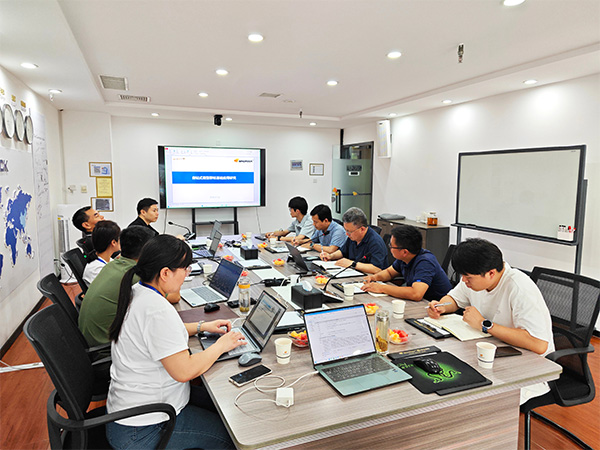
During the technical discussions, both parties aligned on research directions, technical focus areas, and implementation planning.
Sinorock’s engineering team presented its standardized construction methodology for self-drilling micropile systems, based on years of international geotechnical project experience. The presentation covered core working principles, full construction procedures, and quality control systems throughout the entire installation process, providing a solid engineering basis for subsequent research activities.
From the academic side, the Henan University of Science and Technology team defined the overall research framework, including key technical challenges, research methodology, and phased objectives. Both parties finalized task allocation, resource planning, and a structured timeline to ensure efficient and well-organized project execution.
2. Field-Based Experimental Research on a Real Engineering Project
Unlike purely theoretical studies, this collaboration is conducted within a real industrial building foundation project involving 290 self-drilling micropiles.
The experimental program serves as a key pre-construction research phase. The data collected from field testing will directly support subsequent construction optimization, design refinement, and standardization of technical parameters, ensuring both engineering reliability and practical applicability.
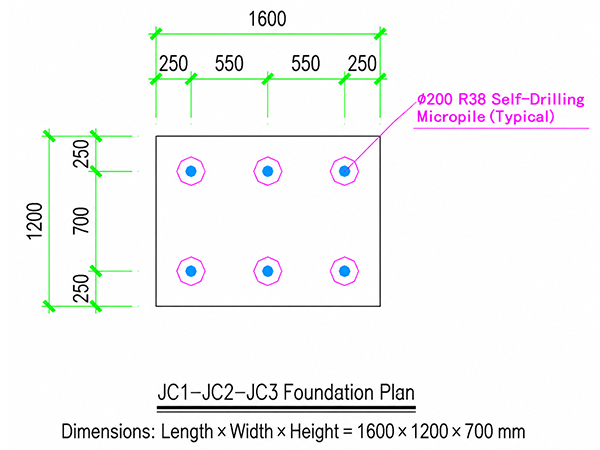
For field implementation, R38 self-drilling anchor systems with 150 mm drill bits are used, with a designed installation depth of 9 meters. The study covers single pile behavior, pile group interaction, pile–soil deformation mechanisms, and load transfer characteristics under real ground conditions.
3. Comprehensive Performance Testing and Deformation Monitoring
A series of performance tests have been designed to evaluate the bearing capacity and construction stability of the system.
Key testing activities include:
· Tensile and pull-out capacity tests on single micropiles
· Compressive load tests on 4-pile and 6-pile group systems with pile caps
To capture real-time mechanical responses during loading, strain gauges are installed along the reinforcement body to continuously monitor stress and strain variations throughout construction and loading stages.
In terms of soil–structure interaction, the study focuses on settlement and deformation behavior of surrounding soil during installation and service stages. Pile spacing is introduced as a key variable to analyze its influence on overall settlement and foundation stability, providing valuable insights for settlement control in complex ground conditions.
4. Integrated Validation Approach Combining Testing and Simulation
To overcome the limitations of single-method studies, the project establishes a multi-method validation system combining:
· Laboratory testing
· Full-scale field experiments
· Numerical simulation analysis
Using advanced geotechnical simulation software such as Abaqus, refined numerical models will be developed. Experimental data from laboratory tests and field measurements will be cross-validated with simulation results to better understand stress distribution, deformation mechanisms, and stability behavior of micropile systems under complex geological conditions.
This integrated approach enables continuous refinement of design parameters and construction methods.
5. Advancing Engineering Applications Through Practical Validation
Sinorock Self-Drilling Micropile Systems integrate drilling, grouting, and anchoring into a single operation, offering significant advantages in construction efficiency, adaptability to complex ground conditions, suitability for restricted-access environments, and overall system reliability.
These systems are widely used in fractured rock, unstable formations, foundation reinforcement, and the rehabilitation of existing structures.
Through this collaboration, high-quality field data obtained from full-scale engineering applications will help address the lack of refined performance data for R38 micropile group systems. The results will provide a solid scientific basis for future design optimization, pile spacing configuration, settlement control strategies, and parameter selection in similar engineering projects.
6. Conclusion
Moving forward, Sinorock will continue to strengthen its industry–university–research collaboration model, driven by real engineering data and scientific innovation. The company remains committed to advancing Self-Drilling Micropile Systems and geotechnical engineering solutions, delivering more efficient, reliable, and data-driven support technologies for global infrastructure development.
latest news
-
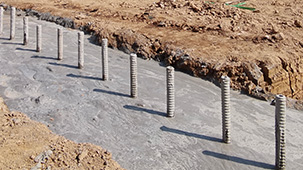
- Self-Drilling Micropiles vs Conventional Micropiles: Choosing the Right Foundation Solution
- Time:2026-07-16From:This Site
- Compare self-drilling micropiles and conventional micropiles, including installation methods, structural performance, advantages, and applications in geotechnical engineering.
- View details
-

- Application of Self-Drilling Anchor Bolts in Bridge Reinforcement
- Time:2026-06-29From:This Site
- Discover how Self-Drilling Anchor Bolts (SDA) revolutionize bridge reinforcement projects. Learn about SDA applications in foundation strengthening, slope stabilization, seismic retrofitting, and construction processes.
- View details
-
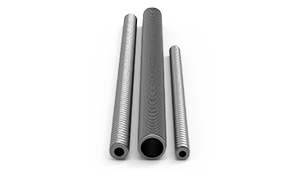
- R Thread vs T Thread Self-Drilling Anchor Bolts: Design, Load Capacity and Applications
- Time:2026-06-13From:This Site
- Compare R-thread and T-thread self-drilling anchor bolts in terms of design, load capacity, performance, applications, and project selection criteria.
- View details
-

- Sinorock Conducts 2026 Safety Month Activities to Enhance Workplace Safety Management
- Time:2026-07-17From:This Site
- Sinorock launched the 2026 Safety Month campaign with safety training, hazard inspections, and emergency drills to strengthen workplace safety and risk prevention.
- View details
-
- Sinorock Launches Industry–University–Research Partnership with Henan University of Science and Technology on Self-Drilling Micropile Systems
- Time:2026-07-03From:This Site
- Sinorock has launched an industry–university–research partnership with Henan University of Science and Technology focusing on Self-Drilling Micropile Systems.
- View details
-

- CBAM Policy Interpretation: Sinorock Promotes the Low-Carbon Transformation of Self Drilling Rock Bolts
- Time:2026-06-25From:This Site
- CBAM policy interpretation for self drilling rock bolts, covering carbon footprint requirements, EU compliance rules, and Sinorock’s low-carbon manufacturing strategy.
- View details
-
- SINOROCK Invites You to Mining Week Kazakhstan 2026
- Time:2026-06-08From:This Site
- Meet SINOROCK at Mining Week Kazakhstan 2026, Booth 925. Discover advanced self-drilling anchor systems and ground support solutions for underground mining, fractured ground, fault zones, and challenging geological conditions.
- View details
-
- Sinorock Invites You to Visit Us at CONEXPO-CON/AGG
- Time:2026-02-14From:This Site
- Sinorock Invites You to Explore Proven Self-Drilling Anchor Bolt Solutions at CONEXPO-CON/AGG –S63341.South Hall 1st Level
- View details
-
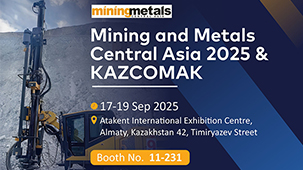
- SINOROCK to Showcase Innovative Mining Solutions at Mining and Metals Central Asia 2025
- Time:2025-09-09From:This Site
- We are pleased to share that SINOROCK will participate in the Mining and Metals Central Asia 2025, taking place from September 17 to 19 at the Atakent International Exhibition Centre in Almaty, Kazakhstan. You can find us at Booth 11-231.
- View details