Download

CBAM Policy Interpretation: Sinorock Promotes the Low-Carbon Transformation of Self Drilling Rock Bolts
Time:2026-06-25From:sinorock View:
With the gradual implementation of the EU Carbon Border Adjustment Mechanism (CBAM), self drilling rock bolts—as essential products in support engineering applications—are increasingly affected by new carbon compliance requirements and supply chain transparency standards when exported to the EU market.Sinorock is closely monitoring CBAM developments and has established a dedicated task team to continuously improve its carbon management capabilities and prepare for future EU market compliance requirements.
1. CBAM Requirements for Self Drilling Rock Bolts
CBAM aims to integrate the carbon emissions of imported goods into a unified carbon cost system. Since self drilling rock bolts are primarily made of steel, they fall within the scope of steel and downstream steel products under CBAM regulation.
Under the CBAM framework, self drilling rock bolts are expected to meet the following requirements:
1.1 Product Carbon Footprint (PCF) Requirements
To enter the EU market, self drilling anchor bolt products will increasingly need to provide carbon emissions data, including:
· Carbon emissions per unit product (kg CO₂/ton or per piece)
· Emissions from steel production and processing
· Energy consumption from heat treatment, forming, and surface treatment
· Full product carbon footprint data
1.2 Traceability of Raw Material Carbon Data
Since a significant portion of emissions comes from steel materials, CBAM requires improved transparency across the supply chain:
· Clear steel production routes (BF/BOF or EAF)
· Increasing availability and verifiability of upstream steel mill carbon data
· Alignment between raw material carbon factors and product-level calculations
· Data traceability and consistency across the value chain
1.3 CBAM Reporting Data Support
Although CBAM reporting responsibility lies with EU importers, exporters are required to provide essential supporting data, including:
· Product specifications and weight
· Customs HS/CN codes
· Unit carbon emission data
· Calculation methodology and supporting documentation
2. Sinorock’s Preparation for CBAM
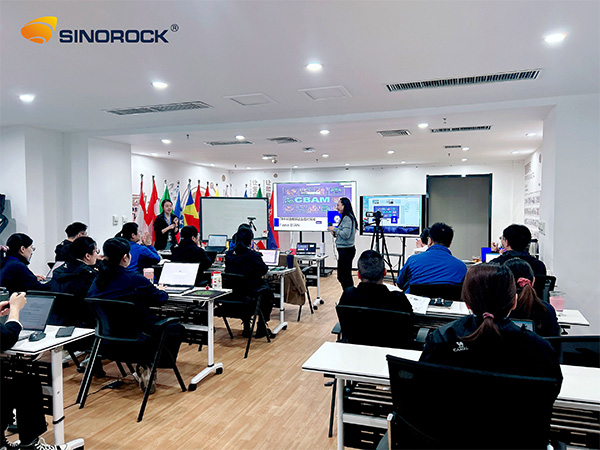
Facing the long-term structural impact of CBAM, Sinorock has proactively initiated response measures and established a CBAM Task Force to systematically enhance its compliance readiness.
Current key focus areas include:
2.1 Establishing CBAM Carbon Accounting Capability
The primary objective of the Sinorock CBAM Task Force is to develop a CBAM data control model and achieve real-time carbon accounting capability. This includes:
· Building a full-chain carbon data traceability system from raw material procurement to manufacturing
· Calculating embedded emissions in accordance with CBAM requirements (including direct and indirect emissions)
· Ensuring that every batch of exported self drilling anchor bolts to Europe is traceable and verifiable in terms of carbon data
2.2 Optimization of Upstream Supplier Carbon Data
CBAM requires that precursor material emissions be included in the final product footprint. Therefore, the Sinorock CBAM Task Force focuses on collecting supplier carbon information, conducting compliance reviews, and implementing supply chain-level CBAM control measures to ensure optimal carbon data support from the source.
2.3 Implementation of Manufacturing Carbon Emission Improvements
Sinorock has established CBAM data tracking efforts across its production bases in Changzhou and Luoyang to systematically review emissions across manufacturing and operational processes and promote greener manufacturing practices.
At the same time, CBAM compliance analysis has been introduced into the product design stage to reduce product carbon footprint from the source.
2.4 Collaboration with EU Customers on Compliance Reporting
Manufacturers play a central role in providing carbon data, and the quality of their calculations directly affects importers’ compliance costs.
Through CBAM training, Sinorock staff are able to support customer communication regarding order compliance, ensuring that European clients can obtain verified carbon data in a timely manner and successfully complete CBAM reporting and certificate surrender obligations.
3. How EU Importers Should Select Self Drilling Rock Bolt Suppliers?
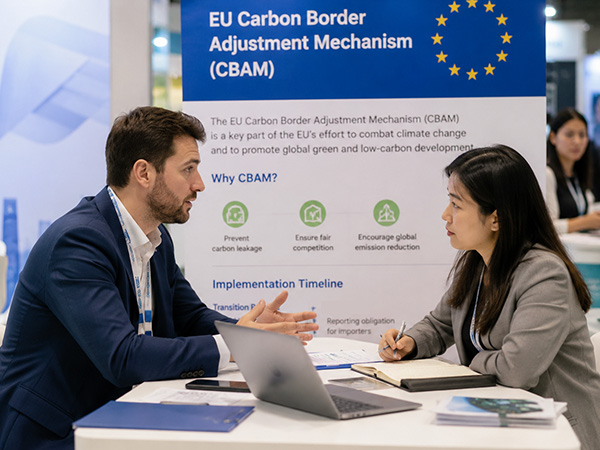
With CBAM gradually taking effect, EU buyers are changing how they evaluate suppliers of self drilling rock bolt products.
3.1 Carbon Data Responsiveness Capability
Future procurement decisions will consider not only quality and price, but also:
· Ability to provide product carbon footprint data
· Capability to support CBAM-related reporting
· Ability to maintain continuous data updates
3.2 Supply Chain Transparency
Buyers increasingly prioritize suppliers with:
· Clear and traceable steel sourcing
· Basic carbon data availability across the supply chain
· Consistent and verifiable product data logic
3.3 Long-Term Compliance Capability
Since CBAM is a long-term regulatory mechanism, EU customers prefer suppliers who:
· Are actively building carbon management systems
· Continuously improve carbon data capabilities
· Can adapt to evolving regulatory requirements
Conclusion
Sinorock is comprehensively advancing its CBAM strategy across four dimensions: data systems, supply chain management, manufacturing processes, and customer collaboration.
We continue advancing CBAM-related initiatives, steadily improving our carbon management system, and providing global customers with anchoring solutions that are more aligned with future sustainability and compliance trends.
Choosing Sinorock means choosing a partner fully preparing for the CBAM era.
latest news
-
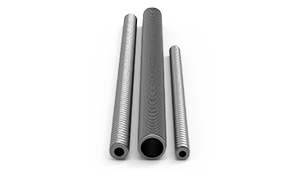
- R Thread vs T Thread Self-Drilling Anchor Bolts: Design, Load Capacity and Applications
- Time:2026-06-13From:This Site
- Compare R-thread and T-thread self-drilling anchor bolts in terms of design, load capacity, performance, applications, and project selection criteria.
- View details
-
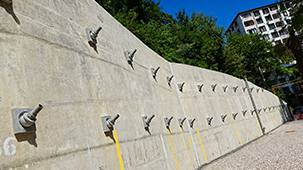
- How Self-Drilling Anchor Bolts Achieve Active Rock Reinforcement?
- Time:2026-06-09From:This Site
- Learn how self-drilling anchor bolts achieve active rock reinforcement through grouting and pre-tensioning to improve tunnel, mining, and slope stability.
- View details
-
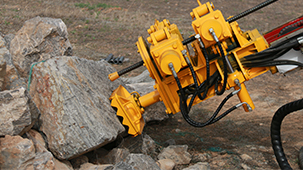
- How Self-Drilling Anchor Bolts Drill and Grout Simultaneously
- Time:2026-05-25From:This Site
- Discover how self-drilling anchor bolts drill and grout simultaneously, improving efficiency, stability, and safety in geotechnical projects. Learn the mechanism, installation process, advantages, and common applications.
- View details
-
- CBAM Policy Interpretation: Sinorock Promotes the Low-Carbon Transformation of Self Drilling Rock Bolts
- Time:2026-06-25From:This Site
- CBAM policy interpretation for self drilling rock bolts, covering carbon footprint requirements, EU compliance rules, and Sinorock’s low-carbon manufacturing strategy.
- View details
-
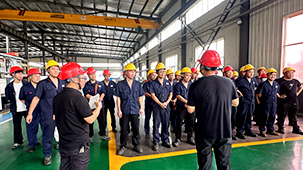
- Sinorock 2025 Quality Month | Strengthening Quality Foundations, Empowering Product Excellence
- Time:2025-08-13From:This Site
- Sinorock’s 2025 Quality Month, themed “Strengthening Quality Foundations, Empowering Product Excellence,” successfully concluded, reinforcing our commitment to superior product quality.
- View details
-
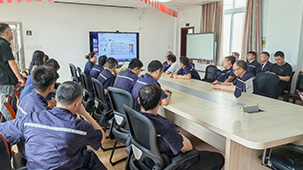
- Sinorock Safety Month 2025 | Everyone Speaks Safety, Everyone Can Respond
- Time:2025-07-03From:This Site
- Sinorock Safety Month 2025, centered on the theme "Everyone Speaks Safety, Everyone Can Respond - Spot Workplace Hazards," has wrapped up successfully!
- View details
-
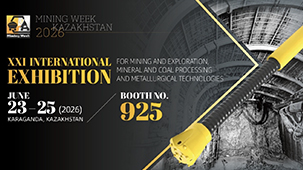
- SINOROCK Invites You to Mining Week Kazakhstan 2026
- Time:2026-06-08From:This Site
- Meet SINOROCK at Mining Week Kazakhstan 2026, Booth 925. Discover advanced self-drilling anchor systems and ground support solutions for underground mining, fractured ground, fault zones, and challenging geological conditions.
- View details
-
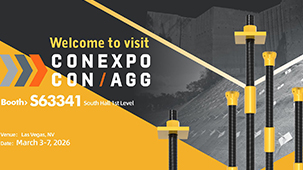
- Sinorock Invites You to Visit Us at CONEXPO-CON/AGG
- Time:2026-02-14From:This Site
- Sinorock Invites You to Explore Proven Self-Drilling Anchor Bolt Solutions at CONEXPO-CON/AGG –S63341.South Hall 1st Level
- View details
-
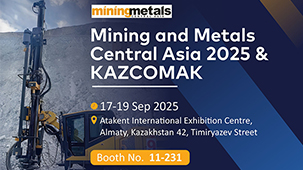
- SINOROCK to Showcase Innovative Mining Solutions at Mining and Metals Central Asia 2025
- Time:2025-09-09From:This Site
- We are pleased to share that SINOROCK will participate in the Mining and Metals Central Asia 2025, taking place from September 17 to 19 at the Atakent International Exhibition Centre in Almaty, Kazakhstan. You can find us at Booth 11-231.
- View details