Download

How Self-Drilling Anchor Bolts Achieve Active Rock Reinforcement?
Time:2026-06-09From:sinorock View:
Self-drilling anchor bolts (SDA bolts) can provide active rock reinforcement when they are installed, grouted, and then pre-tensioned using a bearing plate and nut system. The applied tension generates compressive forces within the surrounding rock mass, improving its stability before significant deformation occurs.
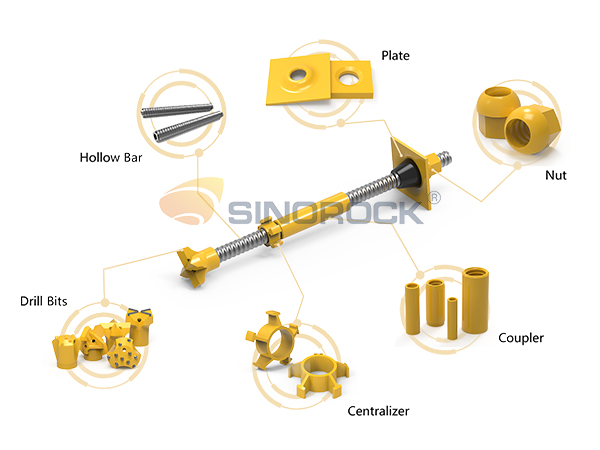
Self-drilling anchor bolts achieve active rock reinforcement by combining:
· Efficient drilling and installation in difficult ground conditions.
· Full-length grout bonding to the surrounding rock.
· Post-installation pre-tensioning that compresses and stabilizes the rock mass.
By applying support before significant movement occurs, pre-tensioned SDA systems improve excavation safety, reduce deformation, and enhance the long-term stability of tunnels, mines, and slopes.
Self-Drilling Anchor Bolts Active Rock Reinforcement Working Principle
1. Installation and Drilling
The hollow anchor bar serves as both the drill rod and the reinforcement element. A sacrificial drill bit is attached to the end, allowing the anchor to be drilled directly into the rock or soil.
2. Simultaneous Grouting
Cement grout is pumped through the hollow core of the bar and exits through openings in the drill bit, filling fractures, voids, and the annular space around the anchor.
· Bonds the anchor bar to the rock mass.
· Increases the shear strength of discontinuities.
· Protects the steel bar from corrosion.
3. Application of Pre-Tension
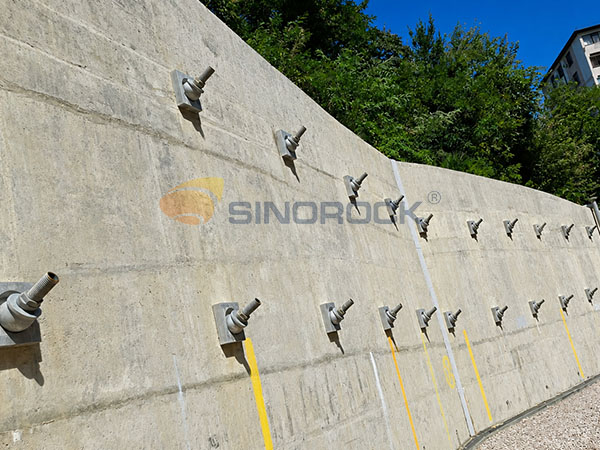
After the grout has reached sufficient strength, a bearing plate and nut are tightened at the exposed end of the anchor.
· Applies a compressive force to the rock surface.
· Clamps fractured rock layers together.
· Increases friction along joints, bedding planes, and cracks.
· Restricts rock movement before instability develops.
This is what makes the system active reinforcement rather than purely passive support.
When a self-drilling anchor bolt is tensioned, it creates a reinforced rock zone around the excavation, reducing crack openings by compressing existing fractures, improving interlocking between rock blocks, transferring loads from weak zones into more competent rock, controlling deformation around tunnels, slopes, and underground excavations, and preventing progressive failure by mobilizing support before significant displacement occurs.
Typical Applications
1. Tunnel Support
In squeezing ground, fractured rock, or fault zones, pre-tensioned SDA bolts help maintain excavation stability immediately after installation.
2. Mining Excavations
Active reinforcement controls roof movement and wall deformation in underground mines, especially where stress redistribution occurs after excavation.
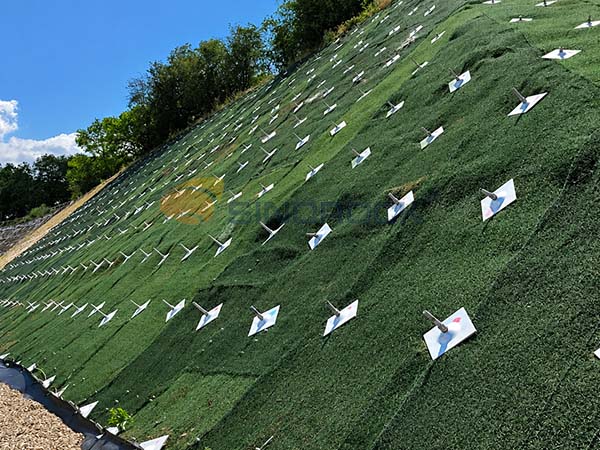
3. Slope Stabilization
Tensioned SDA anchors increase the stability of potentially unstable rock masses by improving resistance to sliding and toppling failures.
Other anchor bolt systems
Self-drilling anchor bolts are not automatically active reinforcement systems. The active behavior depends on the design and installation procedure, not solely on the anchor type itself. There are several other anchor bolt systems that can achieve active rock reinforcement when properly installed and pre-tensioned.
1. Cable Bolts
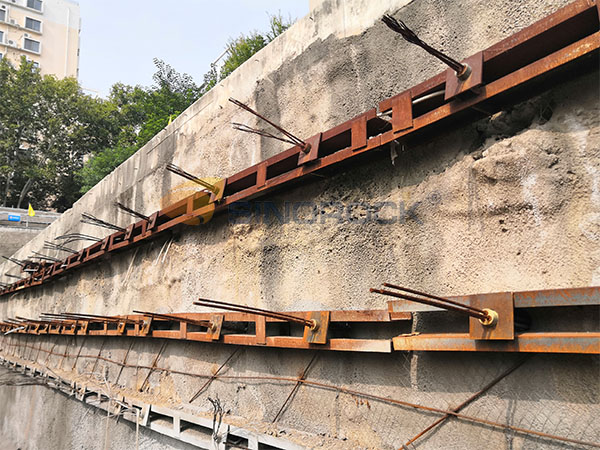
Long, flexible steel cables, typically 7–19 mm in diameter, that can extend several tens of meters into the ground, making them ideal for stabilizing large, unstable rock blocks and deep-seated rock layers.
Active Reinforcement Mechanism:
· Grouted along the cable length.
· Pre-tensioned at the surface using hydraulic jacks and bearing plates.
· Creates compressive forces that clamp rock masses and control large-scale movement.
Typical Uses:
· Stabilizing deep slopes.
· Supporting large tunnel excavations with high roof loads.
· Reinforcing weak, fractured rock zones.
2. Fully Grouted Threaded Rods
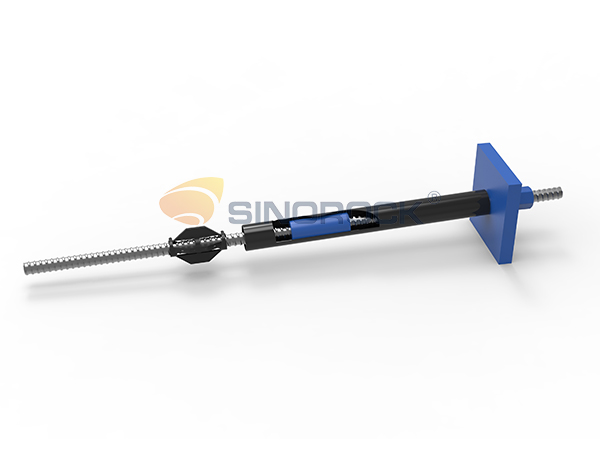
Straight steel rods or bars, threaded along part or the full length, are installed into pre-drilled holes and bonded with grout to provide reliable ground reinforcement.
Active Reinforcement Mechanism:
· After grout cures, the rods are pre-tensioned using nuts and bearing plates.
· The tension compresses rock blocks and mobilizes the surrounding mass for immediate stabilization.
Typical Uses:
· Medium-depth tunnels.
· Rock face stabilization in open-pit mines.
· Supporting retaining walls in slopes.
3. Mechanical Expansion Anchors
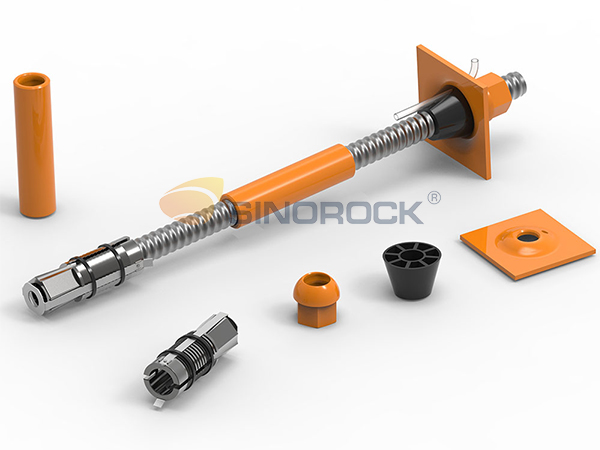
Anchors that expand mechanically within the rock hole
Active Reinforcement Mechanism:
· Some high-capacity mechanical anchors can be tensioned after installation.
· Less common for large-scale active reinforcement but useful for smaller unstable blocks.
Typical Uses:
· Rock faces with small blocks or slabs.
· Secondary support in combination with grouted bolts.
What makes any of these systems active is pre-tensioning after installation. Without tension, the same anchors act passively, only resisting rock movement as it happens.
Conclusion
Active rock reinforcement improves stability by applying pre-stress before significant deformation occurs. Each active reinforcement system has its strengths, with self-drilling anchor bolts providing particular advantages in challenging ground conditions where conventional installation methods may be difficult. The choice of anchor system should be based on ground conditions, load requirements, and project objectives.
latest news
-
- How Self-Drilling Anchor Bolts Achieve Active Rock Reinforcement?
- Time:2026-06-09From:This Site
- Learn how self-drilling anchor bolts achieve active rock reinforcement through grouting and pre-tensioning to improve tunnel, mining, and slope stability.
- View details
-
- How Self-Drilling Anchor Bolts Drill and Grout Simultaneously
- Time:2026-05-25From:This Site
- Discover how self-drilling anchor bolts drill and grout simultaneously, improving efficiency, stability, and safety in geotechnical projects. Learn the mechanism, installation process, advantages, and common applications.
- View details
-
- What Factors Affect the Tensile Strength of Self-Drilling Anchor Bolts?
- Time:2026-05-19From:This Site
- Discover the key factors affecting the tensile strength of self-drilling anchor bolts: diameter, length, shear strength, grouting pressure, and wall thickness. Learn how to optimize for safer tunneling and slope projects!
- View details
-
- Sinorock 2025 Quality Month | Strengthening Quality Foundations, Empowering Product Excellence
- Time:2025-08-13From:This Site
- Sinorock’s 2025 Quality Month, themed “Strengthening Quality Foundations, Empowering Product Excellence,” successfully concluded, reinforcing our commitment to superior product quality.
- View details
-
- Sinorock Safety Month 2025 | Everyone Speaks Safety, Everyone Can Respond
- Time:2025-07-03From:This Site
- Sinorock Safety Month 2025, centered on the theme "Everyone Speaks Safety, Everyone Can Respond - Spot Workplace Hazards," has wrapped up successfully!
- View details
-
- Quality Control: the Vital Factor of A SDA Bolt Factory
- Time:2025-01-09From:This Site
- Sinorock’s comprehensive quality control system, from supplier management to outgoing inspections, ensuring the highest standards for self-drilling anchor bolts in construction.
- View details
-
- SINOROCK Invites You to Mining Week Kazakhstan 2026
- Time:2026-06-08From:This Site
- Meet SINOROCK at Mining Week Kazakhstan 2026, Booth 925. Discover advanced self-drilling anchor systems and ground support solutions for underground mining, fractured ground, fault zones, and challenging geological conditions.
- View details
-
- Sinorock Invites You to Visit Us at CONEXPO-CON/AGG
- Time:2026-02-14From:This Site
- Sinorock Invites You to Explore Proven Self-Drilling Anchor Bolt Solutions at CONEXPO-CON/AGG –S63341.South Hall 1st Level
- View details
-
- SINOROCK to Showcase Innovative Mining Solutions at Mining and Metals Central Asia 2025
- Time:2025-09-09From:This Site
- We are pleased to share that SINOROCK will participate in the Mining and Metals Central Asia 2025, taking place from September 17 to 19 at the Atakent International Exhibition Centre in Almaty, Kazakhstan. You can find us at Booth 11-231.
- View details