Download

Working Principle and Construction Requirements of Self-Drilling Micropiles
Time:2026-09-08From:sinorock View:
Self-drilling micropiles are widely used in foundation reinforcement, excavation support, slope stabilization, and other geotechnical engineering applications. Their working principle can generally be divided into two functions: serving as a pre-support structure and acting as a primary load-bearing component.
In excavation support projects, micropiles are commonly used as a pre-support system. Pressure grouting improves the self-stability and strength of the surrounding soil, reduces changes in secondary stresses during excavation, and allows the micropiles to work together with other structural elements to improve overall ground stability.
This article explains the working principle of self-drilling micropiles and the key construction requirements that should be considered during installation.
1. Working Principle of Self-Drilling Micropiles in Excavation Support
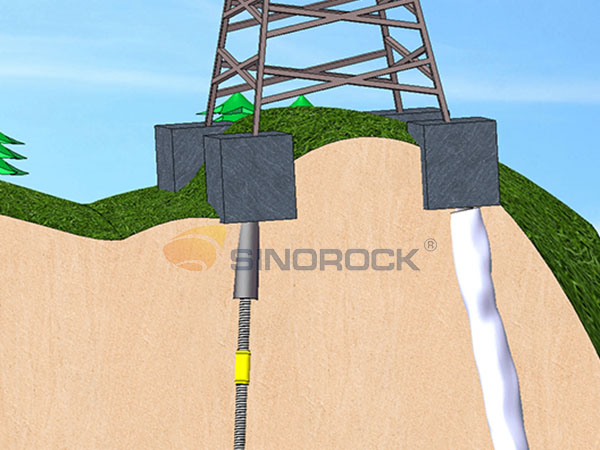
1.1 Self-Drilling Micropiles as a Pre-Support Structure
Self-drilling micropiles can be installed as an advance support structure before or during excavation. Through drilling and grouting, the micropile system improves the reinforcement of the surrounding soil and rock mass.
The injected grout penetrates into cracks, pores, and the surrounding ground, helping improve the interaction between the micropile and the surrounding formation. This can help reduce ground deformation caused by excavation and coordinate the support provided by soil nails, rock bolts, and other reinforcement elements.
As a result, self-drilling micropiles can contribute to maintaining excavation stability and controlling deformation around the excavation area.
1.2 Self-Drilling Micropiles as Load-Bearing Components
Under the effects of earth pressure, groundwater pressure, and additional loads around an excavation, micropiles may be subjected to axial and lateral forces.
When lateral displacement occurs, the surrounding soil can generate passive earth pressure against the micropile. This interaction allows the micropile to resist part of the active earth pressure and participate in the overall load-bearing system.
Depending on the project design, micropiles can therefore work together with retaining structures, anchors, soil nails, and other support components to provide a composite support system.
2. Construction Requirements for Self-Drilling Micropiles
.jpg)
Proper installation is essential to ensure the designed performance of a self-drilling micropile system. Several factors should be carefully controlled during construction.
2.1 Borehole Quality
For micropile installation, the designed hole diameter, drilling depth, and inclination should be maintained within the specified tolerances.
Poor borehole quality may result in problems such as borehole collapse, reduced diameter, deviation from the designed position, or insufficient anchorage depth.
One of the main characteristics of a self-drilling micropile is that the hollow anchor bar serves as both the drilling rod and the permanent reinforcement element. The bar remains in the ground after drilling, while grout is injected through the hollow bar during the drilling process.
This drilling-and-grouting method can simplify the installation process, particularly in unstable or difficult ground conditions.
2.2 Control of Hole Position and Inclination
The position of each micropile should be controlled according to the design layout. Surveying equipment such as total stations, levels, or other positioning instruments can be used to establish the drilling position and record the installed micropiles.
The drilling rig should also be adjusted according to the designed inclination angle. During installation, the actual drilling direction should be monitored to minimize deviation from the design requirements.
Accurate positioning is particularly important when micropiles are installed close to existing buildings, retaining structures, underground utilities, or other sensitive structures.
2.3 Control of Borehole Diameter
With conventional micropile construction, the borehole is normally drilled first, followed by the installation of the reinforcement element. Therefore, borehole diameter and stability have a direct influence on the final micropile geometry.
Ground conditions may change during drilling, making it difficult to maintain a stable borehole diameter in some formations.
For self-drilling micropiles, the hollow anchor bar is equipped with a drill bit and functions as the drilling element as well as the permanent reinforcement. After drilling, the bar does not need to be removed. This eliminates the separate step of inserting a reinforcement bar into the completed borehole.
The resulting grouted micropile system consists of the hollow anchor bar, grout, and surrounding ground, with the final geometry depending on the drilling and grouting conditions.
2.4 Control of Micropile Length
Micropiles may be designed to resist different combinations of tensile, compressive, and shear forces. Sufficient micropile length is therefore important to ensure that the reinforcement extends through weak ground and reaches the required bearing or anchorage zone.
During self-drilling micropile installation, drilling depth should be continuously monitored. The remaining length of the drilling rod or anchor bar can be used together with drilling records to verify whether the required installation depth has been achieved.
If the designed depth cannot be reached because of unexpected ground conditions, the construction team should follow the project design and engineering procedures to determine whether adjustments are required.
2.5 Grouting and Final Micropile Quality
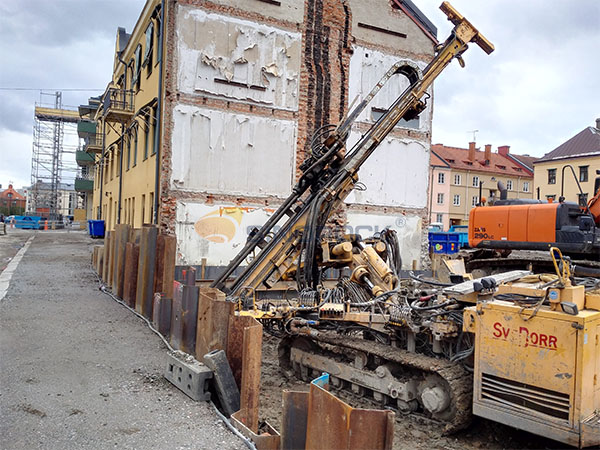
Grouting quality is another important factor affecting the performance of a self-drilling micropile system. The quality of the hollow anchor bar, drill bit, grout material, and grouting process should be checked before and during installation.
Self-drilling micropiles commonly use simultaneous drilling and grouting. Grout is pumped through the hollow center of the anchor bar toward the drill bit and returns through the annular space between the bar and the borehole.
As drilling progresses, grout can penetrate and interact with the surrounding soil or rock. This process helps form a grouted composite structure around the micropile.
Compared with conventional micropile installation, where drilling, reinforcement placement, and grouting are separate operations, the self-drilling method can reduce the number of installation steps and improve construction efficiency.
3. Advantages of Self-Drilling Micropile Installation
Self-drilling micropiles integrate drilling, reinforcement installation, and grouting into a continuous construction process. This can provide several practical advantages in suitable ground conditions:
Simplified installation: The hollow anchor bar serves as the permanent reinforcement and drilling element.
Simultaneous drilling and grouting: Grouting can be carried out during drilling.
Adaptability to difficult ground: The method can be used in various soil and rock conditions, subject to project design.
Reduced construction steps: There is no need to remove the drilling rod and separately install a reinforcement bar.
Efficient construction: The continuous drilling and grouting process can help reduce installation time.
Suitable for restricted sites: Compact rotary or rotary-percussive drilling equipment can be used for many micropile applications.
Reduced disturbance: Compared with some conventional construction methods, appropriate self-drilling equipment can help limit vibration and noise, depending on ground conditions and equipment selection.
Conclusion
The working principle of self-drilling micropiles involves both ground reinforcement and structural load transfer. In excavation support, they can function as pre-support elements and, when designed accordingly, participate as load-bearing components in the overall support system.
For successful construction, particular attention should be paid to borehole quality, hole position, drilling inclination, borehole diameter, micropile length, grouting, and final installation quality.
By combining drilling, permanent reinforcement, and grouting into one installation process, self-drilling micropiles can provide an efficient solution for foundation reinforcement, excavation support, slope stabilization, and other geotechnical applications.
latest news
-
- Working Principle and Construction Requirements of Self-Drilling Micropiles
- Time:2026-09-08From:This Site
- The working principle of self-drilling micropiles includes pre-support and load-bearing functions. Key construction requirements include hole position, diameter, depth, and grouting quality.
- View details
-
- Self-Drilling Anchor Bolt Technical Parameters: Complete Specification Guide
- Time:2026-08-25From:This Site
- Learn about self-drilling anchor bolt specifications, including diameter, wall thickness, tensile strength, yield strength, thread systems, load capacity, and corrosion protection options to select the right anchor solution.
- View details
-
- Common Types of Surrounding Rock Support in Tunnels
- Time:2026-08-19From:This Site
- This article introduces common types of surrounding rock support in tunnels. It explains their features and applications to ensure tunnel stability.
- View details
-
- Sinorock Self-Drilling Anchoring System Completes EPD Registration
- Time:2026-09-18From:This Site
- Sinorock’s Self-Drilling Anchoring System has completed EPD registration, providing transparent environmental information based on Life Cycle Assessment (LCA).
- View details
-

- Sinorock Conducts 2026 Safety Month Activities to Enhance Workplace Safety Management
- Time:2026-07-17From:This Site
- Sinorock launched the 2026 Safety Month campaign with safety training, hazard inspections, and emergency drills to strengthen workplace safety and risk prevention.
- View details
-
- Sinorock Launches Industry–University–Research Partnership with Henan University of Science and Technology on Self-Drilling Micropile Systems
- Time:2026-07-03From:This Site
- Sinorock has launched an industry–university–research partnership with Henan University of Science and Technology focusing on Self-Drilling Micropile Systems.
- View details
-
- SINOROCK Invites You to Mining Week Kazakhstan 2026
- Time:2026-06-08From:This Site
- Meet SINOROCK at Mining Week Kazakhstan 2026, Booth 925. Discover advanced self-drilling anchor systems and ground support solutions for underground mining, fractured ground, fault zones, and challenging geological conditions.
- View details
-
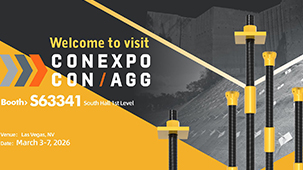
- Sinorock Invites You to Visit Us at CONEXPO-CON/AGG
- Time:2026-02-14From:This Site
- Sinorock Invites You to Explore Proven Self-Drilling Anchor Bolt Solutions at CONEXPO-CON/AGG –S63341.South Hall 1st Level
- View details
-

- SINOROCK to Showcase Innovative Mining Solutions at Mining and Metals Central Asia 2025
- Time:2025-09-09From:This Site
- We are pleased to share that SINOROCK will participate in the Mining and Metals Central Asia 2025, taking place from September 17 to 19 at the Atakent International Exhibition Centre in Almaty, Kazakhstan. You can find us at Booth 11-231.
- View details