Download

Self-Drilling Anchor Bolt Technical Parameters: Complete Specification Guide
Time:2026-08-25From:sinorock View:
The technical parameters of self-drilling anchor bolts are the key basis for determining their applicability and support performance. Different rod dimensions, material properties, thread structures, and mechanical indicators directly affect the load-bearing capacity, drilling efficiency, grouting performance, and long-term stability of the anchor system. This article provides a systematic introduction to the main technical parameters of self-drilling anchor bolts and explains their practical impact on engineering applications.
1. Dimensional Parameters
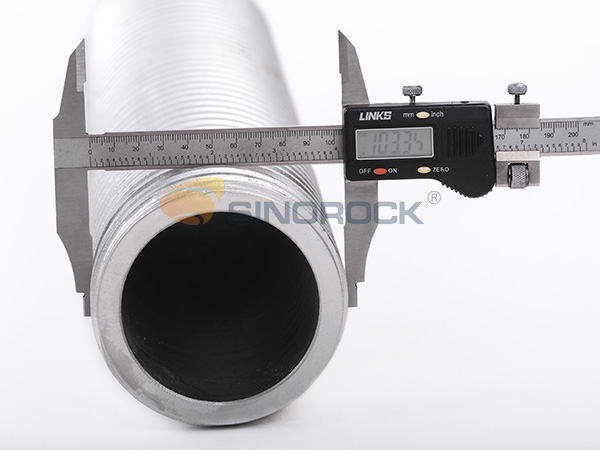
The dimensional structure of self-drilling anchor bolts is the fundamental basis for selecting the appropriate anchor bolt specification and model.
1.1 Outer Diameter
The outer diameter refers to the maximum diameter of the self-drilling anchor bolt body, expressed in millimeters (mm). Common specifications include R-series products such as R25 (25 mm), R32 (32 mm), R38 (38 mm), and R51 (51 mm), as well as large-diameter hollow anchor bars such as T76 (76 mm) from the T-series.
The outer diameter directly determines the cross-sectional area and load-bearing capacity of the anchor bolt. Larger diameters provide higher tensile strength and greater ultimate load capacity, making them more suitable for large-scale engineering applications such as deep mining, high-stress tunnels, and large underground excavations.
The standard diameter range of self-drilling anchor bolts is typically 32–51 mm, while special applications may require smaller diameters such as 22 mm or 28 mm.
1.2 Inner Diameter
The inner diameter refers to the diameter of the internal grouting channel of the hollow anchor bolt. Typical inner diameters for different specifications are as follows:
R25N: 14 mm
R32S: 16 mm
R38N: 19 mm
R51L: 36 mm
R51N: 33 mm
T76N: 52 mm
The inner diameter directly affects grout flow rate, grouting pressure, and grout transportation efficiency. A larger inner diameter improves grouting efficiency and is more suitable for loose formations, fractured rock masses, and engineering conditions requiring large grout volumes.
1.3 Wall Thickness
Wall thickness refers to the thickness of the steel tube wall of the anchor bolt, which is determined by the difference between the outer diameter and inner diameter.
Wall thickness directly affects the tensile strength, shear resistance, and bending performance of the anchor bolt. Under the same outer diameter condition, a larger wall thickness provides higher overall strength, but also increases material consumption and cost.
Therefore, engineering design should consider rock mass conditions, load requirements, and economic factors when selecting the appropriate wall thickness.
1.4 Length
Self-drilling anchor bolts are usually customized according to project requirements. Common lengths include 1 m, 2 m, 3 m, 4 m, and 6 m. The currently available maximum length is 12 m, and longer lengths can also be customized.
The length determines the depth at which the anchor bolt reaches stable strata. Longer anchor bolts are commonly used for deep reinforcement, large deformation tunnels, and deep slope stabilization applications.
2. Material Parameters
Material parameters mainly reflect the basic properties of the steel used for manufacturing self-drilling anchor bolts.
2.1 Steel Grade
Self-drilling anchor bolts are generally manufactured from high-strength alloy structural steel. Common steel grades include:
· 40Cr chromium-molybdenum alloy structural steel
· S460/S500/S650 high-strength structural steel according to European standards
· Quenched and tempered steel conforming to EN 10083-1
· European standards commonly specify high-strength steel grades such as S500 or S650.
High-quality steel ensures that anchor bolts maintain stable performance under long-term loading conditions.
2.2 Chemical Composition
The proportions of carbon (C), manganese (Mn), silicon (Si), and other alloying elements in steel directly influence strength, toughness, weldability, and corrosion resistance.
Compared with ordinary carbon steel, alloy structural steel provides higher corrosion resistance and superior mechanical properties. Therefore, strict control of raw material composition is essential during manufacturing.
3. Mechanical Performance Parameters
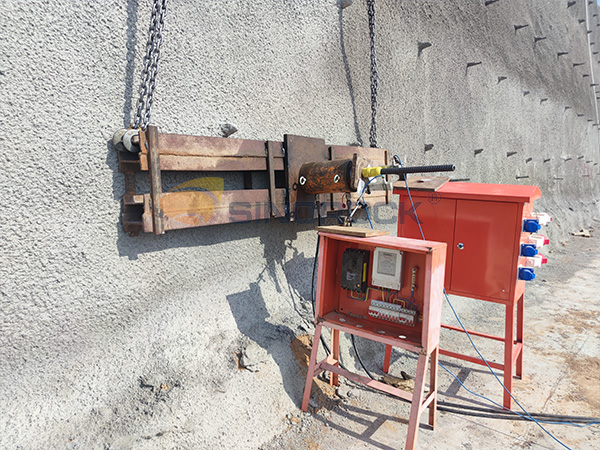
Mechanical performance parameters are the core indicators used to evaluate the load-bearing capacity of self-drilling anchor bolts.
3.1 Ultimate Load Capacity
Ultimate load capacity refers to the maximum axial load that an anchor bolt can withstand, expressed in kilonewtons (kN). It is one of the most important parameters for anchor bolt selection.
Different self-drilling anchor bolt specifications have significant differences in ultimate load capacity and yield load:
|
Specification |
Ultimate Load |
Yield Load |
|
R25N |
200 kN |
150 kN |
|
R32N |
280 kN |
230 kN |
|
R32S |
360 kN |
280 kN |
|
R38N |
500 kN |
400 kN |
|
R51L |
550 kN |
450 kN |
|
R51N |
800 kN |
630 kN |
|
T76N |
1600 kN |
1200 kN |
|
T76S |
1900 kN |
1500 kN |
According to European standards, the typical ultimate tensile load range is 250–600 kN, while typical tunnel design loads are approximately 300–400 kN.
3.2 Yield Load
Yield load refers to the load value at which the anchor bolt begins to undergo permanent plastic deformation. It reflects the anchor bolt’s ability to resist deformation and maintain long-term supporting performance.
Yield performance is particularly important for large deformation tunnels and weak surrounding rock conditions.
3.3 Tensile Strength
Tensile strength represents the maximum tensile load that a material can withstand per unit area, expressed in N/mm² (MPa).
The typical tensile strength of different specifications is approximately 800 N/mm². For example, the average tensile strength of R32N is approximately 720 N/mm².
Higher tensile strength enables the anchor bolt to better resist rock mass deformation and pull-out forces.
3.4 Yield Strength
Yield strength refers to the maximum stress that a material can withstand before permanent deformation occurs.
The typical yield strength of different specifications is approximately 650 N/mm². European self-drilling anchor bolts commonly use high-strength steel grades such as S500 or S650 to achieve excellent yield performance.
3.5 Elongation
Elongation represents the deformation capacity of the material before fracture.
Higher elongation indicates better toughness and stronger deformation adaptability. In areas with significant geological changes, anchor bolts with good elongation performance can reduce the risk of sudden failure.
Energy-absorbing anchor bolts can provide energy absorption capacities of up to 45 kJ.
3.6 Weight per Unit Length
Weight per unit length is an important parameter for anchor bolt selection and transportation cost calculation:
R25N: 2.3 kg/m
R32N: 3.2 kg/m
R32S: 3.6 kg/m
R38N: 5.5 kg/m
R51L: 6.5 kg/m
R51N: 8.0 kg/m
T76N: 16.0 kg/m
4. Thread Parameters
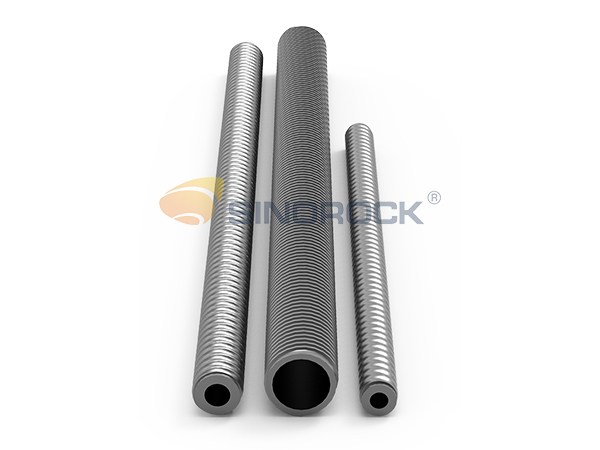
Self-drilling anchor bolts adopt continuous thread structures, enabling connection with drill bits, installation of couplers, adjustment of anchoring length, and improved construction convenience.
4.1 Thread Types
Self-drilling anchor bolts mainly use two types of threads: R-type and T-type threads.
R-Type Thread
R-type thread complies with ISO 10208 international standards. It adopts a wave-shaped thread profile and large pitch design, making it suitable for standard applications. Common sizes include: R25,R32, R38, R51
T-Type Thread
T-type thread adopts a deep trapezoidal thread design. Compared with R-type threads of the same diameter, it provides approximately twice the bonding friction force due to deeper thread engagement. It is suitable for higher-demand applications such as micropile installation. Common sizes include: T30, T40, T76, T103
Both thread systems comply with international ISO standards and can be used with standard drilling equipment such as Epiroc, Sandvik, and various hydraulic crawler drilling rigs.
4.2 Thread Standards
R-type threads are manufactured according to ISO 10208 standards, while R51 series threads comply with ISO 1720 standards. T-type threads are manufactured according to company standards or international standards.
Proper thread pitch design improves drilling efficiency, connection stability, and grouting sealing performance.
5. Construction Performance Parameters
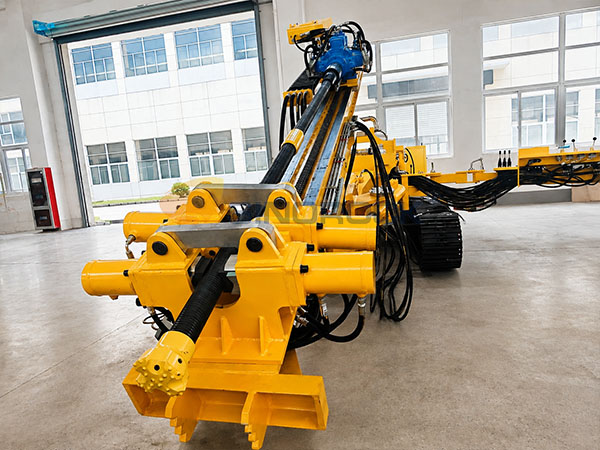
Construction performance parameters directly affect the installation efficiency and quality of self-drilling anchor bolts on site.
5.1 Installation Torque
Installation torque varies depending on regional standards and engineering requirements.
· Chinese standards: typically 5–10 kN·m
· European standards: recommended 3–12 kN·m, verified through torque-tension testing
· Coupler connections: generally require a minimum torque of 300 N·m
Proper torque ensures effective thread engagement and load transfer while preventing overloading at connections.
5.2 Drilling Diameter
The drilling diameter is determined by the outer diameter of the anchor bolt and the diameter of the matching drill bit. A proper drilling diameter should be slightly larger than the anchor bolt diameter to ensure smooth installation and effective grouting quality.
5.3 Design Tensile Load
The design tensile load of prestressed anchor bolts is generally 200–400 kN. The actual design value should be determined based on geological conditions, anchorage length, and safety factors.
6. Corrosion Protection Parameters
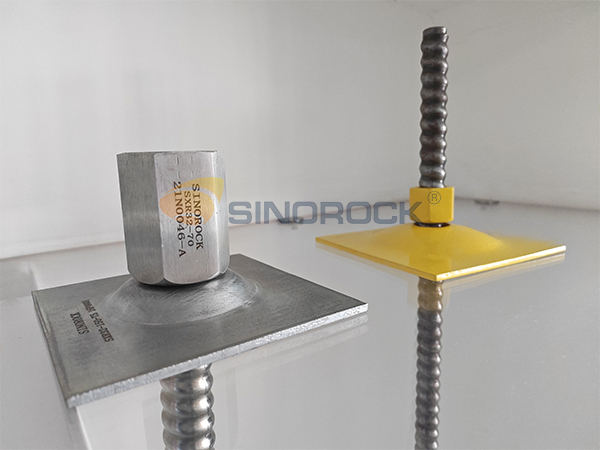
Since self-drilling anchor bolts are usually exposed to underground environments for long periods, corrosion protection performance is a critical factor affecting service life.
6.1 Hot-Dip Galvanizing
Hot-dip galvanizing involves immersing steel into molten zinc at approximately 450°C to form a metallurgically bonded zinc coating.
Advantages include:
· Complete coverage, including threads and couplers
· Sacrificial protection, allowing continued protection even after surface scratches
· Under moderate atmospheric conditions, service life can exceed 50 years. The process generally complies with ASTM A123 or ISO 1461 standards.
6.2 Epoxy Powder Coating
Epoxy coating is formed by electrostatic spraying of epoxy resin powder followed by heat curing. It effectively blocks water, oxygen, and chloride ions, making it suitable for marine environments and chemically corrosive conditions.
The coating provides strong adhesion, with adjustable thickness typically ranging from 200–500 μm. Adhesion testing is conducted according to ISO 2409:2007.
6.3 Duplex Corrosion Protection
Duplex corrosion protection combines hot-dip galvanizing and epoxy powder coating to provide the highest level of corrosion resistance. The service life can be extended up to 150 years.
It is especially suitable for long-term underground projects, areas with abundant groundwater, and permanent critical support structures. The system complies with standards such as NS-EN-ISO 1461 (hot-dip galvanizing) and EN 13438 (epoxy coating).
6.4 Stainless Steel
For highly corrosive environments such as coastal areas or industrial pollution zones, stainless steel self-drilling anchor bolts can be selected.
7. International Standards System
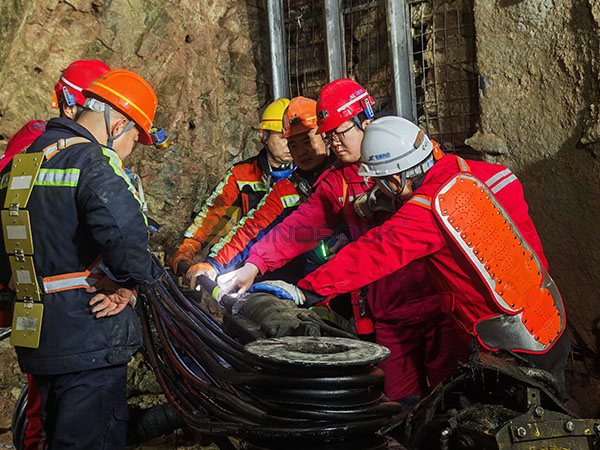
The design and manufacturing of self-drilling anchor bolts must comply with various international standards.
Regarding ISO standards:
· ISO 10208 applies to R-type threads
· ISO 1720 applies to R51 series threads
Regarding European standards:
· EN 10083-1 specifies steel grades
· EN 14490 regulates soil nailing construction
· EN 1997 (Eurocode 7) covers geotechnical design
Regarding American standards:
· ASTM F432 is one of the main specifications for rock bolts
Manufacturers and engineers should ensure that products comply with applicable standards according to regional requirements and specific engineering applications.
Conclusion
The technical parameters of self-drilling anchor bolts form a comprehensive system covering dimensions, material properties, mechanical indicators, thread structures, construction parameters, and corrosion protection performance.
In practical engineering applications, suitable self-drilling anchor bolt specifications should be selected according to geological conditions, support requirements, and construction environments.
A thorough understanding of these technical parameters is essential for engineering selection, quality control, and construction management. Only through accurate parameter evaluation and scientific selection can self-drilling anchor bolts fully demonstrate their technical advantages under complex geological conditions and provide reliable geotechnical support solutions for tunnels, mines, slopes, and foundation engineering projects.
latest news
-
- Self-Drilling Anchor Bolt Technical Parameters: Complete Specification Guide
- Time:2026-08-25From:This Site
- Learn about self-drilling anchor bolt specifications, including diameter, wall thickness, tensile strength, yield strength, thread systems, load capacity, and corrosion protection options to select the right anchor solution.
- View details
-
- Why Do Self-Drilling Anchor Bolts Require a Dedicated Drilling Rig?
- Time:2026-08-08From:This Site
- Learn why self-drilling anchor bolts require dedicated drilling rigs. Explore how these rigs improve drilling efficiency, anchoring quality, and safety in tunnels, mines, slopes, and foundation engineering.
- View details
-
- Self-Drilling Anchor Bolts for Water-Conveyance Tunnel Reinforcement
- Time:2026-07-27From:This Site
- Learn about water-conveyance tunnel support methods, rock stability solutions, and practical applications in complex geological conditions for hydropower construction.
- View details
-
- Sinorock Conducts 2026 Safety Month Activities to Enhance Workplace Safety Management
- Time:2026-07-17From:This Site
- Sinorock launched the 2026 Safety Month campaign with safety training, hazard inspections, and emergency drills to strengthen workplace safety and risk prevention.
- View details
-
- Sinorock Launches Industry–University–Research Partnership with Henan University of Science and Technology on Self-Drilling Micropile Systems
- Time:2026-07-03From:This Site
- Sinorock has launched an industry–university–research partnership with Henan University of Science and Technology focusing on Self-Drilling Micropile Systems.
- View details
-

- CBAM Policy Interpretation: Sinorock Promotes the Low-Carbon Transformation of Self Drilling Rock Bolts
- Time:2026-06-25From:This Site
- CBAM policy interpretation for self drilling rock bolts, covering carbon footprint requirements, EU compliance rules, and Sinorock’s low-carbon manufacturing strategy.
- View details
-
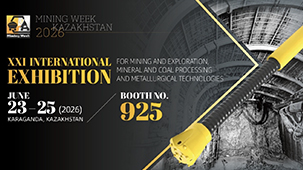
- SINOROCK Invites You to Mining Week Kazakhstan 2026
- Time:2026-06-08From:This Site
- Meet SINOROCK at Mining Week Kazakhstan 2026, Booth 925. Discover advanced self-drilling anchor systems and ground support solutions for underground mining, fractured ground, fault zones, and challenging geological conditions.
- View details
-
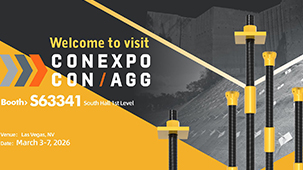
- Sinorock Invites You to Visit Us at CONEXPO-CON/AGG
- Time:2026-02-14From:This Site
- Sinorock Invites You to Explore Proven Self-Drilling Anchor Bolt Solutions at CONEXPO-CON/AGG –S63341.South Hall 1st Level
- View details
-
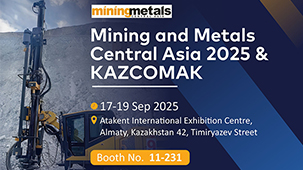
- SINOROCK to Showcase Innovative Mining Solutions at Mining and Metals Central Asia 2025
- Time:2025-09-09From:This Site
- We are pleased to share that SINOROCK will participate in the Mining and Metals Central Asia 2025, taking place from September 17 to 19 at the Atakent International Exhibition Centre in Almaty, Kazakhstan. You can find us at Booth 11-231.
- View details