Download

Why Do Self-Drilling Anchor Bolts Require a Dedicated Drilling Rig?
Time:2026-08-08From:sinorock View:
In geotechnical engineering construction, complex geological conditions are often the key factors affecting construction efficiency and support quality. When facing challenging formations such as loose soil layers, fractured rock formations, and sand-gravel layers, traditional anchor installation methods often encounter problems such as borehole collapse, hole shrinkage, drill jamming, and difficulty in anchor installation. These issues not only increase construction difficulties but also affect project progress and safety.
Self-drilling anchor bolts can effectively solve the challenges of borehole formation in complex ground conditions. However, to fully utilize their advantages of simultaneous drilling and supporting, synchronous grouting, and no need for drill rod withdrawal, professional supporting equipment is essential.
I. Applicable Geological Conditions
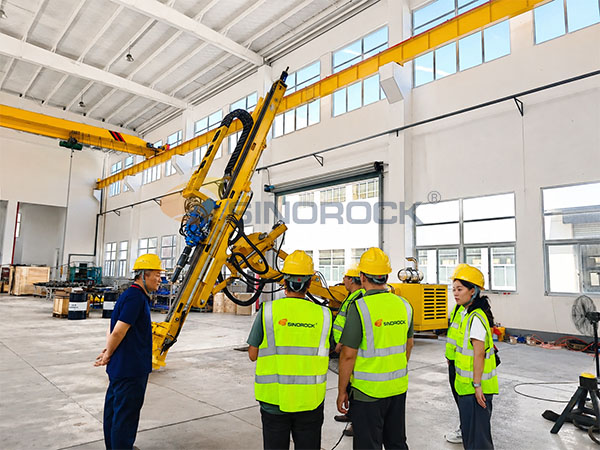
Self-drilling anchor bolt drilling rigs are specially developed for complex formations and difficult drilling conditions. They are particularly suitable for engineering environments where traditional anchor installation methods are prone to borehole collapse, hole shrinkage, and drill jamming.
Typical applicable geological conditions include:
1. Loose Soil Layers
Loose soil layers include clay, silty clay, miscellaneous fill, backfill soil, and other types of unstable formations. Due to their poor structural stability, these formations are prone to borehole collapse and failure to maintain hole integrity during conventional drilling, making anchor installation difficult.
The self-drilling anchor bolt system integrates drilling, grouting, and anchoring into one process. During drilling, grout is injected simultaneously to reinforce the borehole wall and improve borehole stability, effectively solving anchoring challenges in loose ground conditions.
2. Fractured Rock Formations
Fractured rock formations mainly include fault fracture zones, highly weathered rock, jointed and fractured rock masses, and weak surrounding rock conditions.
In these formations, conventional drilling methods often suffer from problems such as rock fragment falling, borehole shrinkage, borehole collapse, and drill rod sticking, seriously affecting construction efficiency and support quality.
When a dedicated self-drilling anchor bolt rig is combined with self-drilling hollow anchor bars, the anchor bar itself acts as the drill rod. During drilling, it continuously supports the borehole wall while grout is injected simultaneously for reinforcement, significantly improving construction stability in fractured rock formations.
3. Sand-Gravel and Soil-Rock Mixed Layers
Sand-gravel layers, cobble layers, and gravel soil formations are characterized by weak particle bonding and loose structures, making them typical difficult-to-drill formations for conventional anchor construction.
Traditional drilling methods often lead to unstable boreholes, incomplete hole formation, or failure to install anchors.
Self-drilling anchor bolt construction does not require a pre-formed stable borehole. Drilling and grouting are performed simultaneously, allowing effective adaptation to complex formations such as sand and gravel layers and improving construction success rates.
4. Backfill Soil and Complex Artificial Fill
In construction backfill areas, miscellaneous fill containing gravel or construction waste, geological conditions are usually uneven. Traditional anchor installation methods are easily affected by local obstacles and loose structures.
The self-drilling anchor bolt system provides strong adaptability to changing ground conditions, reducing construction interruptions caused by geological variations and improving anchoring efficiency.
II. Limitations of Conventional Support Methods
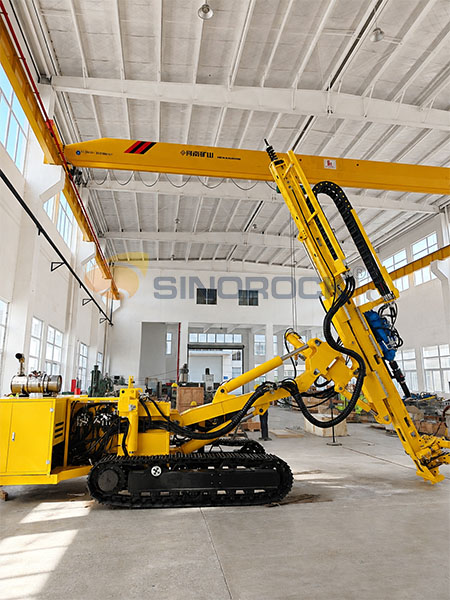
In loose and fractured surrounding rock conditions, the traditional sequential process of "drill first, install anchor second, grout afterward" has three major limitations:
1. Difficulty in Borehole Formation
When drilling in loose geological formations, borehole walls are highly prone to collapse, resulting in failed boreholes or insufficient anchorage depth.
Sand-gravel formations have loose structures and are easily disturbed, making them one of the main causes of borehole collapse and drill jamming during foundation pit anchoring.
Conventional casing drilling requires relatively stable borehole conditions. If collapse or gravel blockage occurs inside the hole, anchor installation becomes extremely difficult and is only suitable for formations with good drilling stability.
2. Difficulty in Removing Drill Rods
During drilling in fractured rock formations, accumulated debris and borehole shrinkage can easily cause drill rods to become stuck. This not only delays construction but may also result in equipment damage and material losses.
In tunnel construction, conventional pipe roof support usually adopts small steel pipes with casing drilling methods. When encountering difficult geological conditions, problems such as drill jamming and slow drilling progress frequently occur.
3. High Overall Construction Cost
In fractured rock construction, complicated drilling processes and borehole stabilization requirements significantly increase construction time and difficulty.
Conventional anchors often require repeated grouting for borehole stabilization or casing-assisted drilling, resulting in more procedures and longer construction cycles.
Meanwhile, workers must operate for extended periods in unstable working areas, increasing safety risks.
III. Alternative Solutions for Different Applications
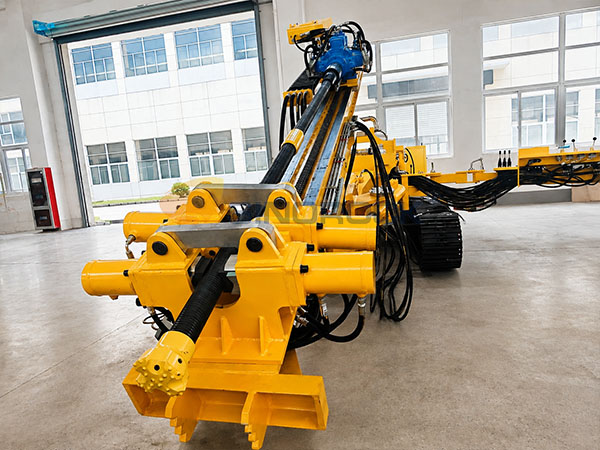
Self-drilling hollow anchor bolts integrate drilling, grouting, and anchoring functions into one system and can replace various traditional support methods in different engineering fields.
1. Mining Engineering
Self-drilling pipe roof drilling rigs are mainly applied in mining environments involving fault fracture zones, highly jointed weak rock formations, high-stress soft rock, loose soft rock, and mining-induced disturbed zones.
The dedicated self-drilling pipe roof rig is optimized for fractured mine surrounding rock conditions with specially designed impact frequency and torque parameters. Equipped with a standard reverse drilling function, it effectively solves drill jamming problems and significantly improves mine roadway support safety and construction efficiency.
2. Slope Stabilization Engineering
Self-drilling anchor bolts use hollow anchor bars with continuous external threads to replace traditional steel reinforcement materials while meeting required design load capacities.
They are widely used in slope stabilization projects and can replace conventional steel bar anchors. They are also suitable for deep excavation slope support.
Compared with traditional mortar anchors, self-drilling anchor bolts provide easier installation, stronger adaptability, and better economic performance, especially in geological disaster prevention and slope reinforcement projects.
3. Tunnel Engineering
When tunnels pass through loose deposits, traditional support methods usually adopt small steel pipes for advance pipe roof support.
Self-drilling pipe roof systems can use self-drilling anchor bolts as alternatives to conventional pipe roofs without requiring casing drilling. They are mainly used for tunnels with weak and fractured surrounding rock.
Conventional pipe roofs commonly use seamless steel pipes with specifications such as:
· 76 × 6 mm
· 89 × 5 mm
· 108 × 6 mm
Self-drilling pipe roofs can use self-drilling anchor bolts with diameters of:
· 51 mm
· 76 mm
· 103 mm
The self-drilling pipe roof method mainly addresses tunnel support challenges under fractured rock conditions and has been successfully applied in projects such as the Zhengzhou–Wanzhou High-Speed Railway and Yuxi–Mohan Railway.
4. Foundation Engineering
Self-drilling hollow anchor bolts are suitable for soft soil and sand-gravel formations where conventional anchors or soil nails cannot achieve stable boreholes.
In deep excavation support projects, they can replace traditional anchors and effectively solve borehole collapse and shrinkage problems.
Compared with conventional steel bar anchors, self-drilling anchor bolts eliminate the need for drill rod withdrawal and separate anchor installation, significantly shortening construction periods.
IV. Why Use a Dedicated Self-Drilling Anchor Bolt Rig?
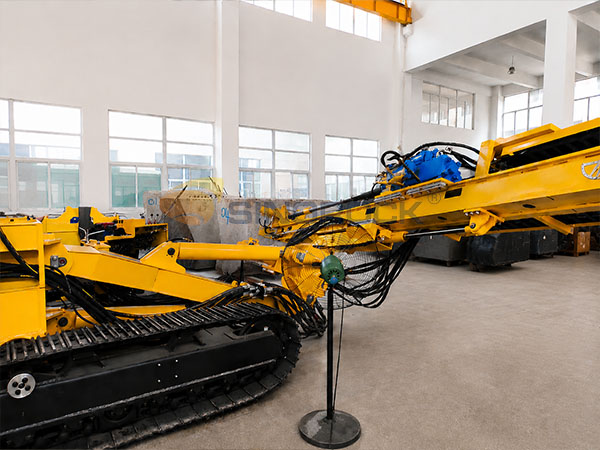
1. Simultaneous Drilling and Grouting
The dedicated self-drilling anchor bolt rig is specifically designed for self-drilling anchor applications and enables simultaneous drilling, grouting, and anchoring.
The rig uses the anchor bar itself as the drill rod. After drilling, the anchor remains permanently installed as the reinforcement element, eliminating the traditional processes of drilling, removing drill rods, and inserting anchors.
2. Significantly Improved Construction Efficiency
The dedicated rig optimizes power head parameters to achieve high-frequency impact and high-speed rotation.
Combined with the self-drilling anchor bolt construction method, construction efficiency can be 4–5 times higher than traditional steel bar anchor or cable anchor methods.
In practical projects, the pure drilling time for a single 18 m deep borehole can be reduced to approximately 14 minutes, with daily drilling capacity exceeding 300 meters per shift (8 hours).
3. Improved Anchoring Quality
Because drilling and grouting are performed simultaneously, grout effectively fills rock fractures, creating a larger anchorage body diameter and improving anchoring performance.
The "drill rod equals anchor bolt" design means that drilling itself provides continuous borehole protection. The anchor bar remains inside the hole throughout the process, continuously supporting the borehole wall.
4. Reduced Overall Construction Cost
Compared with casing drilling methods, using a dedicated self-drilling anchor bolt rig can reduce overall construction costs by more than 60%.
It simplifies construction procedures, improves equipment utilization, reduces the number of required workers, and significantly lowers labor costs.
V. Core Advantages of Dedicated Self-Drilling Anchor Bolt Rigs
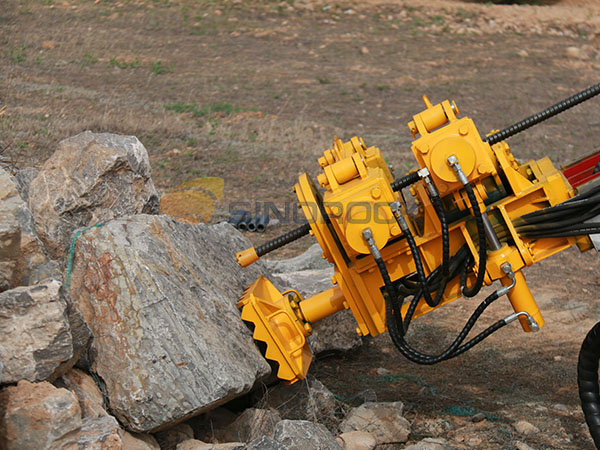
1. Fully Utilize Self-Drilling Technology Advantages
A dedicated self-drilling anchor bolt rig consists of six major assemblies:
· Frame assembly
· Power system
· Drilling system
· Auxiliary drilling system
· Boom assembly
· Undercarriage system
It is specifically developed for self-drilling hollow anchor bolt installation. When combined with self-drilling anchor bolts, it fully releases the advantages of this advanced construction method.
2. Optimized Power Head Parameters
The power head parameters are specially optimized according to self-drilling anchor applications, enabling:
· High-frequency impact (2.900–3.700 impacts/min)
· High-speed rotation
· Better flushing performance
· Faster drilling speed
3. Standard Reverse Drilling Function
The standard reverse drilling function effectively solves drill jamming problems.
When sticking occurs during drilling, the reverse drilling function can quickly release the drill string and improve construction continuity.
4. Full Hydraulic Control
The fully hydraulic control system provides easy and flexible operation.
The hydraulic valve group uses imported Italian components, ensuring stable operation, high reliability, and low failure rates.
5. Faster Construction Efficiency
Dedicated self-drilling anchor bolt rigs provide high safety performance and rapid construction capability, significantly reducing overall project costs.
6. Flexible Supporting Services
Customers can choose different cooperation models:
· Direct equipment purchase
· Equipment rental
· Modification of existing equipment, such as excavator conversion or down-the-hole drill rig modification
7. Wide Application Range
Dedicated self-drilling anchor bolt rigs are widely used in three major fields:
· Foundation engineering (deep excavation support)
· Slope stabilization engineering
· Tunnel and underground engineering
· Mining Engineering
Applicable anchor bolt diameter range: 25–76 mm
Maximum drilling diameter: 100 mm
Conclusion
A dedicated self-drilling anchor bolt rig is not simply an upgraded drilling machine. It is a systematic equipment solution developed specifically around the self-drilling anchor bolt construction technology.
Through precise matching with self-drilling hollow anchor bolts, it fully unlocks the value of self-drilling technology and provides more reliable support solutions for complex geological engineering projects.
By reducing construction procedures, improving drilling efficiency, enhancing anchoring reliability, and lowering overall construction costs, dedicated self-drilling anchor bolt rigs help engineering projects overcome traditional construction limitations and achieve faster, safer, and more economical geotechnical anchoring solutions.
latest news
-
- Why Do Self-Drilling Anchor Bolts Require a Dedicated Drilling Rig?
- Time:2026-08-08From:This Site
- Learn why self-drilling anchor bolts require dedicated drilling rigs. Explore how these rigs improve drilling efficiency, anchoring quality, and safety in tunnels, mines, slopes, and foundation engineering.
- View details
-
- Self-Drilling Anchor Bolts for Water-Conveyance Tunnel Reinforcement
- Time:2026-07-27From:This Site
- Learn about water-conveyance tunnel support methods, rock stability solutions, and practical applications in complex geological conditions for hydropower construction.
- View details
-
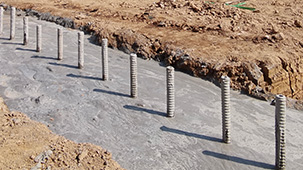
- Self-Drilling Micropiles vs Conventional Micropiles: Choosing the Right Foundation Solution
- Time:2026-07-16From:This Site
- Compare self-drilling micropiles and conventional micropiles, including installation methods, structural performance, advantages, and applications in geotechnical engineering.
- View details
-

- Sinorock Conducts 2026 Safety Month Activities to Enhance Workplace Safety Management
- Time:2026-07-17From:This Site
- Sinorock launched the 2026 Safety Month campaign with safety training, hazard inspections, and emergency drills to strengthen workplace safety and risk prevention.
- View details
-
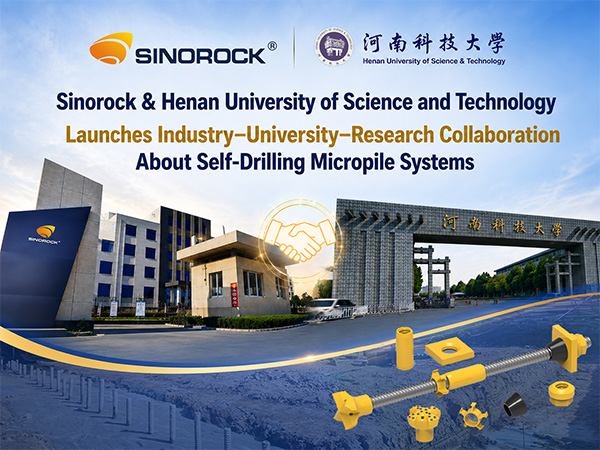
- Sinorock Launches Industry–University–Research Partnership with Henan University of Science and Technology on Self-Drilling Micropile Systems
- Time:2026-07-03From:This Site
- Sinorock has launched an industry–university–research partnership with Henan University of Science and Technology focusing on Self-Drilling Micropile Systems.
- View details
-

- CBAM Policy Interpretation: Sinorock Promotes the Low-Carbon Transformation of Self Drilling Rock Bolts
- Time:2026-06-25From:This Site
- CBAM policy interpretation for self drilling rock bolts, covering carbon footprint requirements, EU compliance rules, and Sinorock’s low-carbon manufacturing strategy.
- View details
-
- SINOROCK Invites You to Mining Week Kazakhstan 2026
- Time:2026-06-08From:This Site
- Meet SINOROCK at Mining Week Kazakhstan 2026, Booth 925. Discover advanced self-drilling anchor systems and ground support solutions for underground mining, fractured ground, fault zones, and challenging geological conditions.
- View details
-
- Sinorock Invites You to Visit Us at CONEXPO-CON/AGG
- Time:2026-02-14From:This Site
- Sinorock Invites You to Explore Proven Self-Drilling Anchor Bolt Solutions at CONEXPO-CON/AGG –S63341.South Hall 1st Level
- View details
-
- SINOROCK to Showcase Innovative Mining Solutions at Mining and Metals Central Asia 2025
- Time:2025-09-09From:This Site
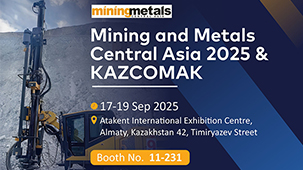
- We are pleased to share that SINOROCK will participate in the Mining and Metals Central Asia 2025, taking place from September 17 to 19 at the Atakent International Exhibition Centre in Almaty, Kazakhstan. You can find us at Booth 11-231.
- View details