Download

Self-Drilling Micropiles vs Conventional Micropiles: Choosing the Right Foundation Solution
Time:2026-07-16From:sinorock View:
Micropiles have become one of the most effective foundation solutions for projects involving difficult ground conditions, restricted access, or the strengthening of existing structures. They are widely used in bridge foundations, building underpinning, retaining walls, and infrastructure rehabilitation.
Among the available micropile technologies, self-drilling micropiles have gained increasing popularity because they combine drilling, grouting, and reinforcement into a single operation. Conventional micropiles, on the other hand, remain a proven solution
for many foundation projects.
Understanding the differences between these two systems is essential for selecting the most efficient and cost-effective solution.
1. What Are Conventional Micropiles?
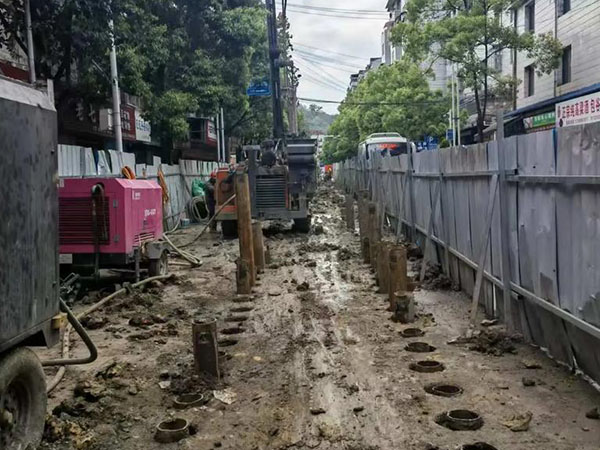
Conventional micropiles are drilled and grouted piles reinforced with steel bars, threaded bars, or steel tubes. Their primary function is to transfer structural loads to competent bearing strata through end bearing, skin friction, or a combination of both.
Because drilling and reinforcement are carried out separately, temporary casing is often required in loose or water-bearing formations to prevent borehole collapse. Conventional micropiles are suitable for many foundation applications where the ground remains relatively stable during drilling.
2. What Are Self-Drilling Micropiles?
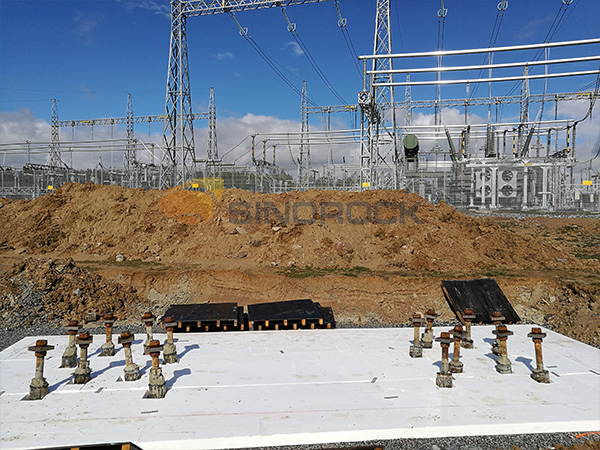
A self-drilling micropile uses a fully threaded hollow anchor bar that serves simultaneously as drill rod, reinforcement element, and the grout conduit.
Unlike conventional systems, grout is injected through the hollow anchor bar while drilling, creating a continuous grouted body around the reinforcement. This simultaneous drilling and grouting process eliminates the need to remove drill rods or install temporary casing in many ground conditions.
The grout not only bonds the bar to the surrounding soil but also improves borehole stability, protects the steel against corrosion, and increases the stiffness of the micropile by forming a larger grout body.
3. Self-Drilling Micropiles vs Conventional Micropiles: Key Differences
| Feature | Self-Drilling Micropiles | Conventional Micropiles |
| Installation | Simultaneous drilling and grouting | Separate drilling and grouting |
| Reinforcement | Hollow threaded bar | Steel bar or steel tube |
| Drill Rod Removal | Not required | Required |
| Temporary Casing | Usually unnecessary | Often required |
| Borehole Stability | Excellent | Depends on ground conditions |
| Construction Speed | High | Moderate |
| Equipment | Lightweight drilling rigs | Larger drilling equipment may be needed |
| Ground Adaptability | Excellent in weak formations | Better for stable formations |
4. Installation Process Comparison
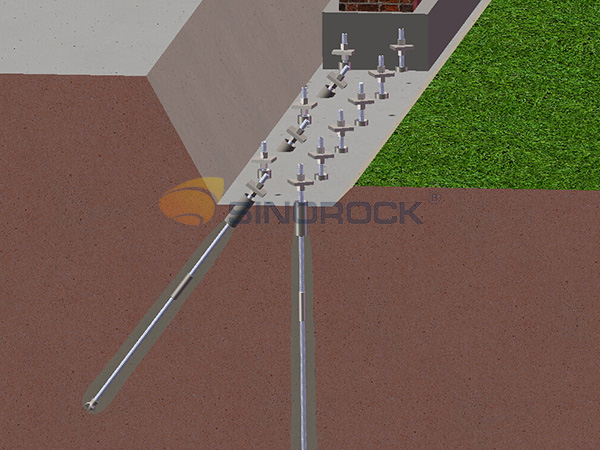
4.1 Conventional Micropiles
A conventional micropile requires multiple construction stages:
· Drill the borehole.
· Clean the hole
· Install the reinforcing steel
· Inject cement grout
· Wait for grout curing
Each stage introduces additional time and increases the risk of borehole collapse in unstable soils.
4.2 Self-Drilling Micropiles
Self-drilling micropiles simplify the installation into one continuous operation:
· Install the drill bit and hollow anchor bar.
· Drill while pumping cement grout through the hollow core.
· Extend the bar using couplers when necessary.
· Complete drilling and grouting simultaneously.
· Install the pile head connection.
Because grout acts as the flushing medium and stabilizes the borehole during drilling, this method is especially suitable for loose soil, fractured rock, and water-bearing formations.
5. Performance in Challenging Ground Conditions
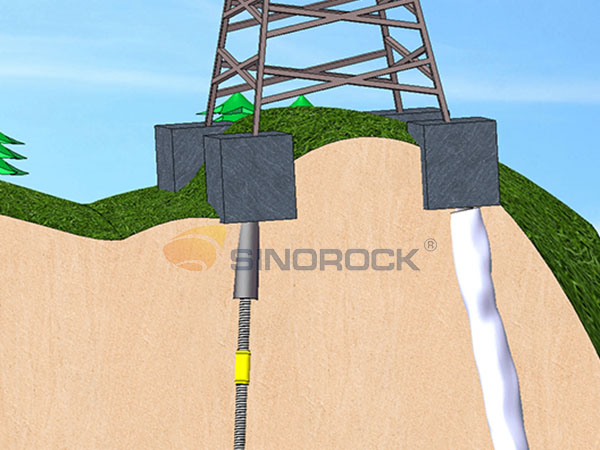
One of the biggest differences between the two systems is their adaptability to difficult geology.
Conventional micropiles may encounter problems such as borehole collapse, loss of drilling fluid, difficulty inserting reinforcement, and delays caused by casing installation.
Self-drilling micropiles overcome these issues by continuously injecting grout during drilling. The grout stabilizes the borehole while simultaneously creating a strong mechanical bond between the grout body and surrounding ground. Once loaded, only a few millimeters of pile head displacement are required to mobilize the skin friction along the grout-soil interface.
This makes self-drilling systems particularly effective in loose sand, soft clay, gravel, collapsible soils, highly fractured rock and water-bearing formations.
6. Advantages of Self-Drilling Micropiles
Compared with conventional micropiles, self-drilling systems provide several significant benefits.
6.1 Faster Construction
Drilling, reinforcement, and grouting are completed in one operation, greatly reducing installation time.
6.2 No Temporary Casing
The continuously injected grout stabilizes the borehole, eliminating temporary casing in many applications.
6.3 Higher Construction Efficiency
Fewer installation steps reduce labor requirements and minimize downtime.
6.4 Excellent Ground Adaptability
The system performs well in unstable, weak, or collapsing ground where conventional drilling becomes difficult.
6.5 Reduced Environmental Impact
Self-drilling micropiles generate low vibration, minimal noise, and limited spoil, making them ideal for urban construction and rehabilitation projects.
7. When Conventional Micropiles Are Still the Better Choice
Although self-drilling micropiles offer many advantages, conventional micropiles remain a suitable solution for certain projects.
They are commonly selected when ground conditions are stable, large-diameter boreholes are required, existing equipment is optimized for conventional drilling, and construction speed is not the primary concern.
For straightforward foundation projects in competent soils, conventional micropiles can still provide excellent performance.
8. Which Micropile System Should You Choose?
.jpg)
The choice depends on several project factors.
Choose self-drilling micropiles if your project involves:
· Weak or unstable ground
· Water-bearing formations
· Restricted access
· Tight construction schedules
· Existing building underpinning
Choose conventional micropiles if:
· The geology is stable.
· Large-diameter foundations are required.
· Conventional drilling equipment is already available.
· Project timelines are less demanding.
9. Conclusion
Both self-drilling micropiles and conventional micropiles are proven deep foundation solutions capable of providing high load capacity and long-term structural performance.
However, for projects involving unstable soils, restricted working space, or demanding construction schedules, self-drilling micropiles offer clear advantages through simultaneous drilling and grouting, elimination of temporary casing, and improved installation efficiency.
By selecting the micropile system that best matches site conditions and project requirements, engineers can improve construction efficiency, reduce project risks, and achieve more reliable long-term foundation performance.
latest news
-
- Self-Drilling Micropiles vs Conventional Micropiles: Choosing the Right Foundation Solution
- Time:2026-07-16From:This Site
- Compare self-drilling micropiles and conventional micropiles, including installation methods, structural performance, advantages, and applications in geotechnical engineering.
- View details
-
- Application of Self-Drilling Anchor Bolts in Bridge Reinforcement
- Time:2026-06-29From:This Site
- Discover how Self-Drilling Anchor Bolts (SDA) revolutionize bridge reinforcement projects. Learn about SDA applications in foundation strengthening, slope stabilization, seismic retrofitting, and construction processes.
- View details
-
- R Thread vs T Thread Self-Drilling Anchor Bolts: Design, Load Capacity and Applications
- Time:2026-06-13From:This Site
- Compare R-thread and T-thread self-drilling anchor bolts in terms of design, load capacity, performance, applications, and project selection criteria.
- View details
-
- Sinorock Launches Industry–University–Research Partnership with Henan University of Science and Technology on Self-Drilling Micropile Systems
- Time:2026-07-03From:This Site
- Sinorock has launched an industry–university–research partnership with Henan University of Science and Technology focusing on Self-Drilling Micropile Systems.
- View details
-

- CBAM Policy Interpretation: Sinorock Promotes the Low-Carbon Transformation of Self Drilling Rock Bolts
- Time:2026-06-25From:This Site
- CBAM policy interpretation for self drilling rock bolts, covering carbon footprint requirements, EU compliance rules, and Sinorock’s low-carbon manufacturing strategy.
- View details
-
- Sinorock 2025 Quality Month | Strengthening Quality Foundations, Empowering Product Excellence
- Time:2025-08-13From:This Site
- Sinorock’s 2025 Quality Month, themed “Strengthening Quality Foundations, Empowering Product Excellence,” successfully concluded, reinforcing our commitment to superior product quality.
- View details
-
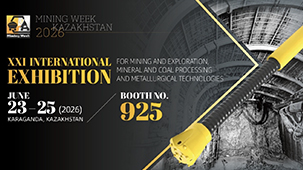
- SINOROCK Invites You to Mining Week Kazakhstan 2026
- Time:2026-06-08From:This Site
- Meet SINOROCK at Mining Week Kazakhstan 2026, Booth 925. Discover advanced self-drilling anchor systems and ground support solutions for underground mining, fractured ground, fault zones, and challenging geological conditions.
- View details
-
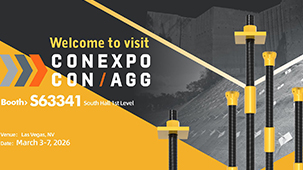
- Sinorock Invites You to Visit Us at CONEXPO-CON/AGG
- Time:2026-02-14From:This Site
- Sinorock Invites You to Explore Proven Self-Drilling Anchor Bolt Solutions at CONEXPO-CON/AGG –S63341.South Hall 1st Level
- View details
-
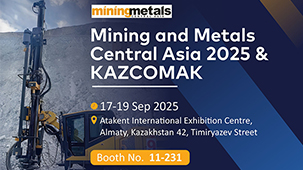
- SINOROCK to Showcase Innovative Mining Solutions at Mining and Metals Central Asia 2025
- Time:2025-09-09From:This Site
- We are pleased to share that SINOROCK will participate in the Mining and Metals Central Asia 2025, taking place from September 17 to 19 at the Atakent International Exhibition Centre in Almaty, Kazakhstan. You can find us at Booth 11-231.
- View details