Download

Types of Soil Nails and Engineering Applications
Time:2026-03-07From:sinorock View:
Soil nailing is a widely used geotechnical engineering technique for reinforcing slopes, deep excavations, and underground structures. With rapid urban development and increasing underground space utilization, soil nails have become essential in ensuring stability and safety. This article explores the main applications of soil nails, their characteristics, suitable materials, and how self-drilling anchors enhance their performance.
1. Soil Nail Walls for Slope Reinforcement
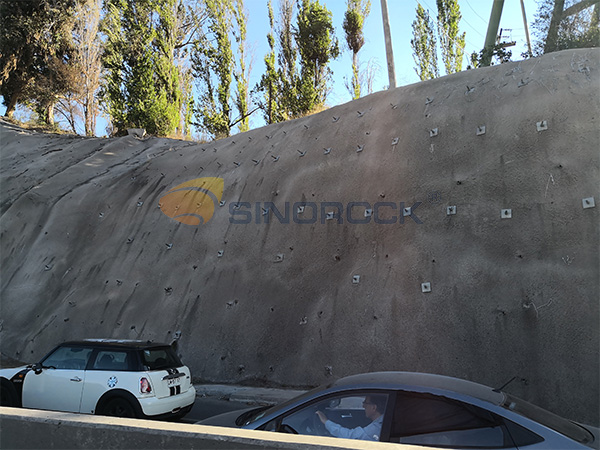
Soil nail walls are one of the most common soil nail applications, ideal for weak soil layers, urban excavations, and unstable slopes. The construction process involves drilling steel or prestressed bars into the soil and covering the surface with shotcrete or mesh-reinforced concrete. Soil nail walls improve slope stability, reduce landslide risks, and offer rapid construction with minimal environmental impact.
Key Features:
High load-bearing capacity and effective slope displacement control
Suitable for urban excavations, road slopes, and underground corridors
Can be integrated with drainage systems for better soil water management
Common Materials:
Hot-rolled steel bars (HRB400/500)
Prestressed steel bars or threaded rods
Fiber Reinforced Polymer (FRP) for corrosion resistance
Reinforced concrete for wall integration
Self-Drilling Anchor Benefits:
Self-drilling anchors allow simultaneous drilling and grouting, improving construction efficiency while minimizing soil disturbance. Their high tensile capacity enhances wall stability, ensuring safe and durable reinforcement for weak soils and uneven slopes.
Typical Use Cases:
Soft or loose soil slopes
Deep urban excavations
Heterogeneous rock-soil structures
2. Soil Nail Anchors for Localized Support
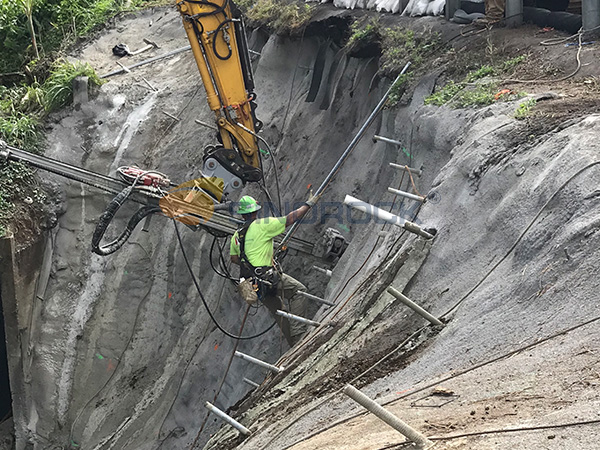
Soil nail anchors increase local soil bearing capacity and prevent soil mass sliding. By embedding steel bars or threaded rods and applying prestress, these anchors strengthen the soil structure. This solution is particularly effective in complex rock-soil formations and deep soft soil conditions.
Key Features:
Adjustable prestress for active soil support
Integrates closely with soil for overall slope stability
Ideal for mountain slopes, underground tunnels, and deep excavation support
Common Materials:
High-strength threaded steel (Grade 500/550)
Prestressed steel bars
Galvanized or epoxy-coated steel for corrosive environments
FRP prestressed soil nails
Self-Drilling Anchor Benefits:
Self-drilling anchors simplify soil nail anchor installation by combining drilling and anchoring in a single step. They reduce construction time, allow installation in complex geology, and increase soil bearing capacity and slope stability, making deep excavations and rock-soil slopes safer and more efficient.
Typical Use Cases:
Deep soft soils
Complex rock-soil slopes
Tunnel or underground garage excavation support
3. Passive Soil Nails for Temporary Restraint
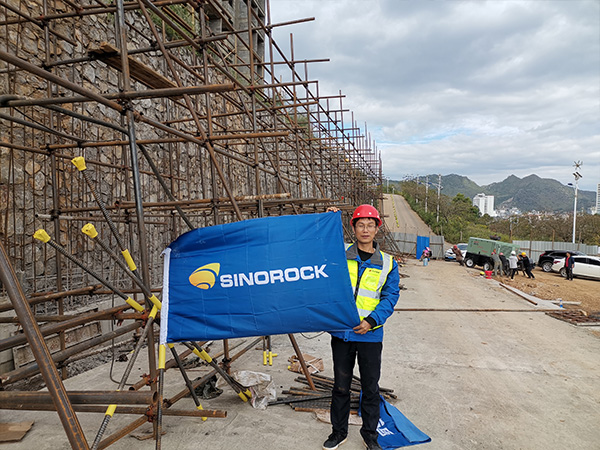
Passive soil nails act as internal reinforcement, providing restraint when soil is subjected to external forces. Stress is transferred via friction between the soil nail and the surrounding soil. Passive nails are typically used for temporary or localized slope reinforcement, especially for cracked or loose soil conditions.
Key Features:
Suitable for locally unstable soils
Simple installation with limited support capacity
Often combined with active nails for enhanced safety
Common Materials:
Hot-rolled steel bars (HRB400/500)
Plain round bars
FRP soil nails
Steel cables or threaded rods for temporary support
Self-Drilling Anchor Benefits:
Self-drilling anchors provide stable restraint, transmitting stress and limiting soil movement during external forces. Their one-step drilling and grouting allows rapid, flexible installation, ideal for temporary reinforcement of localized unstable slopes.
Typical Use Cases:
Temporary or localized slope reinforcement
Cracked slopes or loose soil
Combined with active anchors to improve safety
4. Soil Nail Bearing Plates for HighLoad Applications
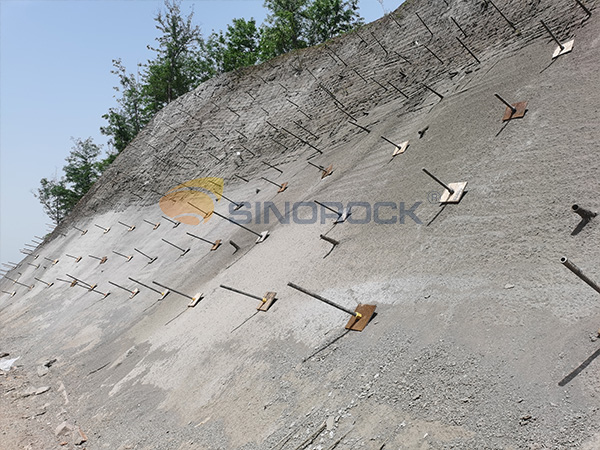
In deep excavations or large-scale slope support, the end of a soil nail may connect to a steel bearing plate to distribute loads and increase soil bearing capacity. Bearing plates prevent localized soil failure and efficiently transfer tensile forces from the nail to the soil.
Key Features:
Increases soil nail bearing area
Ideal for deep nails or high-load scenarios
Can integrate with shotcrete for a complete support system
Self-Drilling Anchor Benefits:
When combined with bearing plates, self-drilling anchors distribute loads effectively, ensuring stress transfer even under high loads. The integrated drilling and anchoring process allows rapid installation of deep nails, improving safety and reliability in major urban infrastructure projects.
Typical Use Cases:
High-load or deep support projects
Combined with steel plates for integrated anchoring
Urban deep excavations and large infrastructure support
5. Specialized Soil Nail Types
Recent construction advancements have produced specialized soil nail designs, including:
Reinforced Concrete Soil Nails: High-strength, fully cast in concrete for durability
FRP Soil Nails: Lightweight and corrosion-resistant, ideal for wet or acidic soils
Prestressed Soil Nails: Applied prestress actively enhances soil strength
6. Advantages of Soil Nailing
Ease of Construction: Works in confined spaces without large-scale supports
Cost-Effective: Low material cost and fast construction, ideal for urban projects
Environmentally Friendly: Minimal impact on surrounding buildings and traffic
Flexible: Multiple forms suited for soil type, slope height, and support needs
Conclusion
Soil nailing is an indispensable method in modern slope stabilization, excavation support, and underground construction due to its efficiency, safety, and flexibility. Choosing the right soil nail type according to geotechnical conditions enhances stability and project safety. With innovative materials and advanced construction techniques, soil nail applications continue to diversify, offering optimal solutions for engineering projects worldwide.
latest news
-
- Mine Support and Stabilization Technology: Self-Drilling Anchor Bolt Systems
- Time:2026-04-23From:This Site
- Professional mine support solutions integrating drilling, pipe roof processes, and self-drilling anchors to ensure stable, safe, and efficient operations for both underground and open-pit mines.
- View details
-
- Self-Drilling Anchor Bolt Systems in Railway Tunnels: Applications and Standards
- Time:2026-04-21From:This Site
- Explore the applications and international standards of self-drilling anchor bolt systems in railway tunnels. Learn how they enhance slope, tunnel, and bridge stability for safer railway infrastructure.
- View details
-
- Self-Drilling Anchor Bolts for Micropiles: Complete Geotechnical Engineering Guide
- Time:2026-04-18From:This Site
- Explore the benefits of SDA bolt micropiles for constrained construction sites, complex geology, and rapid installation. Case studies and practical guidelines included.
- View details
-
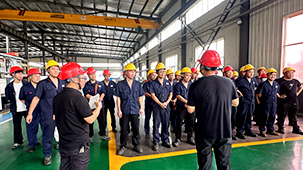
- Sinorock 2025 Quality Month | Strengthening Quality Foundations, Empowering Product Excellence
- Time:2025-08-13From:This Site
- Sinorock’s 2025 Quality Month, themed “Strengthening Quality Foundations, Empowering Product Excellence,” successfully concluded, reinforcing our commitment to superior product quality.
- View details
-
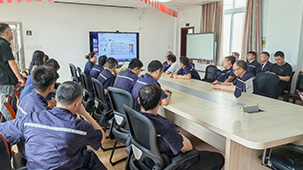
- Sinorock Safety Month 2025 | Everyone Speaks Safety, Everyone Can Respond
- Time:2025-07-03From:This Site
- Sinorock Safety Month 2025, centered on the theme "Everyone Speaks Safety, Everyone Can Respond - Spot Workplace Hazards," has wrapped up successfully!
- View details
-
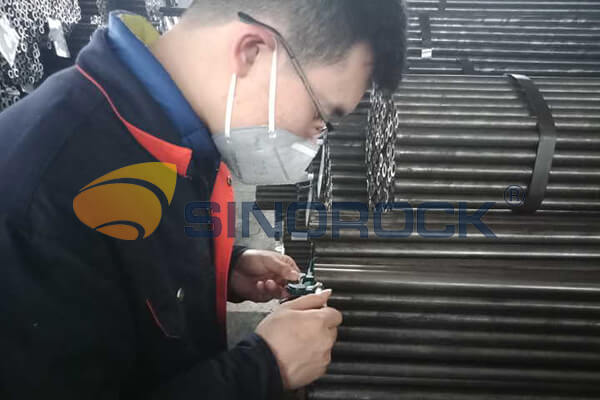
- Quality Control: the Vital Factor of A SDA Bolt Factory
- Time:2025-01-09From:This Site
- Sinorock’s comprehensive quality control system, from supplier management to outgoing inspections, ensuring the highest standards for self-drilling anchor bolts in construction.
- View details
-
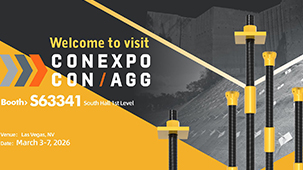
- Sinorock Invites You to Visit Us at CONEXPO-CON/AGG
- Time:2026-02-14From:This Site
- Sinorock Invites You to Explore Proven Self-Drilling Anchor Bolt Solutions at CONEXPO-CON/AGG –S63341.South Hall 1st Level
- View details
-
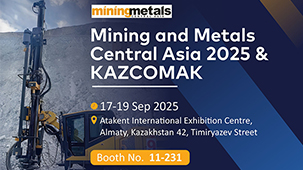
- SINOROCK to Showcase Innovative Mining Solutions at Mining and Metals Central Asia 2025
- Time:2025-09-09From:This Site
- We are pleased to share that SINOROCK will participate in the Mining and Metals Central Asia 2025, taking place from September 17 to 19 at the Atakent International Exhibition Centre in Almaty, Kazakhstan. You can find us at Booth 11-231.
- View details
-
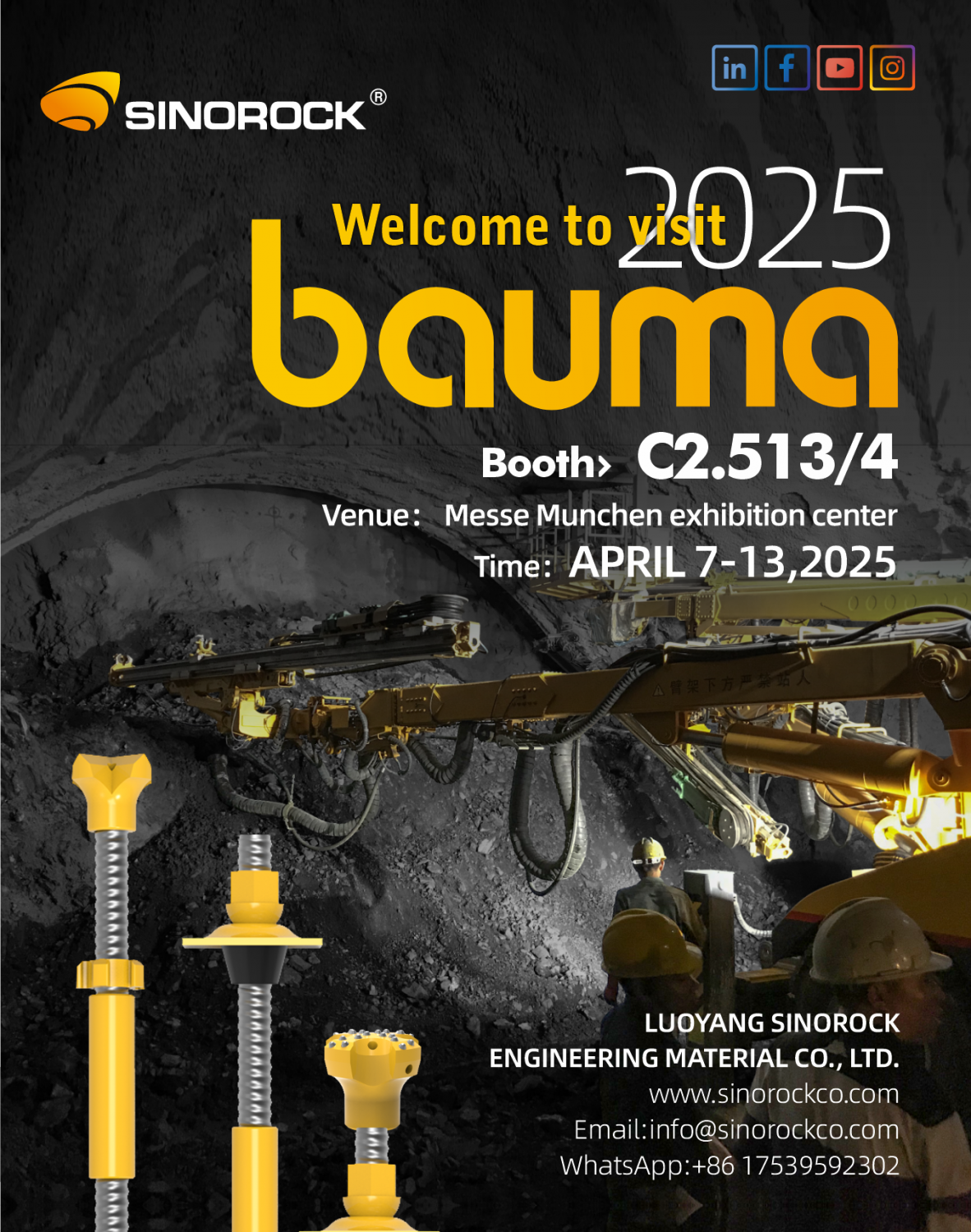
- Sinorock Invites You to Explore Proven Self-Drilling Anchor Bolt Solutions at bauma 2025
- Time:2025-03-07From:This Site
- From April 7–13, 2025, explore Sinorock’s Self-drilling anchor bolt solution at Booth C2.513/4 in Hall C2 of the Messe München Exhibition Center (Munich, Germany).
- View details