Download

Self-Drilling Anchor Bolts for Micropiles: Complete Geotechnical Engineering Guide
Time:2026-04-18From:sinorock View:
Self-drilling anchor bolts (SDA bolts) integrated with micropiles combine drilling, grouting, and anchoring in a single operation, representing a significant technological solution in geotechnical engineering. This method allows drilling and anchoring to be completed in a single step, making it particularly suitable for complex geological conditions and constrained construction sites where conventional techniques may struggle.
1. Applicability of Self-Drilling Anchor Bolt Micropiles
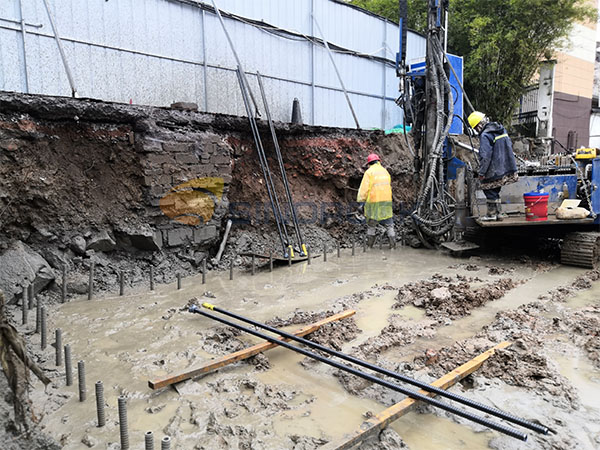
Self-drilling anchor bolt micropiles are not universally applicable but provide unique technical advantages in the following scenarios:
a) Complex Geological Conditions
Complex geology is one of the primary challenges in conventional micropile construction. Traditional methods, involving pre-drilling and subsequent installation of a reinforcement cage, are prone to collapse or reduced bore diameter. SDA bolts’ simultaneous drilling and grouting process enables their application across a variety of challenging soils:
· Fragmented rock, weak interlayers, and collapsible soils: Conventional anchor bolts are prone to hole collapse and anchorage failure in such strata. SDA bolts inject grout during drilling, filling voids and stabilizing the borehole walls, preventing collapse and enabling long anchors where traditional methods fail.
· Sandy gravel, heterogeneous fill, and coarse gravel: These irregular and abrasive soils challenge conventional drilling. High-strength, thick-walled steel tubes allow direct penetration, while pressurized grout from the drill head stabilizes loose soil and forms an irregular, larger-than-drill-diameter anchor for improved bonding.
· Soft clays, silty clays, and fine sands: Low-strength soils often collapse post-drilling. SDA bolts penetrate these layers without specialized hard alloy drill bits and without requiring a sleeve or sealing bag, achieving effective anchorage without plastic flow or loss of fine-grained soils.
· Weathered rock and fill layers: Highly fractured, loose materials are difficult to drill using conventional methods. SDA bolts excel in fractured zones, weathered rock, and mixed fill layers, solving borehole formation challenges.
b) Constrained Construction Sites
Site limitations may prevent the use of large piling rigs. SDA bolts, with compact and flexible equipment, offer a viable solution:
· Urban areas or historic sites: Limited access and fragile surroundings make conventional rigs impractical. SDA bolts use small rotary-percussion units, minimizing disturbance and vibration, making them ideal for heritage restoration or retrofitting.
· Sensitive central urban zones: Low-noise, low-vibration drilling ensures minimal impact on surrounding buildings, critical in city centers or near infrastructure.
· Mountainous or steep slopes: SDA bolts require small work platforms, and modular extensions allow installation of long anchors in confined spaces.
c) High Efficiency Requirements
Projects requiring rapid support formation benefit from SDA bolts:
· Emergency or repair works: Time-sensitive operations demand fast installation. One-step SDA bolt micropiles significantly shorten construction timelines, often achieving 5× the efficiency of traditional reinforcement anchors.
· Critical nodes in linear infrastructure: Highway and railway projects often have constrained schedule nodes. SDA bolts allow rapid micropile installation, substantially reducing overall project duration.
· Deep excavations with strict deformation control: Continuous grouting during drilling reduces soil loss and surface settlement, effectively transmitting loads to competent strata while minimizing local stress and horizontal displacement.
2. Core Advantages of Self-Drilling Anchor Bolt Micropiles
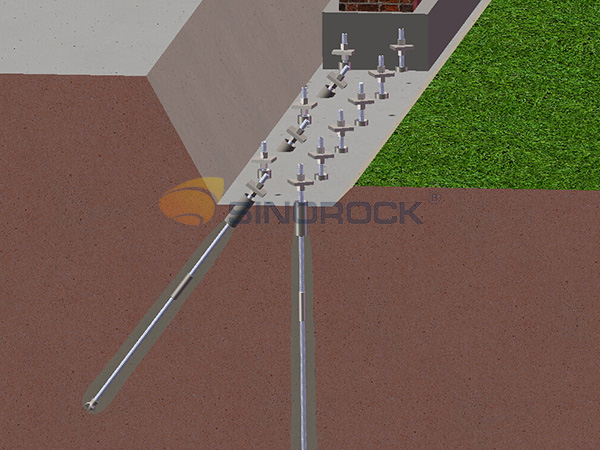
· Integrated construction and high efficiency: Drilling, grouting, and anchoring are combined in one operation. No pre-drilling or temporary casing is required. Field studies show installation efficiency increases by 4–5× compared to traditional methods.
· Strong geological adaptability: SDA bolt micropiles perform well in soft soils, gravel, and fractured rock, overcoming challenges that conventional micropiles cannot. Drill diameters range 40–400 mm, and depths 3–40 m, with rod diameters of 25–200 mm for flexible selection.
· Minimal environmental impact: Low-noise, low-vibration operation makes SDA bolts suitable for sensitive sites, including urban centers, historic districts, and nuclear facilities. Smaller diameters reduce land occupation and environmental footprint.
· High load capacity and anchorage quality: Working loads from 110 kN to 3660 kN are achievable. Pressurized grout creates an irregular, dense anchor body larger than the drill diameter, improving friction and overall stability. Actual boreholes can exceed drill diameter by 20–70 mm, depending on soil type.
· Flexible construction and cost-effectiveness: Compact equipment allows use in confined areas. Although material costs may be higher than conventional steel, reduced construction time, lower equipment investment, and minimized risk lead to significant overall savings.
3. Selection Guidelines
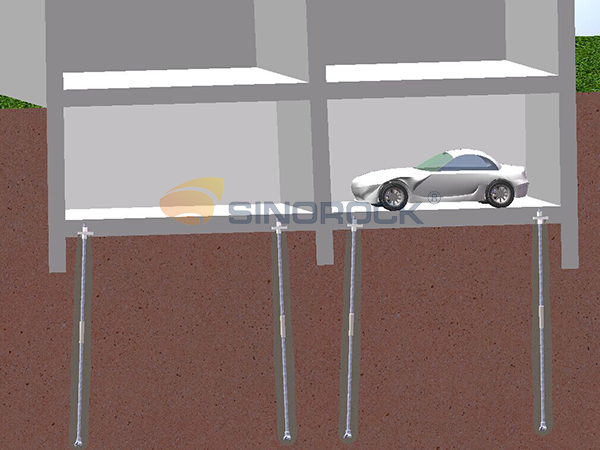
· Hollow bar diameter: 25–51 mm for moderate loads; 52–73 mm for medium-high loads; 76–103 mm+ for heavy-duty applications.
· Length and depth: Typically 1–10 m rods, borehole depths 3–40 m, extendable with couplers for long anchors.
· Grouting: Cement slurry, water-cement ratio 0.45–0.55. pressure ≤1.0 MPa, preferably injected during drilling.
· Drill bit selection: Cross-type for hard rock, ball-tooth for medium-hard strata, alloy bits for soft or loose soils.
· Corrosion protection: Hot-dip galvanizing, epoxy coatings, or GFRP rods in corrosive environments. Full grout coverage ensures durability.
4. Representative Case Study: Huangshan School Micropile Project, Anhui Province
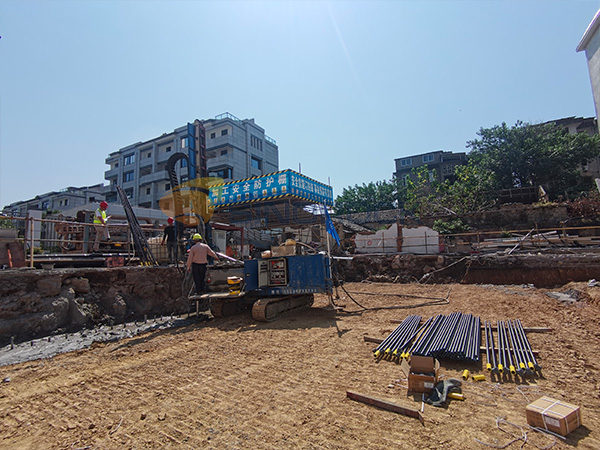
a) Project Background
This project involved the excavation support for a school expansion in the core urban area of Huangshan City. The site is surrounded by the school campus and residential buildings, imposing strict requirements on construction noise, vibration, and site occupation. The confined site prevented the use of large-scale equipment.
b) Geological Conditions
· Mixed fill: loose, containing construction debris and stones, poor mechanical properties.
· Silty clay: plastic, containing minor iron and manganese nodules.
· Rounded gravel: medium density, gravel content approximately 55%.
· Highly weathered fine sandstone: fractured, extremely soft rock.
· Moderately weathered fine sandstone: relatively intact, soft rock.
The silty clay and rounded gravel layers were prone to collapse after drilling, presenting the main construction challenge.
c) Challenges
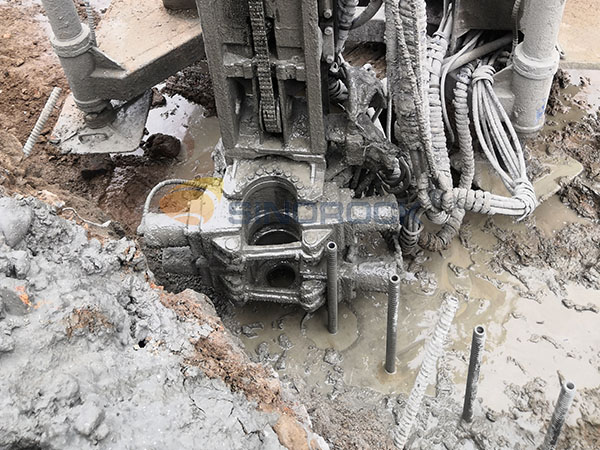
Using conventional pre-drill and grouting methods risked borehole collapse when removing the drill rod, making subsequent anchor insertion difficult or impossible, which could severely affect construction quality and schedule. The casing-following method, while safer, would significantly increase cost and reduce efficiency.
d) Solution
The design team opted for self-drilling hollow grout anchor bolts. These anchors integrate the drill rod, grout pipe, and anchor bolt into a system. Grouting occurs simultaneously with drilling, completing the anchor installation in one step without removing the drill rod or using casing.
e) Implementation Results
The project successfully overcame borehole collapse and stuck-drill issues. Compared with conventional reinforced anchors, the integrated drill-and-grout process eliminated multiple steps (pre-drilling, drill rod removal, anchor insertion), increasing construction efficiency by over 3×. Fast drilling and effective installation provided rapid support, allowing subsequent structural work to proceed on schedule. Meanwhile, low-noise and low-vibration operations ensured minimal disturbance to the surrounding school and residential areas. This project demonstrates the practical applicability and general reference value of SDA bolts in similar excavation support projects.
5. Conclusion
Self-drilling anchor bolts in micropile applications represent a major advancement in geotechnical engineering. By integrating drilling, grouting, and anchoring into a system, they overcome the limitations of conventional micropiles under complex geology, constrained sites, and tight schedules. With careful selection of rod diameter, length, grouting parameters, and drill heads, SDA bolts provide safe, efficient, and environmentally friendly solutions for a wide range of challenging projects worldwide.
latest news
-
- Mine Support and Stabilization Technology: Self-Drilling Anchor Bolt Systems
- Time:2026-04-23From:This Site
- Professional mine support solutions integrating drilling, pipe roof processes, and self-drilling anchors to ensure stable, safe, and efficient operations for both underground and open-pit mines.
- View details
-
- Self-Drilling Anchor Bolt Systems in Railway Tunnels: Applications and Standards
- Time:2026-04-21From:This Site
- Explore the applications and international standards of self-drilling anchor bolt systems in railway tunnels. Learn how they enhance slope, tunnel, and bridge stability for safer railway infrastructure.
- View details
-
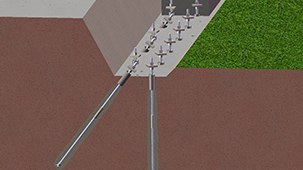
- Self-Drilling Anchor Bolts for Micropiles: Complete Geotechnical Engineering Guide
- Time:2026-04-18From:This Site
- Explore the benefits of SDA bolt micropiles for constrained construction sites, complex geology, and rapid installation. Case studies and practical guidelines included.
- View details
-
- Sinorock 2025 Quality Month | Strengthening Quality Foundations, Empowering Product Excellence
- Time:2025-08-13From:This Site
- Sinorock’s 2025 Quality Month, themed “Strengthening Quality Foundations, Empowering Product Excellence,” successfully concluded, reinforcing our commitment to superior product quality.
- View details
-
- Sinorock Safety Month 2025 | Everyone Speaks Safety, Everyone Can Respond
- Time:2025-07-03From:This Site
- Sinorock Safety Month 2025, centered on the theme "Everyone Speaks Safety, Everyone Can Respond - Spot Workplace Hazards," has wrapped up successfully!
- View details
-
- Quality Control: the Vital Factor of A SDA Bolt Factory
- Time:2025-01-09From:This Site
- Sinorock’s comprehensive quality control system, from supplier management to outgoing inspections, ensuring the highest standards for self-drilling anchor bolts in construction.
- View details
-
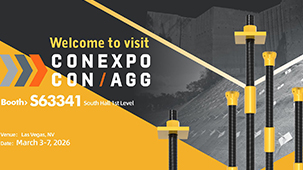
- Sinorock Invites You to Visit Us at CONEXPO-CON/AGG
- Time:2026-02-14From:This Site
- Sinorock Invites You to Explore Proven Self-Drilling Anchor Bolt Solutions at CONEXPO-CON/AGG –S63341.South Hall 1st Level
- View details
-
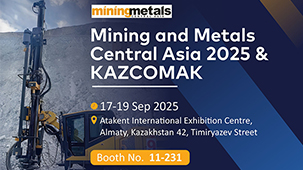
- SINOROCK to Showcase Innovative Mining Solutions at Mining and Metals Central Asia 2025
- Time:2025-09-09From:This Site
- We are pleased to share that SINOROCK will participate in the Mining and Metals Central Asia 2025, taking place from September 17 to 19 at the Atakent International Exhibition Centre in Almaty, Kazakhstan. You can find us at Booth 11-231.
- View details
-
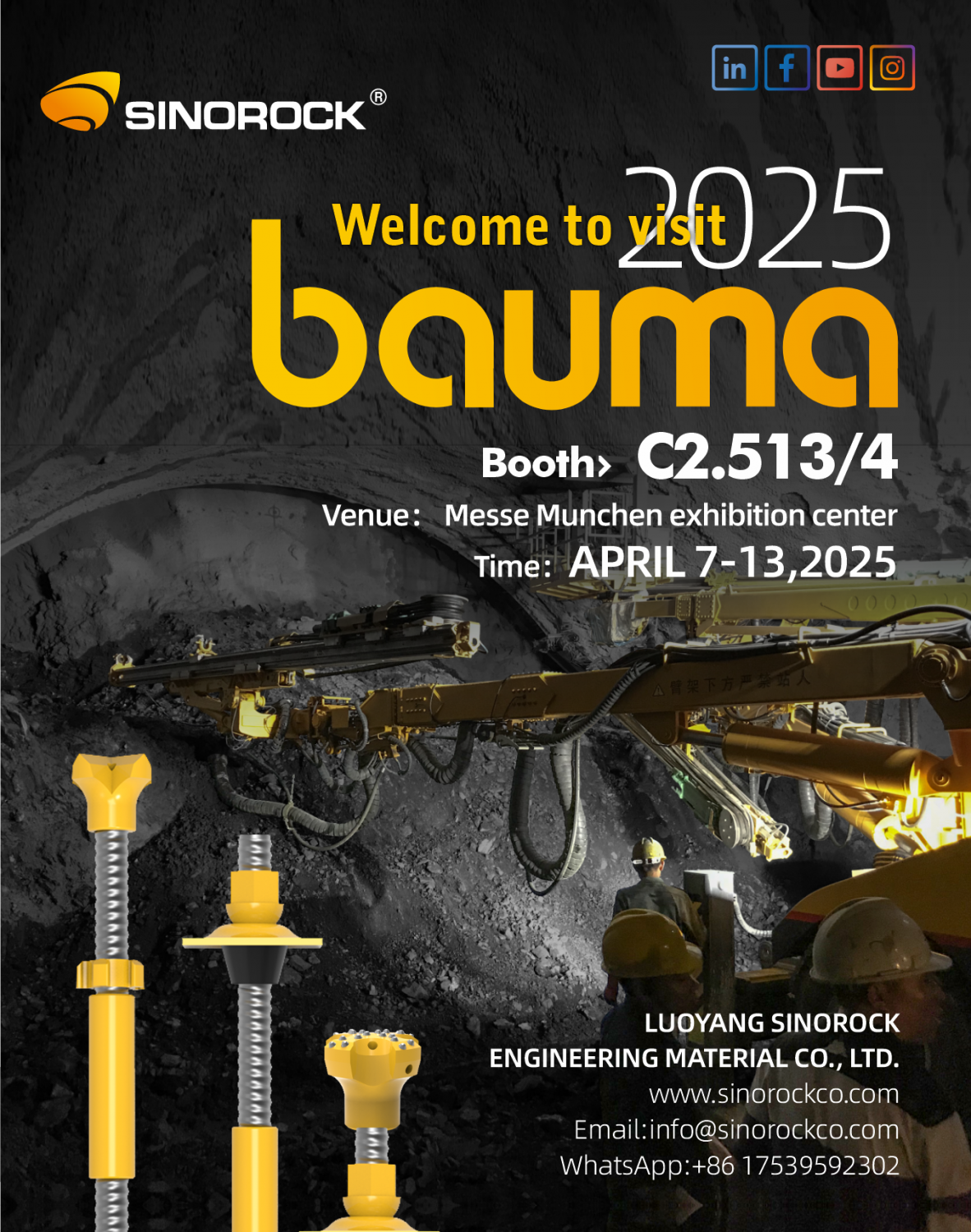
- Sinorock Invites You to Explore Proven Self-Drilling Anchor Bolt Solutions at bauma 2025
- Time:2025-03-07From:This Site
- From April 7–13, 2025, explore Sinorock’s Self-drilling anchor bolt solution at Booth C2.513/4 in Hall C2 of the Messe München Exhibition Center (Munich, Germany).
- View details