Download


How to Choose Rock Bolts: A Technical Guide for Ground Support
Time:2026-11-28From:sinorock View:
Choosing the right rock bolt is a critical part of underground ground support design. The selection process should consider rock mass conditions, geological discontinuities, support requirements, installation methods, loading conditions, corrosion exposure, and long-term performance. A rock bolt that performs well in one geological environment may not provide the same level of support in another.
For rock engineering applications, rock bolt selection should be based on the interaction between the support system and the surrounding rock mass rather than on bolt diameter or tensile strength alone.
This guide explains how to select rock bolts, covering different rock bolt types, design considerations, mechanical properties, installation requirements, and field verification.
1. Understand the Ground Conditions
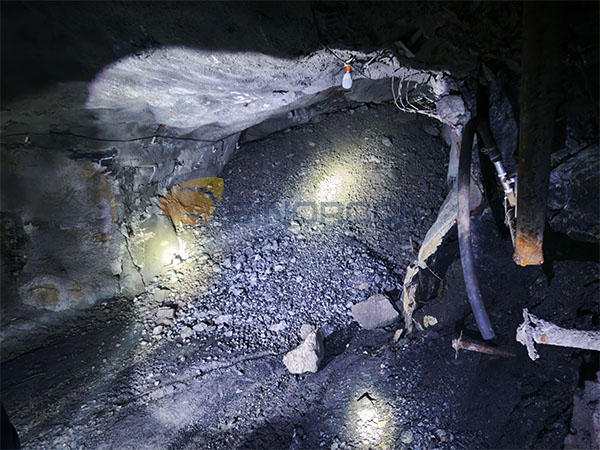
The first step in rock bolt selection is to understand the geological and geotechnical conditions of the project.
Rock mass behavior is influenced by factors such as rock strength, joint orientation, discontinuity spacing, groundwater conditions, stress distribution, and excavation geometry. These factors determine the potential failure mechanisms and the type of reinforcement required.
Rock Mass Classification and Geological Investigation
Geotechnical investigations typically include:
Rock type and lithology
Rock mass strength and deformation characteristics
Joint, bedding, and fracture orientation
Discontinuity spacing and persistence
Groundwater conditions
In-situ stress conditions
Excavation dimensions and geometry
Potential rockfall, wedge failure, or deformation mechanisms
Rock mass classification systems such as RMR (Rock Mass Rating), Q-system, and GSI (Geological Strength Index) can help engineers characterize ground conditions and establish preliminary support requirements.
Identify the Potential Failure Mechanism
Different ground conditions require different support strategies.
| Ground condition | Potential failure mechanism | Typical support objective |
|---|---|---|
| Jointed rock mass | Rock block movement or wedge failure | Restrain and stabilize discrete rock blocks |
| Fractured rock | Progressive loosening and rockfall | Reinforce the fractured zone and improve confinement |
| Weak rock | Deformation, yielding, or local collapse | Provide reinforcement and maintain excavation stability |
| Highly weathered rock | Surface deterioration and shallow instability | Stabilize the near-surface rock mass |
| High-stress rock | Stress-induced cracking or rockburst-related damage | Improve reinforcement and energy absorption where required |
| Water-bearing rock | Reduced bond performance or corrosion exposure | Maintain anchorage performance and durability |
Understanding the failure mechanism is more important than simply choosing a bolt with a higher tensile capacity.
2. Support Mechanisms of Different Rock Bolts
Rock bolts work by reinforcing the surrounding rock mass, restraining movement, transferring loads, or improving the stability of potentially unstable rock blocks. The appropriate support mechanism depends on the geological conditions and engineering objectives.
Fully Grouted Rock Bolts
Fully grouted rock bolts are commonly used in underground mining and tunneling to reinforce fractured rock masses. They are commonly used where the rock mass requires distributed reinforcement rather than support of a single isolated block.
The grout transfers load between the bolt and the surrounding rock, helping improve the stability of the reinforced zone. Depending on the design, fully grouted bolts may reinforce bond resistance, confinement, and interaction with the surrounding rock.
Mechanically Anchored Rock Bolts
Mechanically anchored bolts develop anchorage through mechanical components, such as expansion shells, that engage the surrounding rock. These systems may provide relatively immediate anchorage and are often used in applications where installation requirements or rock conditions favor mechanical anchoring.
Their performance depends on the quality of the surrounding rock, anchorage location, installation procedure, and the mechanical anchor design.
Resin-Anchored Rock Bolts
Resin-anchored rock bolts use resin cartridges or resin-based anchoring materials to establish a bond between the bolt and the borehole. The selection of resin type, installation procedure, mixing quality, and curing conditions must be considered when evaluating their performance.
Resin systems can provide rapid installation and anchorage development, making them suitable for certain mining and tunneling applications.
Self-Drilling Rock Bolts
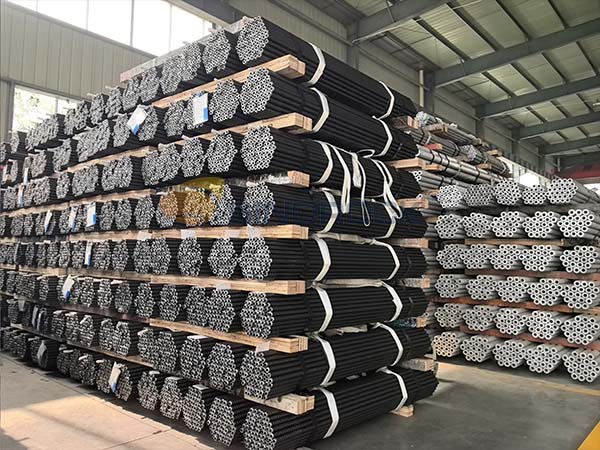
Self-drilling rock bolts are particularly useful in fractured, loose, collapsing, or difficult-to-drill ground. They are commonly considered for underground mining, tunnel reinforcement, rock stabilization, and ground support in fractured formations.
The hollow bar functions as both a drilling component and a reinforcement element. Grout can be injected through the hollow bar during or after drilling, depending on the installation method and project requirements.
Self-drilling systems can reduce the need for separate drilling and bolt insertion operations and help maintain borehole stability in difficult ground.
3. Selection of Rock Bolt Types
Rock bolt selection should match the support mechanism, geological conditions, and installation requirements.
| Rock bolt type | Main anchorage mechanism | Typical applications |
|---|---|---|
| Fully grouted rebar bolt | Grout bond along the bolt | General rock reinforcement |
| Mechanically anchored bolt | Mechanical anchorage at the borehole | Local rock stabilization and specific mining applications |
| Resin-anchored bolt | Resin bond and anchorage | Mining and tunneling requiring rapid installation |
| Friction bolt | Frictional interaction with borehole walls | Temporary or specific ground support applications |
| Cable bolt | Long-range reinforcement and anchorage | Large excavations, deep reinforcement, and heavy ground support |
| Self-drilling rock bolt | Grouted hollow bar with drilling capability | Fractured, loose, unstable, or difficult ground |
The categories above are not interchangeable. Engineers should compare load-transfer mechanisms, installation requirements, design assumptions, and expected performance under actual ground conditions.
4. Determine Rock Bolt Length and Anchorage Depth
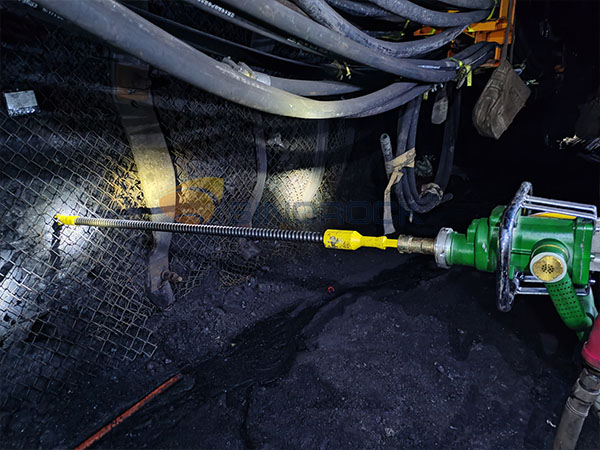
Rock bolt length is determined by the geometry of the unstable rock mass and the required anchorage within competent ground.
The rock bolt that is too short may fail to extend beyond the potential failure zone. If it is too long, it may increase installation time, material consumption, and drilling costs without providing proportional engineering benefits.
For block stabilization, bolts should be positioned and oriented to restrain the potential movement of unstable blocks.
For fractured rock reinforcement, rock bolt length should be sufficient to reinforce the affected zone and develop anchorage beyond the region of significant instability, where feasible.
For large underground openings, longer rock bolts may be required to reinforce deeper rock zones.
Key Factors Affecting Rock Bolt Length
Rock bolt length should be evaluated based on:
Thickness of the unstable rock zone
Depth of potential failure surfaces
Joint and fracture distribution
Required anchorage length
Rock mass deformation characteristics
Excavation dimensions
Support spacing and layout
Design load and expected load transfer
The final rock bolt length should be determined through geological investigation, structural analysis, empirical design methods, and engineering judgment.
5. Evaluate Rock Bolt Mechanical Properties
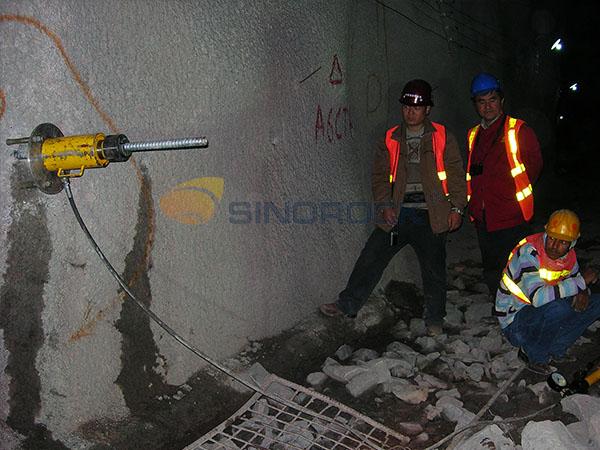
Rock bolt diameter is one of the most important parameters influencing tensile capacity, stiffness, and installation compatibility. However, increasing rock bolt diameter does not automatically improve overall support performance.
The anchor bolt must be compatible with the anchorage system, surrounding rock, grout, bearing plate, and design loading conditions.
Mechanical Properties
When selecting a rock bolt, engineers should review the yield strength, ultimate tensile strength, elongation, elastic modulus, ductility, load-displacement behavior, and fatigue performance of the material.
Yield strength determines the load at which permanent deformation begins, while ultimate tensile strength represents the maximum tensile stress the material can withstand before failure.
Elongation and ductility are particularly important in ground conditions involving deformation or dynamic loading.
The overall capacity of a rock bolt system may be governed by several potential failure modes. Design capacity should be evaluated against the relevant failure modes, with appropriate safety factors and design criteria.
6. Rock Bolt Corrosion Protection and Service Life
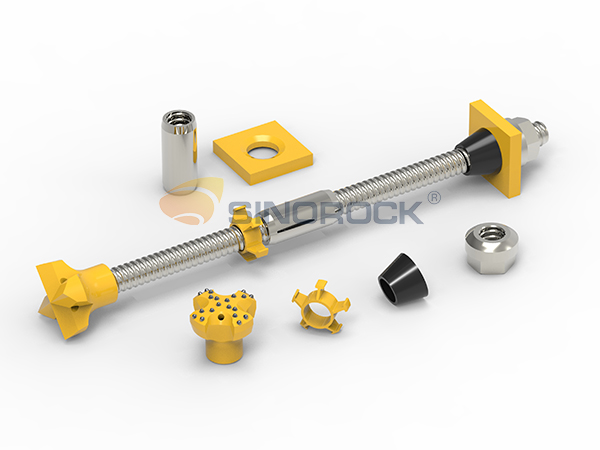
Corrosion protection is an important consideration for rock bolts installed in groundwater, aggressive geological environments, or infrastructure requiring long-term service.
The appropriate protection system depends on the expected exposure conditions, required service life, and maintenance accessibility.
Uncoated steel
May be considered in applications where corrosion exposure and required service life are limited or where project-specific requirements permit.
Hot-dip galvanizing
Provides a zinc coating that helps protect steel against corrosion. Coating requirements should be evaluated according to the project specification and applicable standards.
Epoxy coating
Provides a protective barrier against corrosive exposure. Coating continuity, thickness, adhesion, and handling damage should be considered.
Duplex protection
Dual anti-corrosion treatment combining hot-dip galvanizing and epoxy coating to provide multiple corrosion protection mechanisms.
Stainless steel
May be specified for environments requiring enhanced corrosion resistance. Material grade should be selected according to the actual chemical and environmental exposure.
For permanent rock support, corrosion protection should be considered as part of the complete system, including the bolt, nut, bearing plate, couplings, and exposed components.
7. Check Installation Conditions
The rock bolt system must be practical to install under the actual site conditions. Installation considerations may directly affect the performance of the support system, particularly in fractured ground, confined spaces, and projects with limited drilling access.
Important installation parameters include drilling equipment compatibility, borehole diameter, bolt diameter and thread configuration, drilling length and equipment capacity, installation orientation, grouting method, grout pressure and flow requirements, mixing and curing requirements, installation sequence, construction space, quality control and inspection procedures.
A properly selected rock bolt system should be compatible with the project's drilling equipment, construction sequence, and site working conditions.
For self-drilling rock bolts, engineers should also evaluate drill bit selection, coupling compatibility, flushing requirements, grout injection performance, and the ability to drill and grout in unstable formations.
8. Consider Deformation Requirements
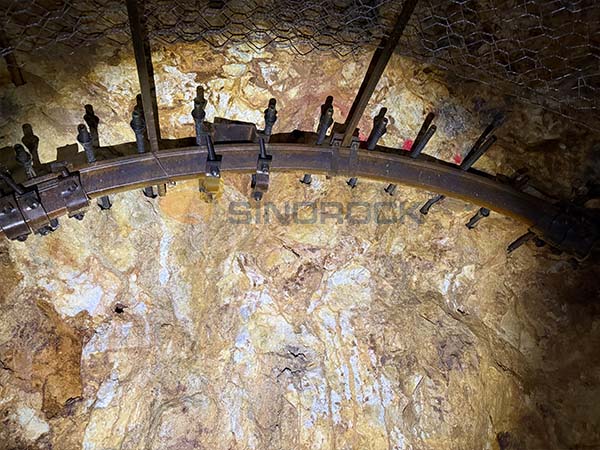
In some mining and underground construction environments, rock bolts may experience dynamic loading, large deformation, or energy demand associated with changing ground conditions.
Conventional high-strength bolts may be suitable for static or relatively stable conditions, but dynamic applications require additional evaluation of energy absorption, deformation capacity, and load-displacement behavior.
Engineers should consider expected ground displacement, dynamic loading conditions, required energy absorption, bolt elongation capacity, anchorage behavior under dynamic loading, and compatibility with mesh, shotcrete, plates, and other support elements.
Where rockburst or dynamic ground conditions are anticipated, the support system should be designed using appropriate dynamic support principles and project-specific testing.
9. Rock Bolt Testing and Quality Control
Engineering calculations establish the preliminary design, but field performance and quality verification are essential to confirm that the installed support system meets project requirements.
Relevant laboratory tests may include tensile testing, yield strength and ultimate strength testing, elongation testing, thread and coupling performance testing, grout bond testing, corrosion coating inspection, component compatibility testing, and field testing.
Depending on the project specification, field verification may include pull-out testing, anchorage testing, installation inspection, grout quality verification, bolt installation records, load testing, displacement monitoring, and ground movement monitoring.
Testing requirements should be established according to the design specification, applicable standards, and project risk level.
Conclusion
Selecting the right rock bolt requires a comprehensive understanding of ground conditions, support mechanisms, mechanical properties, anchorage performance, corrosion exposure, and construction requirements.
The most suitable rock bolt is not necessarily the one with the largest diameter or highest tensile strength. It is the system that provides the required reinforcement, anchorage, durability, and installation reliability under the actual geological and engineering conditions.
Sinorock manufactures self-drilling rock bolt systems and hollow anchor bars for mining, tunneling, rock stabilization, and geotechnical engineering applications. Different bar diameters, thread configurations, steel grades, and corrosion protection options are available to meet project requirements. Contact Sinorock to discuss rock bolt specifications, ground conditions, and application requirements.
latest news
-
- How to Choose Rock Bolts: A Technical Guide for Ground Support
- Time:2026-11-28From:This Site
- Learn how to select rock bolts based on rock mass conditions, anchorage, bolt length, tensile strength, corrosion protection, installation methods, and ground support requirements.
- View details
-
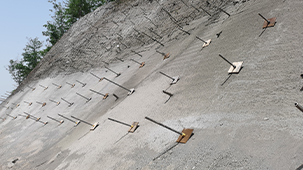
- Types of Soil Nails and Engineering Applications
- Time:2026-10-25From:This Site
- Learn about soil nail walls, anchors, passive nails, bearing plates, and specialized types for safe and efficient geotechnical engineering.
- View details
-

- Common Failures For Hollow Anchor Bar Tunnel Construction
- Time:2026-10-16From:This Site
- Common failures in hollow anchor bar tunnel construction: causes, solutions, and Sinorock’s self-drilling bolt technology for safer tunnels.
- View details
-
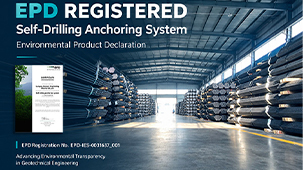
- Sinorock Self-Drilling Anchoring System Completes EPD Registration
- Time:2026-09-18From:This Site
- Sinorock’s Self-Drilling Anchoring System has completed EPD registration, providing transparent environmental information based on Life Cycle Assessment (LCA).
- View details
-
- Sinorock Conducts 2026 Safety Month Activities to Enhance Workplace Safety Management
- Time:2026-07-17From:This Site
- Sinorock launched the 2026 Safety Month campaign with safety training, hazard inspections, and emergency drills to strengthen workplace safety and risk prevention.
- View details
-
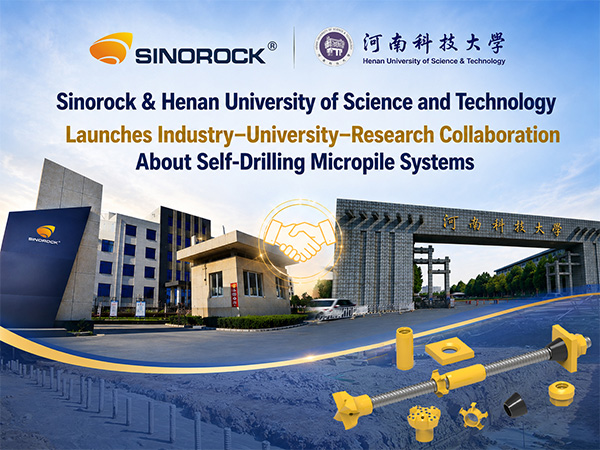
- Sinorock Launches Industry–University–Research Partnership with Henan University of Science and Technology on Self-Drilling Micropile Systems
- Time:2026-07-03From:This Site
- Sinorock has launched an industry–university–research partnership with Henan University of Science and Technology focusing on Self-Drilling Micropile Systems.
- View details
-
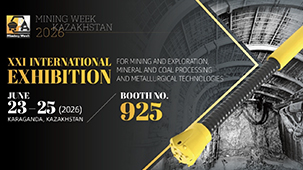
- SINOROCK Invites You to Mining Week Kazakhstan 2026
- Time:2026-06-08From:This Site
- Meet SINOROCK at Mining Week Kazakhstan 2026, Booth 925. Discover advanced self-drilling anchor systems and ground support solutions for underground mining, fractured ground, fault zones, and challenging geological conditions.
- View details
-
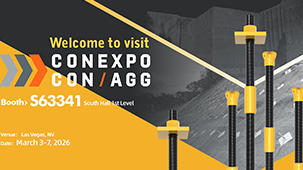
- Sinorock Invites You to Visit Us at CONEXPO-CON/AGG
- Time:2026-02-14From:This Site
- Sinorock Invites You to Explore Proven Self-Drilling Anchor Bolt Solutions at CONEXPO-CON/AGG –S63341.South Hall 1st Level
- View details
-
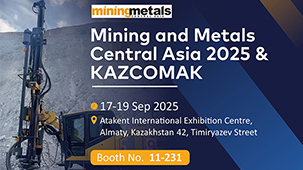
- SINOROCK to Showcase Innovative Mining Solutions at Mining and Metals Central Asia 2025
- Time:2025-09-09From:This Site
- We are pleased to share that SINOROCK will participate in the Mining and Metals Central Asia 2025, taking place from September 17 to 19 at the Atakent International Exhibition Centre in Almaty, Kazakhstan. You can find us at Booth 11-231.
- View details