Download

Active vs Passive Protective Mesh with Self-Drilling Anchor Bolts
Time:2025-12-13From:sinorock View:
In mining engineering, tunnel construction, slope stabilization, and underground works, the proper selection of a support system is directly related to project safety, construction efficiency, and long-term stability. As projects involving complex geological conditions become increasingly common, traditional single support methods are often no longer sufficient.
The combined support system of self-drilling anchors and protective mesh has been widely adopted due to its high construction efficiency, strong adaptability, and stable support performance.
Protective mesh systems are generally classified into active protective mesh and passive protective mesh based on their load-bearing characteristics and working mechanisms. When self-drilling anchors are combined with these two types of mesh, significant differences arise in terms of working principles, support capacity, construction methods, and applicable scenarios. This article systematically analyzes these differences to help engineers and technicians make informed and scientific choices in practical projects.
1. Differences in Working Principles
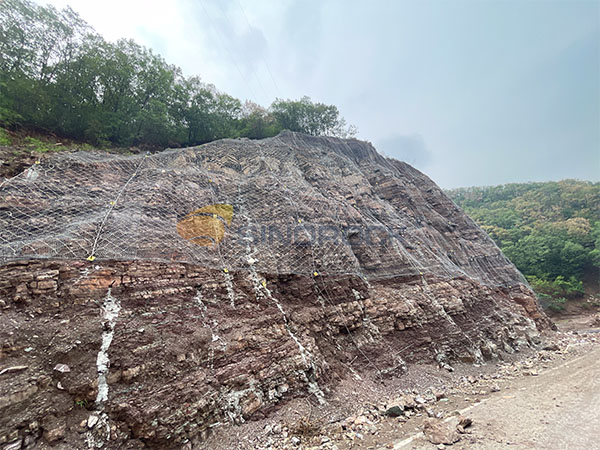
Combination with Active Protective Mesh
When self-drilling anchors are combined with active protective mesh, the anchors are primarily used to fix and tension the mesh, forming an actively reinforced support system. The tensile force of the active mesh is transmitted through steel cables, wire mesh, and other structural components and anchored by the self-drilling anchors. The anchoring capacity of the anchors enhances the overall stability and resistance to external forces.
Through continuous tension, the active protective mesh actively restrains the rock or soil mass, preventing the movement of loose rock layers or soil blocks and improving slope and surface stability.
Combination with Passive Protective Mesh
When combined with passive protective mesh, self-drilling anchors mainly serve a fixing and supporting function. The protective mesh relies on its own structural elasticity and flexibility to absorb and dissipate impact forces. The anchors secure the mesh to the ground or rock surface, ensuring that the mesh can intercept falling or sliding material and disperse impact energy.
Unlike active systems, passive protective mesh does not rely on pre-tensioning. Instead, it resists external forces through the elastic deformation of the mesh itself.
2. Support Strength and Stability
Active Protective Mesh
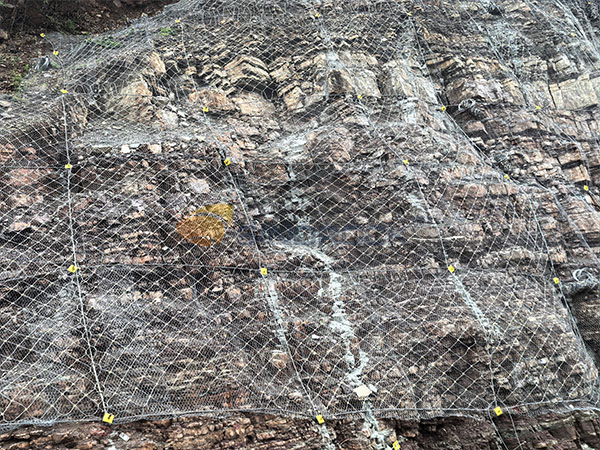
The combination of self-drilling anchors with active protective mesh provides higher support strength and overall stability. Active systems rely on tensile forces to enhance reinforcement performance, making them suitable for unstable geological conditions such as weak rock formations, loose soil layers, or steep slopes.
With strong active restraint capability, active protective mesh systems can effectively prevent large-scale landslides, rockfalls, and similar hazards.
Passive Protective Mesh
When combined with passive protective mesh, the overall support strength is relatively lower. Although self-drilling anchors provide stable fixing points, passive systems mainly depend on the elasticity and flexibility of the mesh structure to absorb and buffer external forces.
Since passive mesh does not apply continuous tensile restraint to the rock mass, it is more suitable for relatively stable geological conditions and is typically used to prevent small-scale rockfalls or soil sliding.
3. Differences in Applicable Environments
Active Protective Mesh
Active protective mesh systems are suitable for high-risk areas and complex geological environments, such as steep slopes, weak rock layers, or unstable soil formations. When combined with self-drilling anchors, these systems significantly improve resistance to seismic activity and slope instability.
They provide continuous support, even under extreme conditions such as heavy rainfall or earthquakes, effectively preventing landslides and rock detachment.
Passive Protective Mesh
Passive protective mesh systems are more suitable for relatively stable geological environments, including gentle slopes or solid rock formations. When combined with self-drilling anchors, they provide basic protection mainly against small-scale rockfalls or minor soil movement.
They are not suitable for large-scale landslide protection or projects requiring high support capacity.
4. Differences in Construction Methods
Active Protective Mesh
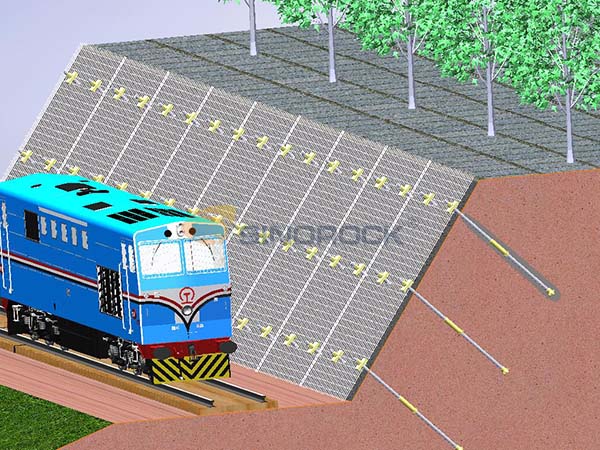
The construction of active protective mesh systems requires the precise installation of self-drilling anchors, steel cables, and wire mesh. Tension levels must be adjusted according to geological conditions, and tensioning equipment is required to properly pre-stress the system.
Compared with passive systems, active protective mesh construction is more complex and demands more materials, equipment, and technical expertise.
Passive Protective Mesh
Passive protective mesh systems are relatively simple to install. The mesh is laid directly over the slope or rock surface and fixed using self-drilling anchors.
Because passive systems do not require tensioning, construction involves fewer technical requirements, faster installation, and lower overall costs.
5. Differences in Protective Capacity
Active Protective Mesh
Active protective mesh offers robust protection, particularly against high-impact forces such as large-scale landslides, rockfalls, and seismic events. Through pre-tensioning, the system effectively distributes external forces and prevents large-scale displacement or sliding of rock and soil masses.
It is especially suitable for high-risk and geologically complex areas, including mountainous slopes, mining zones, and tunnel projects.
Passive Protective Mesh
Passive protective mesh offers relatively limited protection and is mainly intended for stable environments where the risk level is low. It is primarily used to prevent small rockfalls or minor soil movement.
Protection is achieved by absorbing impact energy through elastic deformation, rather than by providing strong structural restraint. As a result, it is suitable for low-risk applications such as small mining sites, landscaping projects, or controlled slope areas.
6. Cost and Economic Considerations
Active Protective Mesh
Due to the need for steel cables, wire mesh, and precise tensioning operations, active protective mesh systems involve higher construction and installation costs. They require more equipment, labor, and ongoing maintenance.
However, their superior protective capacity makes them a cost-effective choice for high-risk, long-term projects where safety and stability are critical.
Passive Protective Mesh
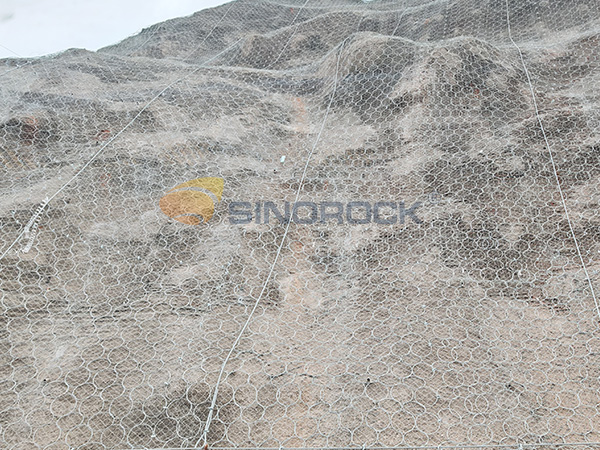
Passive protective mesh systems have lower installation and maintenance costs. Their simple construction process and reduced equipment requirements make them economically attractive for smaller projects or low-risk areas.
While their protective capacity is limited, they provide adequate safety at a lower overall investment.
Conclusion
When self-drilling anchors are combined with active or passive protective mesh systems, the differences are evident in support strength, applicable conditions, construction methods, and cost. Active protective mesh is suitable for high-risk and complex geological environments, offering strong support and protection at the expense of higher cost and construction complexity. Passive protective mesh, on the other hand, is ideal for relatively stable conditions, featuring simpler installation and lower costs, and is mainly used to prevent small-scale rockfalls or soil movement.
When selecting a protective mesh system, engineers should evaluate geological conditions, risk level, and project budget to determine whether an active or passive system is more appropriate.
latest news
-
- Mine Support and Stabilization Technology: Self-Drilling Anchor Bolt Systems
- Time:2026-04-23From:This Site
- Professional mine support solutions integrating drilling, pipe roof processes, and self-drilling anchors to ensure stable, safe, and efficient operations for both underground and open-pit mines.
- View details
-
- Self-Drilling Anchor Bolt Systems in Railway Tunnels: Applications and Standards
- Time:2026-04-21From:This Site
- Explore the applications and international standards of self-drilling anchor bolt systems in railway tunnels. Learn how they enhance slope, tunnel, and bridge stability for safer railway infrastructure.
- View details
-
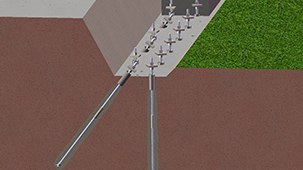
- Self-Drilling Anchor Bolts for Micropiles: Complete Geotechnical Engineering Guide
- Time:2026-04-18From:This Site
- Explore the benefits of SDA bolt micropiles for constrained construction sites, complex geology, and rapid installation. Case studies and practical guidelines included.
- View details
-
- Sinorock 2025 Quality Month | Strengthening Quality Foundations, Empowering Product Excellence
- Time:2025-08-13From:This Site
- Sinorock’s 2025 Quality Month, themed “Strengthening Quality Foundations, Empowering Product Excellence,” successfully concluded, reinforcing our commitment to superior product quality.
- View details
-
- Sinorock Safety Month 2025 | Everyone Speaks Safety, Everyone Can Respond
- Time:2025-07-03From:This Site
- Sinorock Safety Month 2025, centered on the theme "Everyone Speaks Safety, Everyone Can Respond - Spot Workplace Hazards," has wrapped up successfully!
- View details
-
- Quality Control: the Vital Factor of A SDA Bolt Factory
- Time:2025-01-09From:This Site
- Sinorock’s comprehensive quality control system, from supplier management to outgoing inspections, ensuring the highest standards for self-drilling anchor bolts in construction.
- View details
-
- Sinorock Invites You to Visit Us at CONEXPO-CON/AGG
- Time:2026-02-14From:This Site
- Sinorock Invites You to Explore Proven Self-Drilling Anchor Bolt Solutions at CONEXPO-CON/AGG –S63341.South Hall 1st Level
- View details
-
- SINOROCK to Showcase Innovative Mining Solutions at Mining and Metals Central Asia 2025
- Time:2025-09-09From:This Site
- We are pleased to share that SINOROCK will participate in the Mining and Metals Central Asia 2025, taking place from September 17 to 19 at the Atakent International Exhibition Centre in Almaty, Kazakhstan. You can find us at Booth 11-231.
- View details
-
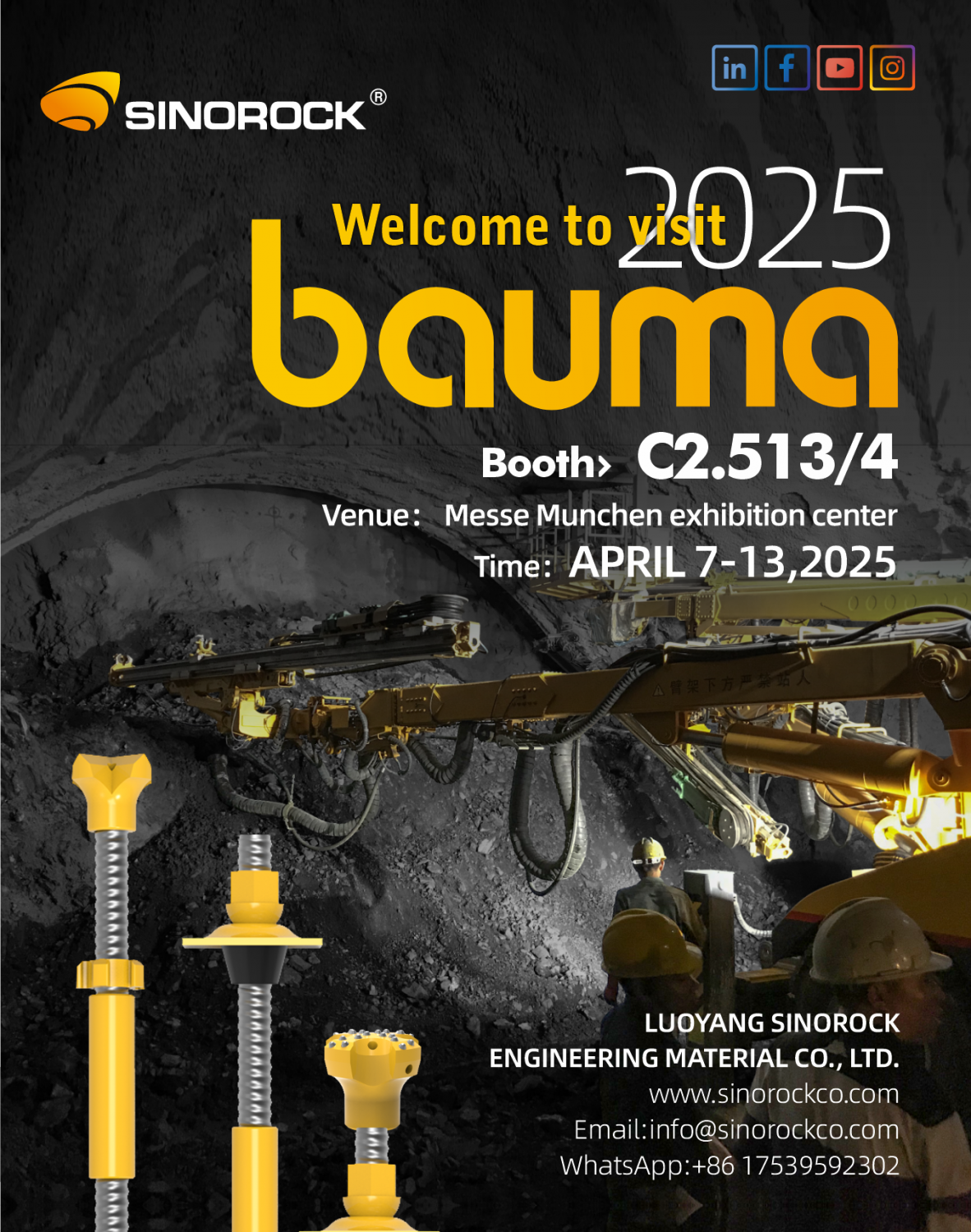
- Sinorock Invites You to Explore Proven Self-Drilling Anchor Bolt Solutions at bauma 2025
- Time:2025-03-07From:This Site
- From April 7–13, 2025, explore Sinorock’s Self-drilling anchor bolt solution at Booth C2.513/4 in Hall C2 of the Messe München Exhibition Center (Munich, Germany).
- View details