Download

Tunnel Pre-Support Methods: Techniques, Applications, and Comparisons
Time:2026-04-24From:sinorock View:
In tunneling, pre-support refers to techniques used to stabilize the ground ahead of the tunnel face before main excavation. This is particularly important in weak, fractured, or water-bearing soils to prevent collapses, excessive deformation, and water inflow, ensuring safety and maintaining construction quality.
1. Classification of Tunnel Pre-Support Methods
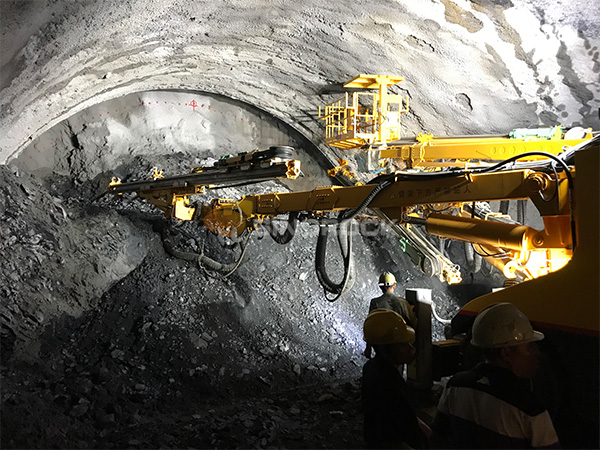
Based on the mechanism and construction method, tunnel pre-support methods can be classified into four major categories:
1.1 Pipe Roofing and Umbrella Arch
Pipe roofing and umbrella arch methods stabilize the ground by inserting steel pipes along the tunnel crown outside the excavation profile, forming a rigid arch to support the overlying soil. They provide high stiffness and strong load-bearing capacity.
Pipe Roofing / Umbrella Arch: Suitable for tunnel portals, shallow tunnels, or crossing important structures or faulted zones where settlement control is critical.
Pipe Canopy Method: Commonly used for large-section or shallow tunnels, especially under railways or rivers, forming a temporary waterproof enclosure.
Jet-Grouting Pipe Roof: For soft, saturated, and flowable soils; forms a consolidated shell combining strength and waterproofing.
Steel Tube Slab (STS) Pipe Roof: Provides extremely high stiffness for tunnels under critical infrastructure, controlling settlement to minimal levels.
Freeze-Sealing Pipe Roof (FSPR): Combines pipe roof and freezing for shallow, large-section tunnels in high water or soft soils.
1.2 Forepoling and Small Pipes
These methods insert inclined rods or small pipes ahead of the tunnel face to connect the ground with the support structure, providing reinforcement and stability.
Rock Bolts: Suitable for low-stress, fractured rock with low groundwater.
Small Pipe Canopy / Forepoling: Common in shallow tunnels with class IV or higher rock; cost-effective and flexible.
Self-Drilling Anchors: Ideal for broken, loose, or unboreable soils, such as fault zones, gravel, or fill.
Glass Fiber Reinforced Polymer (GFRP) Bolts: Can be cut directly by tunnel boring machines (TBM), used at TBM launch or arrival zones.
1.3 Grouting and Jet Grouting
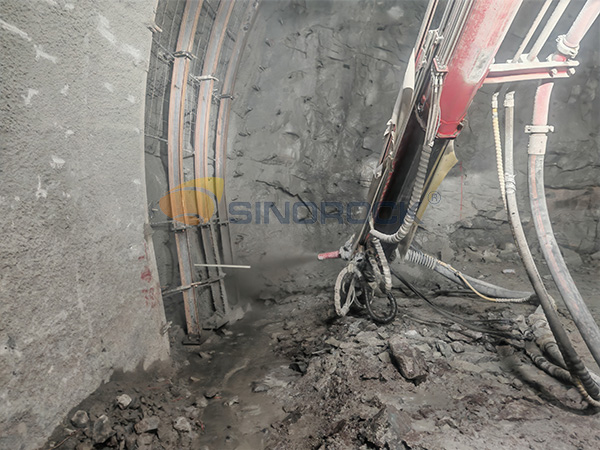
Grouting techniques inject cementitious or chemical grout into the soil to fill voids, consolidate the ground, and reduce permeability.
Pre-Grouting: Effective in fractured rock, fault zones, and water-bearing sands, enhancing strength and reducing permeability.
Horizontal Jet Grouting: For soft, saturated soils (mud, silt, clay, fine sand), forming continuous reinforced waterproof barriers.
Sleeve Valve Pipe Grouting: Used in non-homogeneous soils, allowing precise control of grout injection with minimal disturbance.
1.4 Ground Freezing
Ground freezing uses artificial refrigeration to turn water in soil into ice, creating a high-strength temporary support and waterproof barrier.
Artificial Ground Freezing (AGF): Suitable for high water pressure, quicksand, and soft saturated soils that are difficult to stabilize by conventional grouting.
Freeze-Sealing Pipe Roof (FSPR): Combines pipe roofing and freezing advantages for shallow, large-section tunnels.
Saltwater and Liquid Nitrogen Freezing: Saltwater freezing for routine construction; liquid nitrogen for rapid or emergency freezing.
In practice, composite methods (e.g., pipe roof + small pipe grouting) are often used to combine the advantages of different techniques for optimal support.
2. Comparison of Tunnel Pre-Support Methods
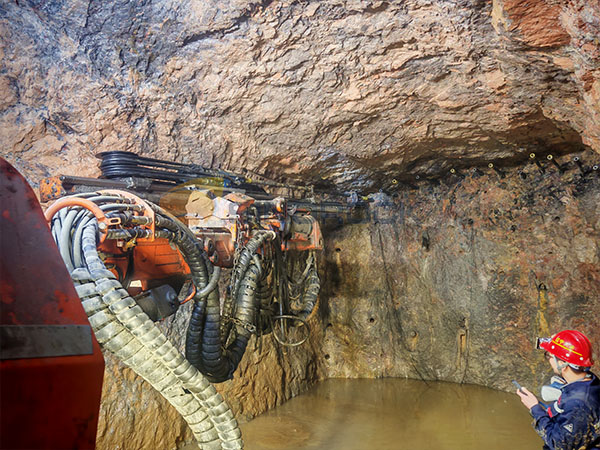
Selecting an appropriate pre-support method requires balancing geological conditions, environmental requirements, cost, and construction speed.
| Method | Applicable Ground | Support Length | Pipe/Hole Diameter | Circumferential Spacing | Key Advantages |
|---|---|---|---|---|---|
| Pipe Roofing | Weak, fractured, shallow soil | 10–45 m | φ80–φ180 mm | 0.35–0.5 m | High stiffness, strong load-bearing |
| Pipe Canopy | Shallow, large-section tunnels; high settlement/water control | Up to 100 m | φ300 mm+ | Pipes closely spaced or grouted | Combined support and waterproofing |
| Horizontal Jet Grouting | Soft, saturated soils | 10–30 m | φ600–φ1200 mm | Overlapping | Strengthens ground + waterproofing |
| Small Pipe Canopy | Class IV+ rock; soft/fractured soils | 3–6 m | φ32–φ50 mm | 0.3–0.4 m | Flexible, economical, easy to construct |
| Rock Bolts | Fractured rock or hard soil, low groundwater | 3–5 m | φ22–φ32 mm | 0.3–0.4 m | Simple, low cost |
| Ground Freezing | High water pressure, quicksand, mud | Unlimited | φ100–φ150 mm | 0.8–1.5 m | High strength, excellent waterproofing |
| Pre-Grouting | Fractured rock, fault zones, water-bearing sand | 10–50 m | φ42–φ110 mm | 1–2 m | Fills voids, reduces permeability |
| GFRP Bolts | Temporary TBM zones | 6–20 m | φ25–φ40 mm | 0.5–1.0 m | Can be cut by TBM cutterhead |
| Self-Drilling Anchors | Broken, loose, unboreable soils | 6–15 m | φ30–φ52 mm | 0.5–1.0 m | Drill+grout integration, fast, adaptable |
3. Conclusion
Tunnel pre-support is a critical aspect of underground construction, particularly in weak, fractured, or water-bearing soils. Selecting the most appropriate method requires a careful balance between geological conditions, environmental constraints, cost, and construction speed. Understanding the characteristics and limitations of each pre-support technique is essential for safe, efficient, and cost-effective tunnel construction.
latest news
-
- Tunnel Pre-Support Methods: Techniques, Applications, and Comparisons
- Time:2026-04-24From:This Site
- Overview of tunnel pre-support methods, including pipe roofing, umbrella arch, grouting, forepoling, and ground freezing, with applications, comparisons, and construction strategies.
- View details
-
- Mine Support and Stabilization Technology: Self-Drilling Anchor Bolt Systems
- Time:2026-04-23From:This Site
- Professional mine support solutions integrating drilling, pipe roof processes, and self-drilling anchors to ensure stable, safe, and efficient operations for both underground and open-pit mines.
- View details
-
- Self-Drilling Anchor Bolt Systems in Railway Tunnels: Applications and Standards
- Time:2026-04-21From:This Site
- Explore the applications and international standards of self-drilling anchor bolt systems in railway tunnels. Learn how they enhance slope, tunnel, and bridge stability for safer railway infrastructure.
- View details
-
- Sinorock 2025 Quality Month | Strengthening Quality Foundations, Empowering Product Excellence
- Time:2025-08-13From:This Site
- Sinorock’s 2025 Quality Month, themed “Strengthening Quality Foundations, Empowering Product Excellence,” successfully concluded, reinforcing our commitment to superior product quality.
- View details
-
- Sinorock Safety Month 2025 | Everyone Speaks Safety, Everyone Can Respond
- Time:2025-07-03From:This Site
- Sinorock Safety Month 2025, centered on the theme "Everyone Speaks Safety, Everyone Can Respond - Spot Workplace Hazards," has wrapped up successfully!
- View details
-
- Quality Control: the Vital Factor of A SDA Bolt Factory
- Time:2025-01-09From:This Site
- Sinorock’s comprehensive quality control system, from supplier management to outgoing inspections, ensuring the highest standards for self-drilling anchor bolts in construction.
- View details
-
- Sinorock Invites You to Visit Us at CONEXPO-CON/AGG
- Time:2026-02-14From:This Site
- Sinorock Invites You to Explore Proven Self-Drilling Anchor Bolt Solutions at CONEXPO-CON/AGG –S63341.South Hall 1st Level
- View details
-
- SINOROCK to Showcase Innovative Mining Solutions at Mining and Metals Central Asia 2025
- Time:2025-09-09From:This Site
- We are pleased to share that SINOROCK will participate in the Mining and Metals Central Asia 2025, taking place from September 17 to 19 at the Atakent International Exhibition Centre in Almaty, Kazakhstan. You can find us at Booth 11-231.
- View details
-
- Sinorock Invites You to Explore Proven Self-Drilling Anchor Bolt Solutions at bauma 2025
- Time:2025-03-07From:This Site
- From April 7–13, 2025, explore Sinorock’s Self-drilling anchor bolt solution at Booth C2.513/4 in Hall C2 of the Messe München Exhibition Center (Munich, Germany).
- View details