Download

Self-Drilling Micropiles: Introduction and Applications
Time:2026-01-19From:sinorock View:
Self-drilling hollow micropiles are a modern ground improvement technology used across multiple industries, including construction, transportation, and water conservancy. This technology combines drilling, grouting, and anchoring into one seamless process. It offers key advantages such as high construction efficiency, excellent adaptability to various soil conditions, and minimal environmental impact. Self-drilling micropiles have become essential solutions in modern geotechnical engineering.
1. What Are Self-Drilling Micropiles?
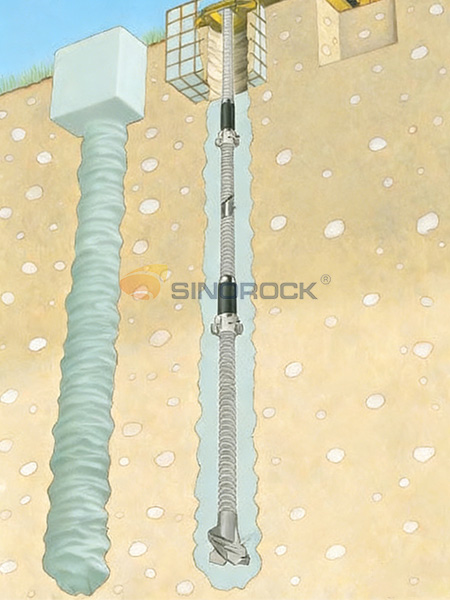
Self-drilling micropiles are small-diameter piles with a diameter of less than 300mm and a slenderness ratio greater than 30. The core component is a hollow anchor bar with continuous external threads and a disposable drill bit. This design allows for simultaneous drilling and grouting. During construction, no casing is required, and high-pressure grouting creates a mechanical interlock between the cement slurry and surrounding soil, reinforcing the foundation and transferring loads to deeper, more stable soil layers.
Originating from the "root pile" concept proposed by Italian engineer F. Lizzi in the 1950s, self-drilling micropiles are a mature and highly effective technique suitable for various geological conditions and engineering applications.
2. The Core Components of Self-Drilling Micropiles
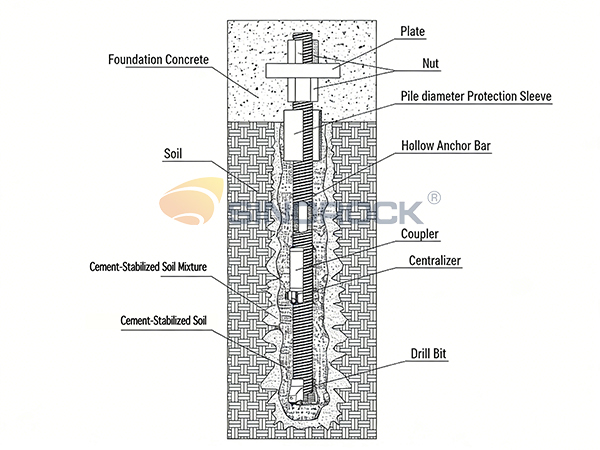
Self-drilling micropiles are composed of a hollow anchor bar, a self-drilling drill bit, along with supporting components such as couplings, bearing plates, nuts, and a grouting system. The hollow anchor bar serves multiple functions during construction, including drilling, grouting, and load-bearing. The drill bit creates the hole in various geological conditions while simultaneously injecting grout, and the various coupling and bearing components ensure proper extension, load transfer, and structural stability. Through the coordinated operation of these standardized parts, self-drilling micropiles enable efficient piling and maintain reliable load-bearing and anchoring performance, even in challenging soil conditions.
3. Core Applications
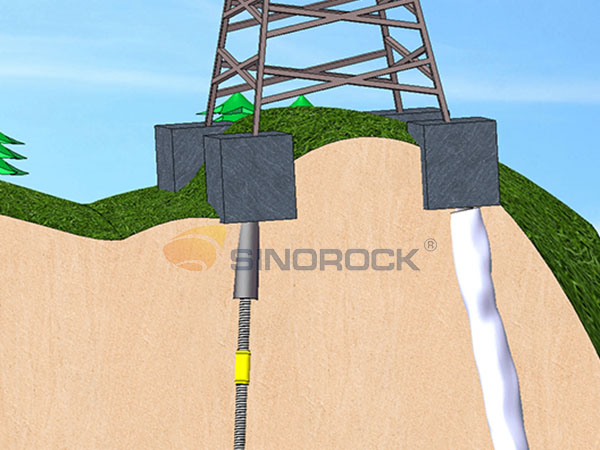
Self-drilling micropiles are versatile and can be categorized into compression piles, tension piles, and alternating load piles based on their bearing behavior. Key applications include:
3.1 Structural Reinforcement and Underpinning
Ideal for strengthening existing foundations, correcting settlement, and supporting structural additions such as basement excavation and facade reinforcement.
3.2 Anti-Uplift Foundations
Used in underground structures like basements and water tanks, self-drilling micropiles counteract buoyancy forces and prevent uplift.
3.3 Slope Stabilization and Excavation Support
These piles are used as anchor piles or micropile walls in slope stabilization and deep excavation projects, providing lateral resistance.
3.4 Tower and Equipment Foundations
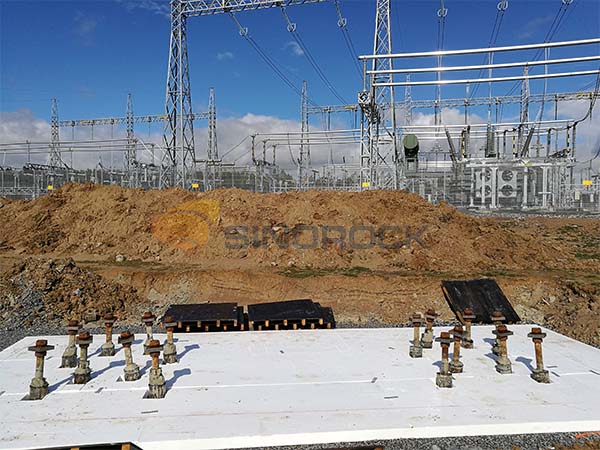
Perfect for foundations of communication towers, wind turbines, and cranes, particularly in remote or hard-to-access locations.
3.5 Bridge and Road Foundations
Applied in bridge abutment reinforcement, roadbed improvement, and retaining wall anchoring for transportation infrastructure.
3.6 Geohazard Mitigation
Effective in landslide and collapse prevention projects as anti-slide piles or emergency support piles.
4. Advantages of Self-Drilling Micropiles
4.1 Integrated Drilling, Grouting, and Anchoring
Self-drilling micropiles use a "one-step" construction method, where the hollow anchor bar serves as a drill rod, grouting pipe, and reinforcement. Once drilling is complete, the pile is formed, which simplifies the process and boosts construction efficiency.
4.2 No Casing and Collapse Prevention
The use of cement slurry during drilling prevents the collapse of the hole, removing the need for casing. This makes the method ideal for loose or unstable soils.
4.3 Enhanced Anchoring Effect
High-pressure grouting expands the hole diameter and allows the cement slurry to penetrate the surrounding soil, creating a rough interface that enhances the friction and bond between the pile and soil.
4.4 High Adaptability
The hollow anchor bar can be extended and cut as needed, and various drill bits can be used to adapt to different geologies, including rock, clay, and sand.
4.5 Environmental and Economic Benefits
Self-drilling micropiles create minimal noise and vibration during installation, reducing their impact on the surrounding environment. The streamlined construction process and reduced timeline also result in significant cost savings.
5. Case Studies and Examples
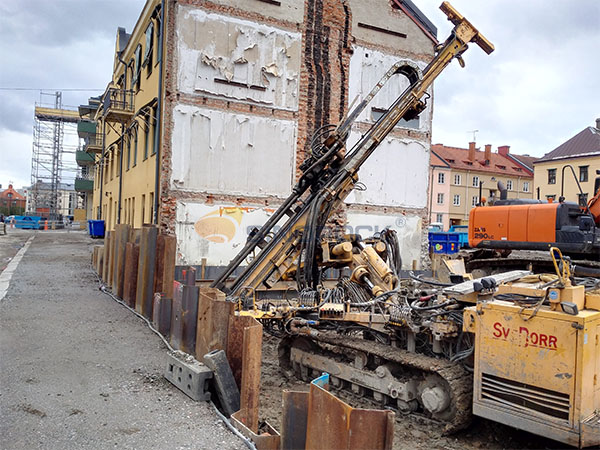
5.1 Barcelona Arena Renovation
In Barcelona, 21-meter-long self-drilling micropiles were used to reinforce the foundation of a historic bullfighting arena while preserving its iconic facade. This enabled the construction of an underground parking garage beneath the structure.
5.2 Pembroke Courthouse Foundation Strengthening
Self-drilling micropiles were used to address inadequate foundation bearing capacity at the Pembroke Courthouse in Canada, where piles were drilled through glacial till into bedrock.
5.3 Telecommunications Tower Foundations
Micropiles, such as the T40/20 type, were installed quickly in challenging environments, such as remote locations, to provide a stable foundation for telecommunications towers.
5.4 Wastewater Treatment Plant Anti-Float Piles
In coastal areas, T52/26 micropiles were used to resist buoyancy forces at a wastewater treatment plant, providing a tensile capacity of 900kN per pile.
6. Conclusion
Self-drilling micropiles are an efficient, flexible, and reliable solution for ground improvement in various civil engineering projects. They offer a cost-effective and environmentally friendly approach for foundation reinforcement, slope stabilization, and even geohazard mitigation. With ongoing advancements in materials and techniques, their application range will continue to expand, making them an essential tool in modern construction projects.
latest news
-
- Mine Support and Stabilization Technology: Self-Drilling Anchor Bolt Systems
- Time:2026-04-23From:This Site
- Professional mine support solutions integrating drilling, pipe roof processes, and self-drilling anchors to ensure stable, safe, and efficient operations for both underground and open-pit mines.
- View details
-
- Self-Drilling Anchor Bolt Systems in Railway Tunnels: Applications and Standards
- Time:2026-04-21From:This Site
- Explore the applications and international standards of self-drilling anchor bolt systems in railway tunnels. Learn how they enhance slope, tunnel, and bridge stability for safer railway infrastructure.
- View details
-
- Self-Drilling Anchor Bolts for Micropiles: Complete Geotechnical Engineering Guide
- Time:2026-04-18From:This Site
- Explore the benefits of SDA bolt micropiles for constrained construction sites, complex geology, and rapid installation. Case studies and practical guidelines included.
- View details
-
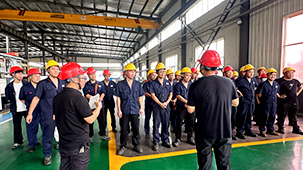
- Sinorock 2025 Quality Month | Strengthening Quality Foundations, Empowering Product Excellence
- Time:2025-08-13From:This Site
- Sinorock’s 2025 Quality Month, themed “Strengthening Quality Foundations, Empowering Product Excellence,” successfully concluded, reinforcing our commitment to superior product quality.
- View details
-
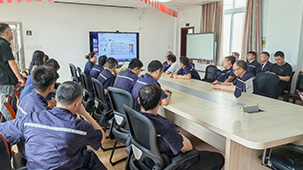
- Sinorock Safety Month 2025 | Everyone Speaks Safety, Everyone Can Respond
- Time:2025-07-03From:This Site
- Sinorock Safety Month 2025, centered on the theme "Everyone Speaks Safety, Everyone Can Respond - Spot Workplace Hazards," has wrapped up successfully!
- View details
-
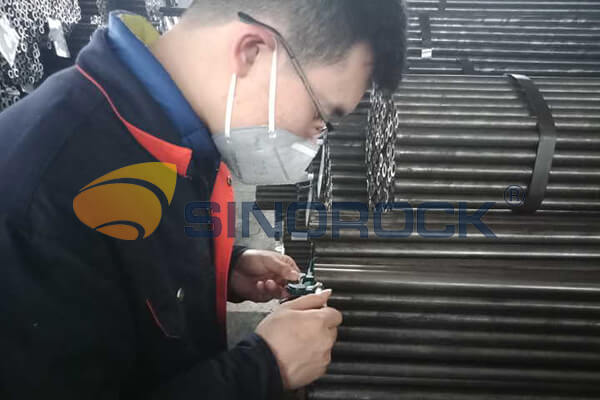
- Quality Control: the Vital Factor of A SDA Bolt Factory
- Time:2025-01-09From:This Site
- Sinorock’s comprehensive quality control system, from supplier management to outgoing inspections, ensuring the highest standards for self-drilling anchor bolts in construction.
- View details
-
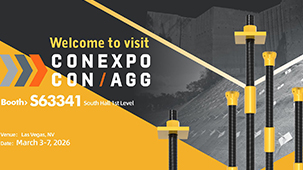
- Sinorock Invites You to Visit Us at CONEXPO-CON/AGG
- Time:2026-02-14From:This Site
- Sinorock Invites You to Explore Proven Self-Drilling Anchor Bolt Solutions at CONEXPO-CON/AGG –S63341.South Hall 1st Level
- View details
-
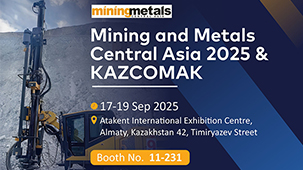
- SINOROCK to Showcase Innovative Mining Solutions at Mining and Metals Central Asia 2025
- Time:2025-09-09From:This Site
- We are pleased to share that SINOROCK will participate in the Mining and Metals Central Asia 2025, taking place from September 17 to 19 at the Atakent International Exhibition Centre in Almaty, Kazakhstan. You can find us at Booth 11-231.
- View details
-
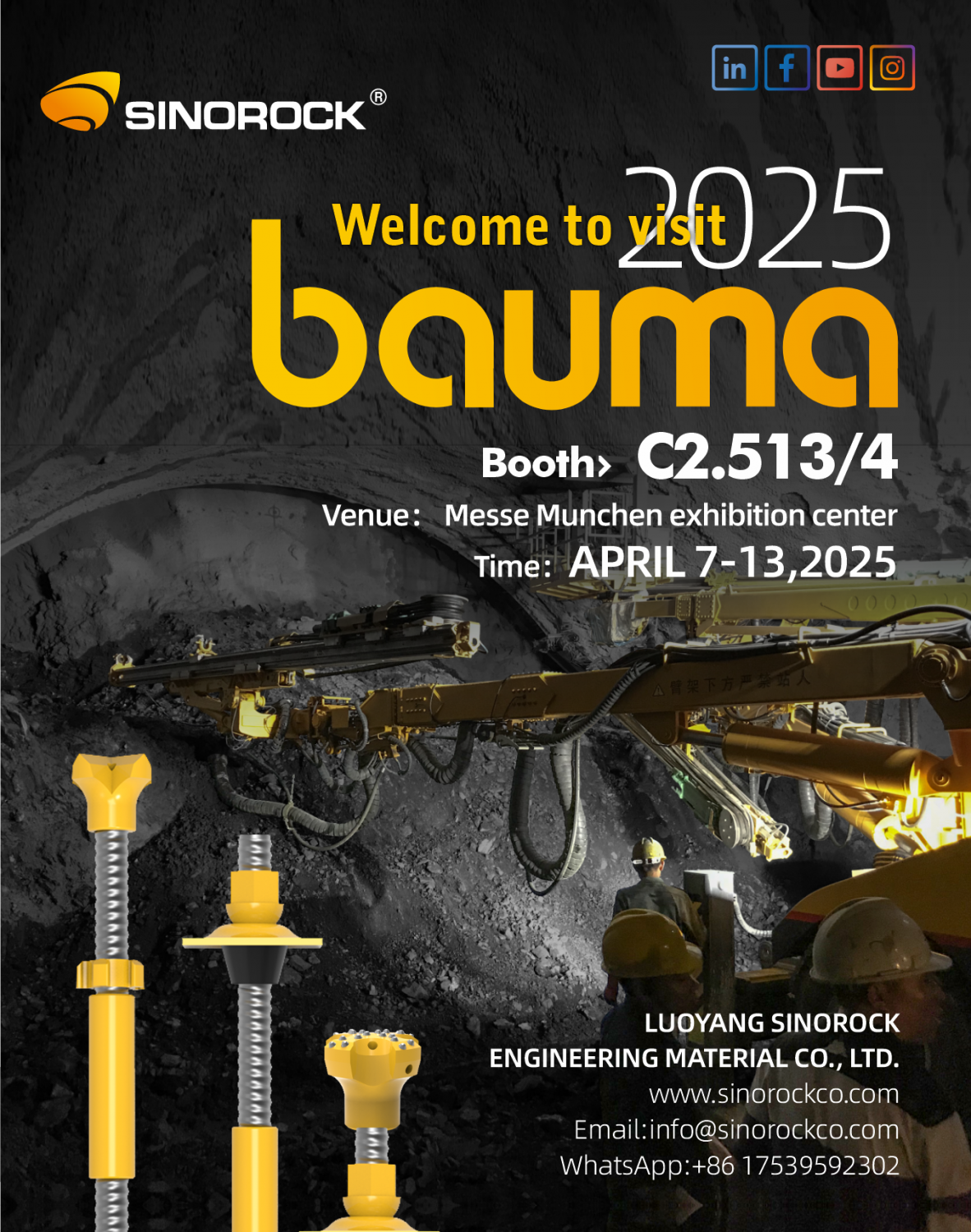
- Sinorock Invites You to Explore Proven Self-Drilling Anchor Bolt Solutions at bauma 2025
- Time:2025-03-07From:This Site
- From April 7–13, 2025, explore Sinorock’s Self-drilling anchor bolt solution at Booth C2.513/4 in Hall C2 of the Messe München Exhibition Center (Munich, Germany).
- View details