Download

The Core Components of Self-Drilling Micropiles and Functions
Time:2026-01-16From:sinorock View:
Self-drilling micropiles are widely used in construction, infrastructure projects, and environmental engineering. These piles are designed to enhance ground stability while minimizing environmental impact. This innovative foundation technology is particularly useful in challenging soil conditions, offering a cost-effective, durable, and adaptable solution for modern construction needs.
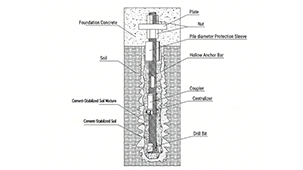
The self-drilling micro pile system is made up of several key components that work together to ensure a smooth construction process and optimal performance of the pile. Here’s a breakdown of the main components:
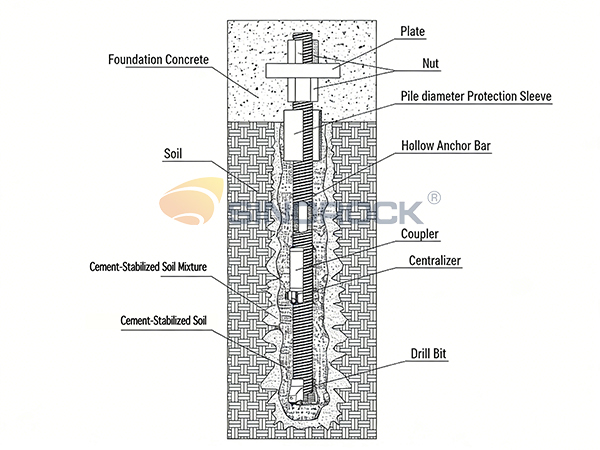
1. Hollow Anchor Bar
The hollow anchor bar is the core component of the self-drilling micro pile. Typically made from high-strength steel pipe, it is specially processed with continuous external threads. The hollow anchor bar acts not only as a drill rod but also as a grouting pipe and reinforcement. Its continuous thread design allows it to be cut and extended as needed, providing strong adaptability.
Function: Serves as a drill rod, grouting pipe, and reinforcement.
Advantage: Enhances the bond between the pile and surrounding soil, improving load-bearing capacity.
2. Drill Bit
The drill bit is used to drill through the soil during the construction of the self-drilling micro pile. Drill bits vary depending on the type of soil being drilled, including cross-alloy bits, full-steel bits, and ball-tooth alloy bits. The drill bit is connected to the hollow anchor bar and is used throughout the drilling process.
Function: Used to drill through various types of soil and create a stable borehole.
Advantage: The variety of drill bits ensures suitability for different soil conditions, ensuring smooth drilling operations.
3. Centralizer
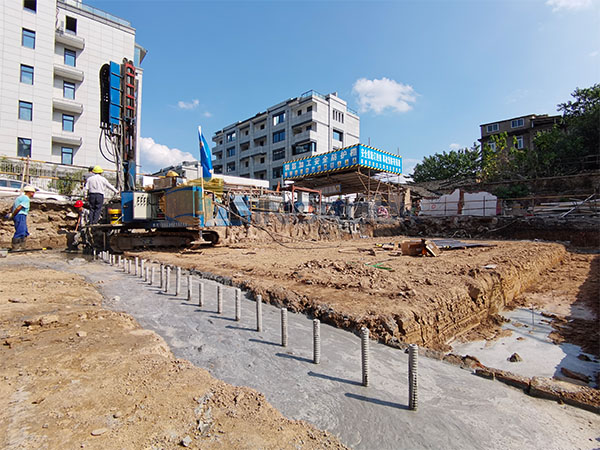
The centralizer is a component attached to the front of the connecting sleeve. It ensures that the hollow anchor bar remains centered within the borehole, guaranteeing even distribution of grout around the anchor bar. The centralizer ensures that the grouting material is uniformly applied during the injection process.
Function: Ensures the hollow anchor bar stays centered within the borehole, ensuring uniform grout coverage.
Advantage: Improves the grouting effect and enhances the friction between the pile and the soil.
4. Coupler
The coupler is used to join different sections of the hollow anchor bar. By using a coupler, the anchor bar length can be extended to reach the required depth. The coupler features internal threads that match the external threads of the hollow anchor bar, ensuring a secure and stable connection.
Function: Used to extend the length of the hollow anchor bar, ensuring the required depth is reached.
Advantage: Flexible and adaptable, allowing for easy length adjustment during construction.
5. Nuts and Plates
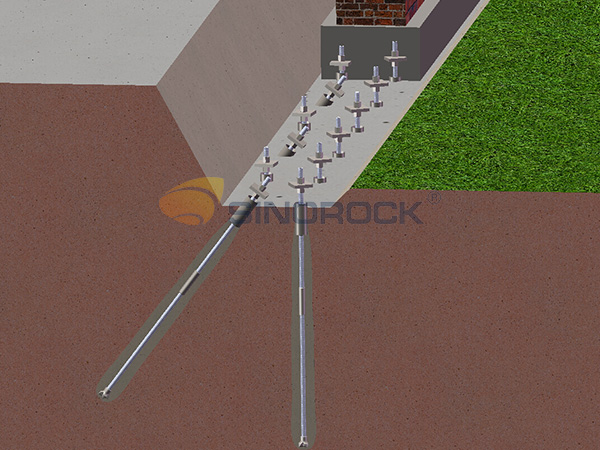
Nuts and bearing plates are located at the head of the micro pile and are used to carry and transfer the load. There are two types of nuts: anchor nuts and lock nuts. Anchor nuts bear the tensile or compressive forces, while lock nuts are used to secure the anchor nut and bearing plate during construction. Bearing plates are used to distribute the anchoring force to the foundation concrete.
Function: Bear and transfer the load, ensuring the stability of the pile head.
Advantage: Proper configuration of nuts and bearing plates enhances the pile's load-bearing capacity and stability.
6. Cement Slurry and Grouting Equipment
Cement slurry is the primary material used in grouting during the construction of self-drilling micropiles. It is pumped through the grouting pump at high pressure and injected into the borehole, forming a mechanical bond between the cement slurry and the surrounding soil. Grouting equipment typically includes grouting pumps, mixing equipment, and rotary grouting adapters.
Function: Injects cement slurry into the borehole, creating a bond between the slurry and the surrounding soil.
Advantage: High-pressure grouting ensures complete coverage of the entire borehole, enhancing the reinforcement effect.
7. Pile Cap (Pile Head)
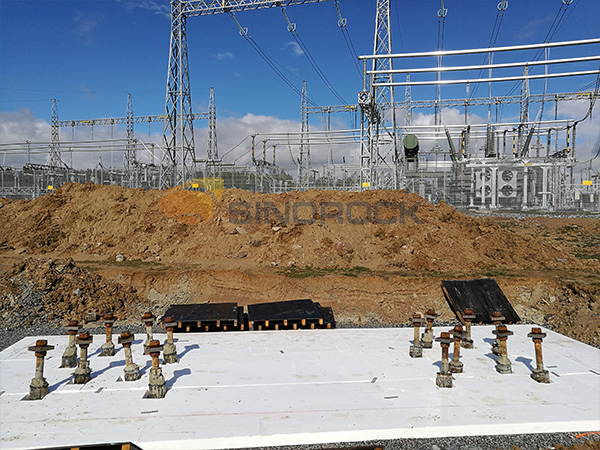
The pile cap is the top structure of the micro pile, typically made of reinforced concrete. It is used to connect multiple micropiles together, distributing the load from the superstructure evenly across the piles. The pile cap ensures the stability of the entire foundation system and facilitates the load transfer from the structure to the pile.
Function: Connects multiple micropiles, distributing the load from the superstructure evenly.
Advantage: Increases the overall stability and compressive strength of the foundation system.
These key components work in unison to enable efficient construction and high performance of the self-drilling micro pile system. Whether for urban development, infrastructure reinforcement, or projects in challenging geological conditions, the precise design and integration of these components make self-drilling micropiles a reliable solution for foundation reinforcement.
latest news
-
- Self-Drilling Micropiles: Introduction and Applications
- Time:2026-01-19From:This Site
- Self-drilling micropiles are an advanced geotechnical solution used for foundation reinforcement, slope stabilization, and geohazard mitigation. Combining drilling, grouting, and anchoring into a single process, these piles offer high efficiency, minimal environmental impact, and excellent adaptability to various soil conditions.
- View details
-

- The Core Components of Self-Drilling Micropiles and Functions
- Time:2026-01-16From:This Site
- Discover the essential components of self-drilling micropiles, including the hollow anchor bar, drill bit, centralizer, and more.
- View details
-

- Sinorock Self-Drilling Pipe Roof Support Technology | Case Study of a Gold Mine in Xinjiang
- Time:2025-12-26From:This Site
- Sinorock's self-drilling anchor bolt pipe roof support technology provides a comprehensive solution to complex geological challenges in mining projects. The solution improved progress and enabled timely project completion.
- View details
-
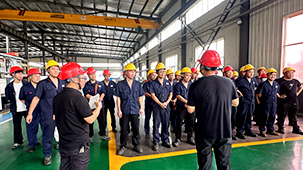
- Sinorock 2025 Quality Month | Strengthening Quality Foundations, Empowering Product Excellence
- Time:2025-08-13From:This Site
- Sinorock’s 2025 Quality Month, themed “Strengthening Quality Foundations, Empowering Product Excellence,” successfully concluded, reinforcing our commitment to superior product quality.
- View details
-
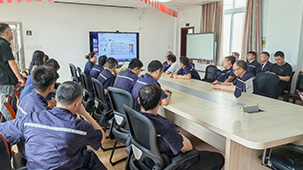
- Sinorock Safety Month 2025 | Everyone Speaks Safety, Everyone Can Respond
- Time:2025-07-03From:This Site
- Sinorock Safety Month 2025, centered on the theme "Everyone Speaks Safety, Everyone Can Respond - Spot Workplace Hazards," has wrapped up successfully!
- View details
-
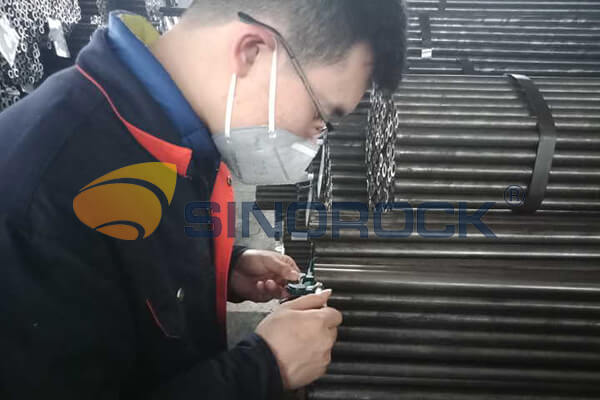
- Quality Control: the Vital Factor of A SDA Bolt Factory
- Time:2025-01-09From:This Site
- Sinorock’s comprehensive quality control system, from supplier management to outgoing inspections, ensuring the highest standards for self-drilling anchor bolts in construction.
- View details
-

- SINOROCK to Showcase Innovative Mining Solutions at Mining and Metals Central Asia 2025
- Time:2025-09-09From:This Site
- We are pleased to share that SINOROCK will participate in the Mining and Metals Central Asia 2025, taking place from September 17 to 19 at the Atakent International Exhibition Centre in Almaty, Kazakhstan. You can find us at Booth 11-231.
- View details
-
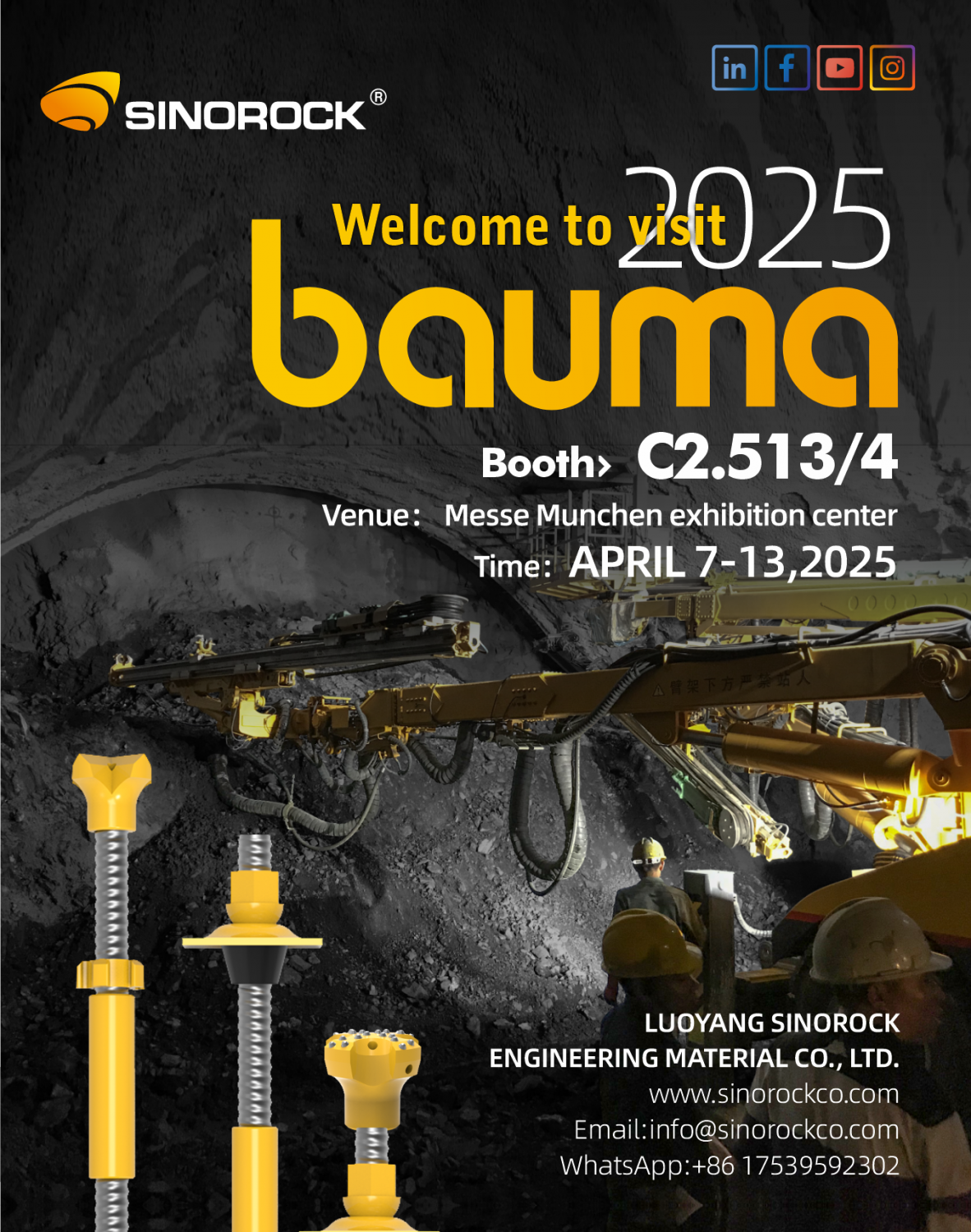
- Sinorock Invites You to Explore Proven Self-Drilling Anchor Bolt Solutions at bauma 2025
- Time:2025-03-07From:This Site
- From April 7–13, 2025, explore Sinorock’s Self-drilling anchor bolt solution at Booth C2.513/4 in Hall C2 of the Messe München Exhibition Center (Munich, Germany).
- View details
-
.jpg)
- SINOROCK to Attend EXPOMINA PERÚ 2024 in Lima, Peru
- Time:2024-08-10From:This Site
- Sinorock to Attend EXPOMINA PERÚ 2024 in Lima, Peru
- View details