Download

Self-Drilling Anchor Bolts in Mine Tunnel Support: Solutions for Challenging Geological Conditions
Time:2026-02-13From:sinorock View:
With the gradual depletion of shallow mineral resources, mining operations are progressively moving towards deeper levels. Issues such as the rheology of soft rock, fault zones, and the superimposition of mining-induced stresses have brought unprecedented challenges to mine tunnel support. Traditional methods are not only time-consuming but also face difficulties in highly fragmented strata. Once a hole is drilled, it can collapse immediately when the drill rod is withdrawn, making it impossible to insert the rock bolt. Even if installed with difficulty, ordinary rock bolts cannot form an effective bond with the fractured surrounding rock, rendering the support system ineffective. The emergence of self-drilling anchor bolts aims to solve this industry pain point. Let’s explore the application of self-drilling anchor bolts in mine tunnel support with Sinorock.
1. Self-Drilling Anchor Bolt Support System
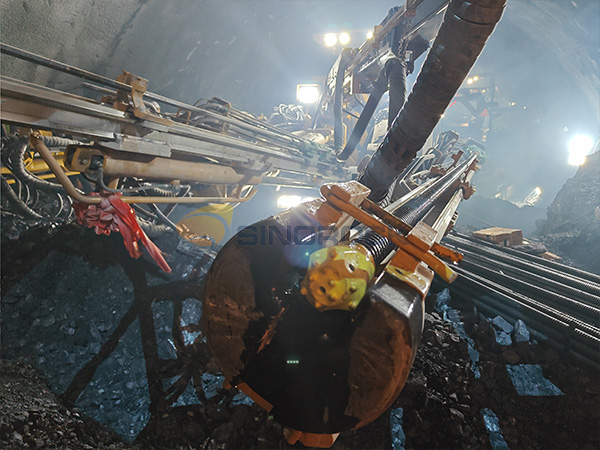
Unlike traditional rock bolts, self-drilling anchor bolts function as both the drill rod and the support rod. The rod body is made from thick-walled seamless steel pipes, specially heat-treated to provide sufficient torsional and bending strength. At the top of the rod is a consumable alloy drill bit, while the tail can be extended indefinitely via a coupler. Upon reaching the design depth, the drill rod does not need to be removed. High-pressure grouting is injected directly through the hollow bar, with grout entering the fractures in the rock mass through the discharge hole on the drill bit, creating a full-length bonding anchor system.
2. Application Scenarios
2.1 Effective Hole Formation in Fractured Zones
In fault zones, joints, or loose soft rock, traditional air-leg drills often cause wall collapse once the surrounding rock's stress is released. Self-drilling anchor bolts use a drilling and immediate support technique, where the drill bit breaks the front rock while the rod body immediately follows, supporting the hole wall. High-pressure flushing media (water or air) circulate inside the rod body, preventing the exposure of the hole wall and fundamentally solving the collapse issue in fractured strata.
2.2 Solving Surrounding Rock Collapse Issues
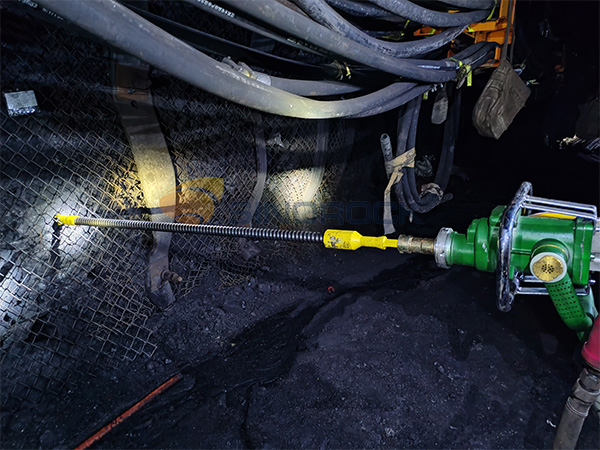
Ordinary rock bolts are passively loaded and only start to bear loads when the surrounding rock deforms or shifts. Self-drilling anchor bolts, however, use high-pressure grouting to compact the clayey fill material in the fractures of the fractured rock mass. Once the grout diffuses and hardens, loose rock blocks are solidified into a continuous arch. This transforms the surrounding rock from a load-bearing source into a bearing structure, which is the fundamental logic for long-term tunnel stability.
In tunnels with cracked roof slabs and poor integrity, using the self-drilling anchor bolt system in combination with a grouted anchor solution can reduce surrounding rock deformation from 1500mm to 300-400mm, a reduction of over 70%.
2.3 Advanced Pipe Roof Support
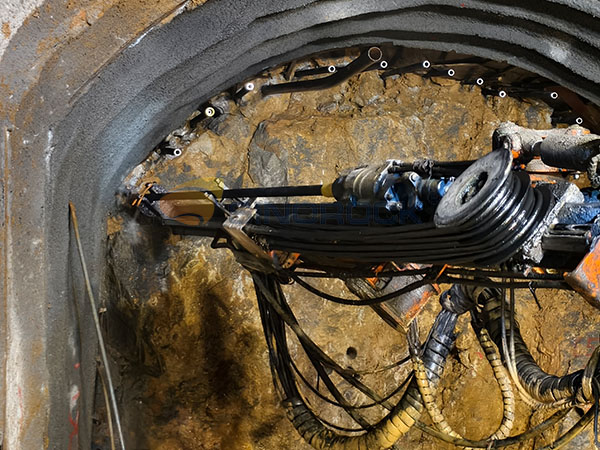
In tunnels crossing fault zones or at major intersections with large cross-sections, self-drilling anchor bolts can be used as an advanced pipe roof system. Utilizing its drilling capability, rock bolts can be drilled at a 5°-15° angle into undisturbed rock ahead of the tunnel. After grouting, this forms an umbrella-shaped advance roof structure, effectively reducing the risk of roof collapse during excavation.
The self-drilling anchor bolt system eliminates redundant steps such as removing the drill rod, installing the rock bolt, and inserting resin capsules. For larger tunnels, installation time per rock bolt can be reduced by more than 50%.
3. Advantages of the Self-Drilling Anchor Bolt System
3.1 Time Reduction by Over 50%
Traditional anchor bolt installation requires multiple steps: drilling → removing the drill rod → applying grout → inserting the anchor bolt → mixing → waiting for curing → installing the bearing plate → tensioning, involving at least seven processes, with equipment needing to switch between drilling and installation tools.
The self-drilling anchor bolt system condenses this into four steps: connecting the rod body → drilling to the design depth → high-pressure grouting → installing and tensioning the bearing plate, using the same drill machine throughout the process without tool switching. Installation time per traditional rock bolt is 8-12 minutes, while self-drilling anchor bolts take only 3-5 minutes, improving work efficiency by 60%-70%.
3.2 Lower Overall Costs
Purchasing staff are often concerned with the higher material unit cost of self-drilling anchor bolts compared to ordinary rock bolts. However, ordinary rock bolts fail to support fractured surrounding rock more than 50% of the time. Self-drilling anchor bolts do not require casing, secondary grouting pipes, or drill rod removal, reducing auxiliary material consumption by over 30%. Despite the higher initial investment, the fast construction speed and high quality significantly reduce long-term maintenance and repair costs.
3.3 Adaptability to Complex Geological Conditions
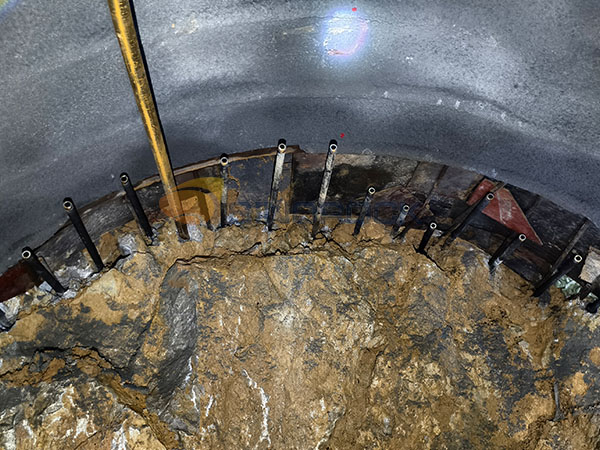
Mine tunnels often face challenges such as soft rock layers and fractured zones. Self-drilling anchor bolts can quickly drill through these unstable layers and strengthen the support by grouting. High-quality grouting enhances the bond between the anchor bolt and the rock mass, ensuring lasting support. Drilling rods and grout materials can be adjusted according to the specific geological conditions to achieve the best support effect.
3.4 High Safety Factor
The number of workers required per cycle is reduced by 2-3. and the technical skill required for operations is significantly lower. Compared to traditional support methods, the self-drilling anchor bolt system reduces the time workers spend in hazardous areas, minimizing safety risks during construction.
5. Case Study
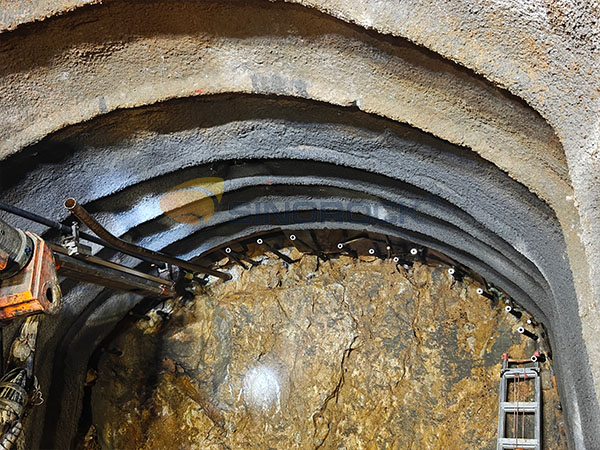
Problem: In a gold mine in Xinjiang, China, the tunnel support often encounters issues with the inability to insert small conduits into advanced holes when encountering fractured layers. The lack of effective drilling and support techniques in the fractured surrounding rock led to slow construction efficiency, and workers and equipment were at significant safety risks. Support safety was not guaranteed.
Solution: Sinorock adopted a self-drilling pipe roof as the advanced support system, utilizing a "support first, blasting later" method. The R51 self-drilling anchor bolts, with higher rigidity, can function as drill rods during drilling, reaching the designated depth. By arranging the hole positions reasonably and sequencing drilling and grouting, the efficiency of excavation and support was greatly improved, resulting in a significant increase in daily progress.
Results: The risk of rock bolt breakage and roof collapse was greatly reduced, material costs were saved by around 30%, overall costs were reduced by more than 40%, and the daily progress increased from 1.2-1.5 meters per day to 2.5-2.8 meters per day.
6. Conclusion
The application of self-drilling anchor bolts in mine tunnel support has become a crucial choice in mining engineering due to their efficiency, cost-effectiveness, and reliability. With the continuous development of technology and an increasing number of successful applications, self-drilling anchor bolts are expected to play an increasingly important role in future mine support projects.
latest news
-
- Mine Support and Stabilization Technology: Self-Drilling Anchor Bolt Systems
- Time:2026-04-23From:This Site
- Professional mine support solutions integrating drilling, pipe roof processes, and self-drilling anchors to ensure stable, safe, and efficient operations for both underground and open-pit mines.
- View details
-
- Self-Drilling Anchor Bolt Systems in Railway Tunnels: Applications and Standards
- Time:2026-04-21From:This Site
- Explore the applications and international standards of self-drilling anchor bolt systems in railway tunnels. Learn how they enhance slope, tunnel, and bridge stability for safer railway infrastructure.
- View details
-
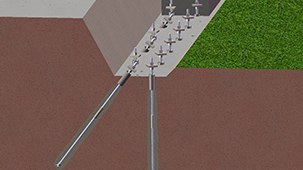
- Self-Drilling Anchor Bolts for Micropiles: Complete Geotechnical Engineering Guide
- Time:2026-04-18From:This Site
- Explore the benefits of SDA bolt micropiles for constrained construction sites, complex geology, and rapid installation. Case studies and practical guidelines included.
- View details
-
- Sinorock 2025 Quality Month | Strengthening Quality Foundations, Empowering Product Excellence
- Time:2025-08-13From:This Site
- Sinorock’s 2025 Quality Month, themed “Strengthening Quality Foundations, Empowering Product Excellence,” successfully concluded, reinforcing our commitment to superior product quality.
- View details
-
- Sinorock Safety Month 2025 | Everyone Speaks Safety, Everyone Can Respond
- Time:2025-07-03From:This Site
- Sinorock Safety Month 2025, centered on the theme "Everyone Speaks Safety, Everyone Can Respond - Spot Workplace Hazards," has wrapped up successfully!
- View details
-
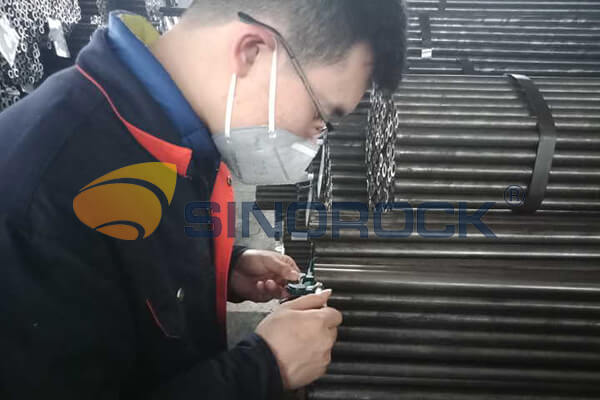
- Quality Control: the Vital Factor of A SDA Bolt Factory
- Time:2025-01-09From:This Site
- Sinorock’s comprehensive quality control system, from supplier management to outgoing inspections, ensuring the highest standards for self-drilling anchor bolts in construction.
- View details
-
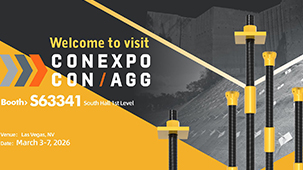
- Sinorock Invites You to Visit Us at CONEXPO-CON/AGG
- Time:2026-02-14From:This Site
- Sinorock Invites You to Explore Proven Self-Drilling Anchor Bolt Solutions at CONEXPO-CON/AGG –S63341.South Hall 1st Level
- View details
-
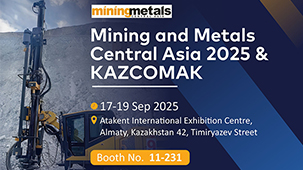
- SINOROCK to Showcase Innovative Mining Solutions at Mining and Metals Central Asia 2025
- Time:2025-09-09From:This Site
- We are pleased to share that SINOROCK will participate in the Mining and Metals Central Asia 2025, taking place from September 17 to 19 at the Atakent International Exhibition Centre in Almaty, Kazakhstan. You can find us at Booth 11-231.
- View details
-
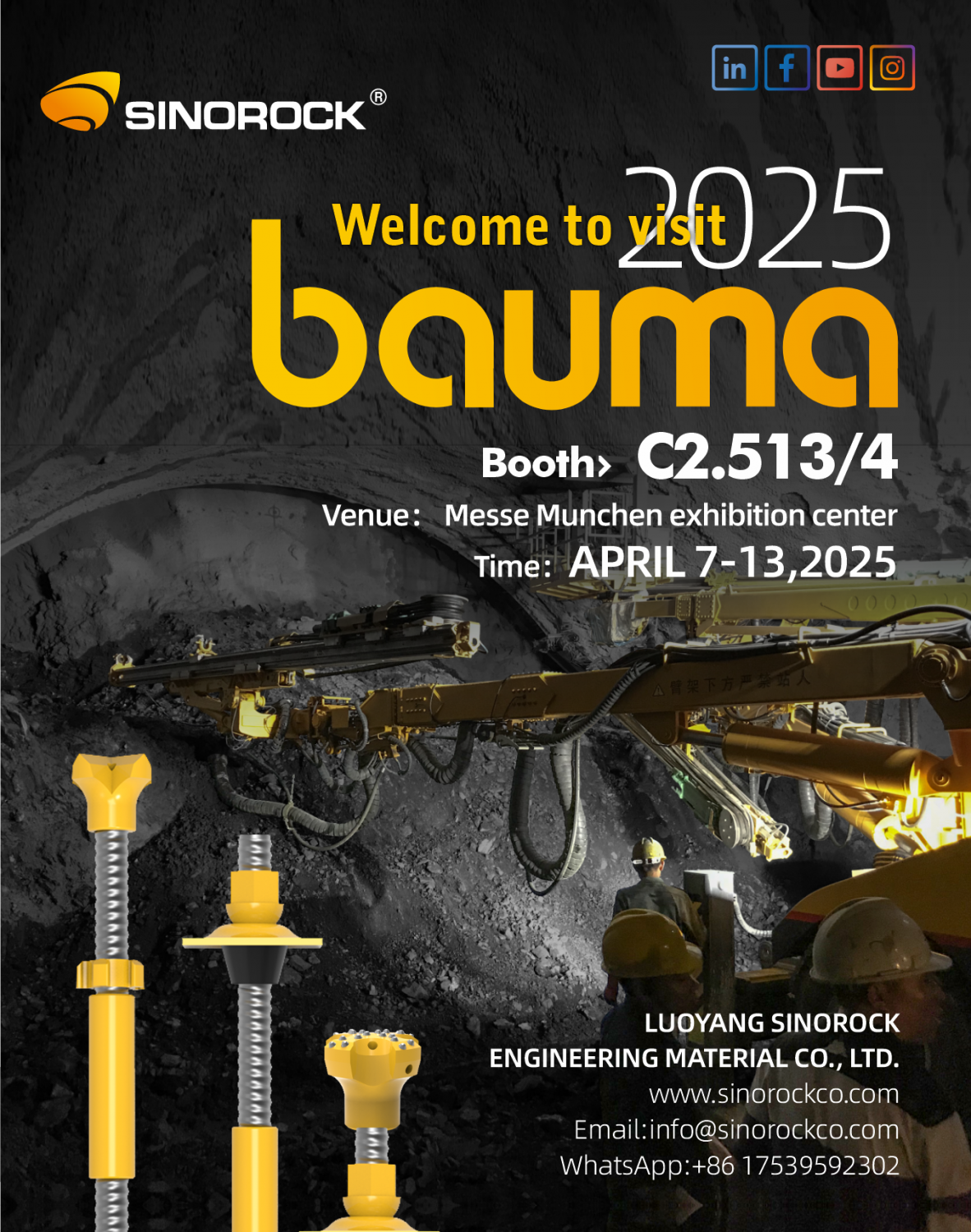
- Sinorock Invites You to Explore Proven Self-Drilling Anchor Bolt Solutions at bauma 2025
- Time:2025-03-07From:This Site
- From April 7–13, 2025, explore Sinorock’s Self-drilling anchor bolt solution at Booth C2.513/4 in Hall C2 of the Messe München Exhibition Center (Munich, Germany).
- View details