Download

International Standards for Self-Drilling Anchor Bolts: A Comparative Overview
Time:2026-03-23From:sinorock View:
Self-drilling anchor bolts are essential components in geotechnical engineering, mining operations, and tunnel construction. Ensuring the safety and performance of underground structures depends on the proper selection, installation, and testing of these anchors. Around the world, different countries implement distinct standards for self-drilling anchor bolts, each emphasizing specific aspects of performance, construction, and safety. This article provides a comprehensive comparison of the international standards for self-drilling anchor bolts, including China, Europe, the United States, and Japan.
China Self-Drilling Anchor Bolt Standards
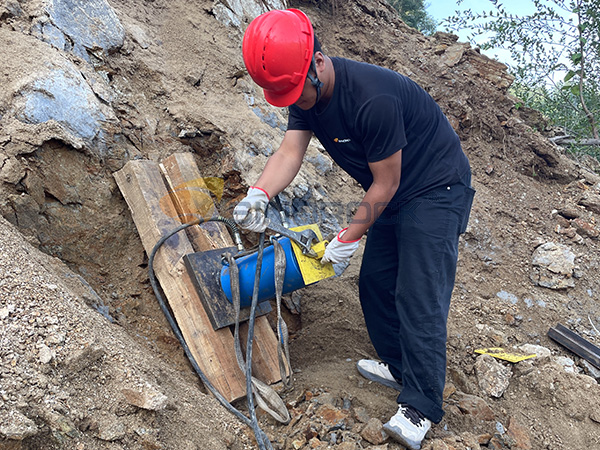
In China, self-drilling anchor bolts are regulated by GB (national standards), JC (construction industry standards), and mining-specific standards like MT/T. Chinese standards emphasize practical constructability, anchor performance verification, and on-site inspection during construction.
Key standards include:
· JGJ 94-94 (Technical Code for Soil and Rock Anchor, updated 2020): Covers soil nails, rock bolts, anchor cables, and self-drilling anchor bolts. Focuses on anchor selection, installation methods, anchorage length, and prestress ranges.
· MT/T 992-2012 (Mining Support Technical Standard): Regulates self-drilling anchor bolts for mining tunnels and shafts, specifying hole diameter, thread design, and steel grade.
Materials typically follow GB steel grades, such as HRB400 or HRB500 high-strength steel rods. Standard anchor diameters range from 22–32 mm, with special applications using 16 mm or 36 mm. Installation torque is generally between 5–10 kN·m, while design tensile loads for prestressed anchors are 200–400 kN. Ultimate loads can exceed 500 kN depending on rock conditions and anchoring length.
Sinorock has its own R&D team and manufacturing facilities, enabling us to provide customized solutions tailored to your needs. Our self-drilling hollow anchor system is available in a variety of materials, including 40Cr, S460. stainless steel, and carbon steel, with two thread types: R-type and T-type. The R-type thread complies with the ISO 10208 standard, while the T-type thread is manufactured in accordance with our corporate standards. Please feel free to contact us for more information.
China’s standards are practical and construction-oriented, ensuring self-drilling anchor bolts perform reliably in real-world conditions.
European Self-Drilling Anchor Bolt Standards
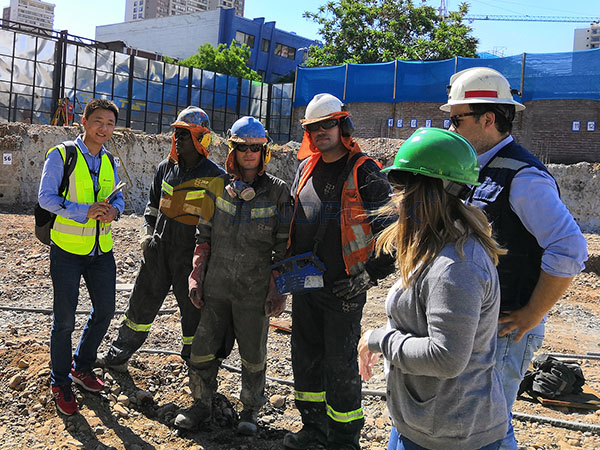
European standards include EN (European Norms), German DIN, and national standards such as Switzerland’s SIA and Austria’s ÖNORM. Europe emphasizes mechanical performance, controllability during installation, and long-term stability.
Key standards include:
· EN 14490:2006: Defines performance levels, tensile strength, torque requirements, steel materials, and corrosion protection for self-drilling rock bolts.
· DIN 4472 and DIN 8036: Focus on anchor bolt design, installation safety, and mechanical properties.
· SIA / ÖNORM: Specify drilling capacity, torque-tension relationships, and underground support reliability.
European self-drilling anchor bolts typically use high-strength steel grades like S500 or S650. often galvanized or epoxy-coated. Standard diameters range from 20–32 mm, with up to 36 mm for high-load applications. Recommended installation torque is 3–12 kN·m, verified through torque-tension tests. Ultimate tensile loads range from 250–600 kN, while typical design loads for tunnels are 300–400 kN. Europe also emphasizes fatigue resistance and long-term durability.
United States Self-Drilling Anchor Bolt Standards
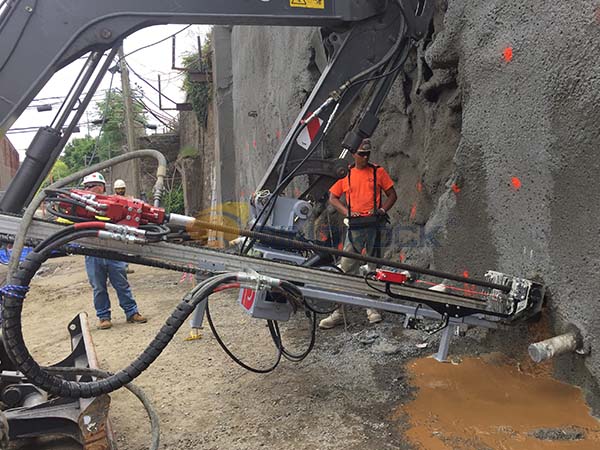
In the U.S., standards are governed by ASTM and MSHA (Mine Safety and Health Administration) regulations. American standards focus on construction safety, material performance, and verification testing.
Key standards include:
· ASTM A1034 / A108: Steel grades and mechanical performance for self-drilling anchor bolts.
· ASTM D7558: Testing anchor bolt load capacity and installation torque.
· MSHA 30 CFR Part 57: Mining safety regulations for underground support installation.
Common steel grades include ASTM A108 rods with minimum tensile strengths of 500 MPa, and in some cases up to 700 MPa. Anchor diameters typically range from 1–1¼ inches (~25–32 mm), with 1½ inches (~38 mm) for high-load applications. Installation torque is usually 3–10 kN·m. Design tensile loads are 200–400 kN, with ultimate loads reaching 500–600 kN. Post-installation pull tests are required to ensure anchor performance.
Japanese Self-Drilling Anchor Bolt Standards
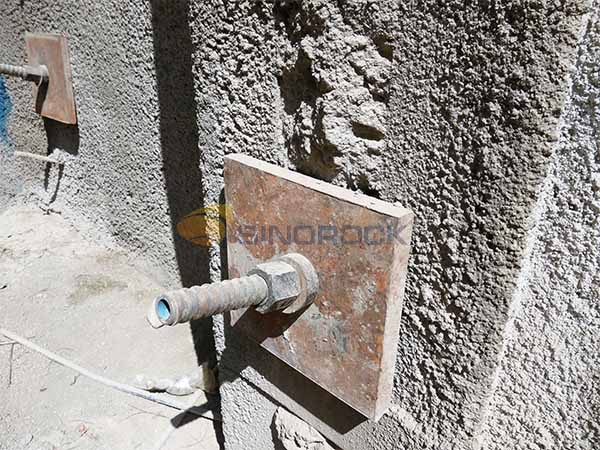
Japan follows JIS (Japanese Industrial Standards) and JSCE (Japan Society of Civil Engineers) recommendations. Japanese standards prioritize geological adaptability and strict construction quality control.
Key standards include:
· JIS A 5335: Defines steel grade, thread specification, surface treatment, and anchorage length for self-drilling anchor bolts.
· JSCE Tunnel Support Recommendations: Detailed guidance on anchor bolt design and construction process for tunnels.
Japanese anchors typically use JIS G 3101 high-strength steel, with tensile strength between 490–590 MPa. Threaded rods are galvanized or epoxy-coated. Standard diameters are 22–32 mm, with 36 mm for special projects. Recommended installation torque is 4–8 kN·m, emphasizing smooth installation without over-torquing. Design loads are 200–400 kN, with ultimate loads reaching 500 kN, ensuring adaptability to diverse ground conditions.
Comparative Insights
Although international standards vary, all share the goal of ensuring reliable, safe, and high-performance self-drilling anchor bolt support. The primary focus differs by region:
· China: Construction techniques and support performance verification.
· Europe: Mechanical performance, controllable construction, and long-term stability.
· United States: Balance between construction safety and material performance verification.
· Japan: Geological adaptability and strict construction quality control.
Key factors like steel grade, tensile strength, installation torque, anchor diameter, and load capacity are critical worldwide, although specifications differ according to local engineering practices and geological conditions.
Conclusion
Understanding international standards for self-drilling anchor bolts is essential for engineers and project managers involved in tunnel construction, mining, and geotechnical projects. By aligning with country-specific standards, construction teams can ensure safety, durability, and optimal performance, regardless of location.
latest news
-
- Mine Support and Stabilization Technology: Self-Drilling Anchor Bolt Systems
- Time:2026-04-23From:This Site
- Professional mine support solutions integrating drilling, pipe roof processes, and self-drilling anchors to ensure stable, safe, and efficient operations for both underground and open-pit mines.
- View details
-
- Self-Drilling Anchor Bolt Systems in Railway Tunnels: Applications and Standards
- Time:2026-04-21From:This Site
- Explore the applications and international standards of self-drilling anchor bolt systems in railway tunnels. Learn how they enhance slope, tunnel, and bridge stability for safer railway infrastructure.
- View details
-
- Self-Drilling Anchor Bolts for Micropiles: Complete Geotechnical Engineering Guide
- Time:2026-04-18From:This Site
- Explore the benefits of SDA bolt micropiles for constrained construction sites, complex geology, and rapid installation. Case studies and practical guidelines included.
- View details
-
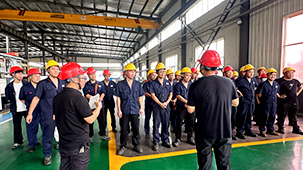
- Sinorock 2025 Quality Month | Strengthening Quality Foundations, Empowering Product Excellence
- Time:2025-08-13From:This Site
- Sinorock’s 2025 Quality Month, themed “Strengthening Quality Foundations, Empowering Product Excellence,” successfully concluded, reinforcing our commitment to superior product quality.
- View details
-
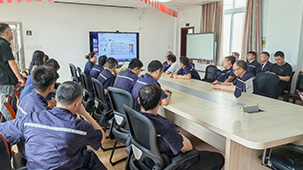
- Sinorock Safety Month 2025 | Everyone Speaks Safety, Everyone Can Respond
- Time:2025-07-03From:This Site
- Sinorock Safety Month 2025, centered on the theme "Everyone Speaks Safety, Everyone Can Respond - Spot Workplace Hazards," has wrapped up successfully!
- View details
-
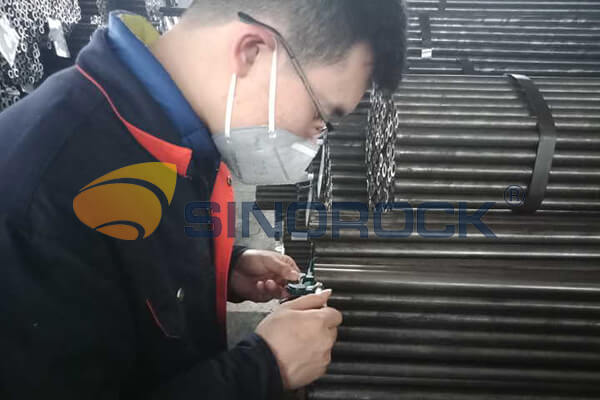
- Quality Control: the Vital Factor of A SDA Bolt Factory
- Time:2025-01-09From:This Site
- Sinorock’s comprehensive quality control system, from supplier management to outgoing inspections, ensuring the highest standards for self-drilling anchor bolts in construction.
- View details
-
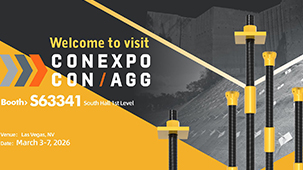
- Sinorock Invites You to Visit Us at CONEXPO-CON/AGG
- Time:2026-02-14From:This Site
- Sinorock Invites You to Explore Proven Self-Drilling Anchor Bolt Solutions at CONEXPO-CON/AGG –S63341.South Hall 1st Level
- View details
-
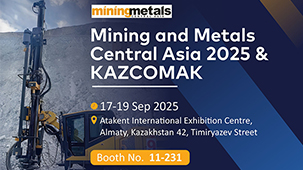
- SINOROCK to Showcase Innovative Mining Solutions at Mining and Metals Central Asia 2025
- Time:2025-09-09From:This Site
- We are pleased to share that SINOROCK will participate in the Mining and Metals Central Asia 2025, taking place from September 17 to 19 at the Atakent International Exhibition Centre in Almaty, Kazakhstan. You can find us at Booth 11-231.
- View details
-
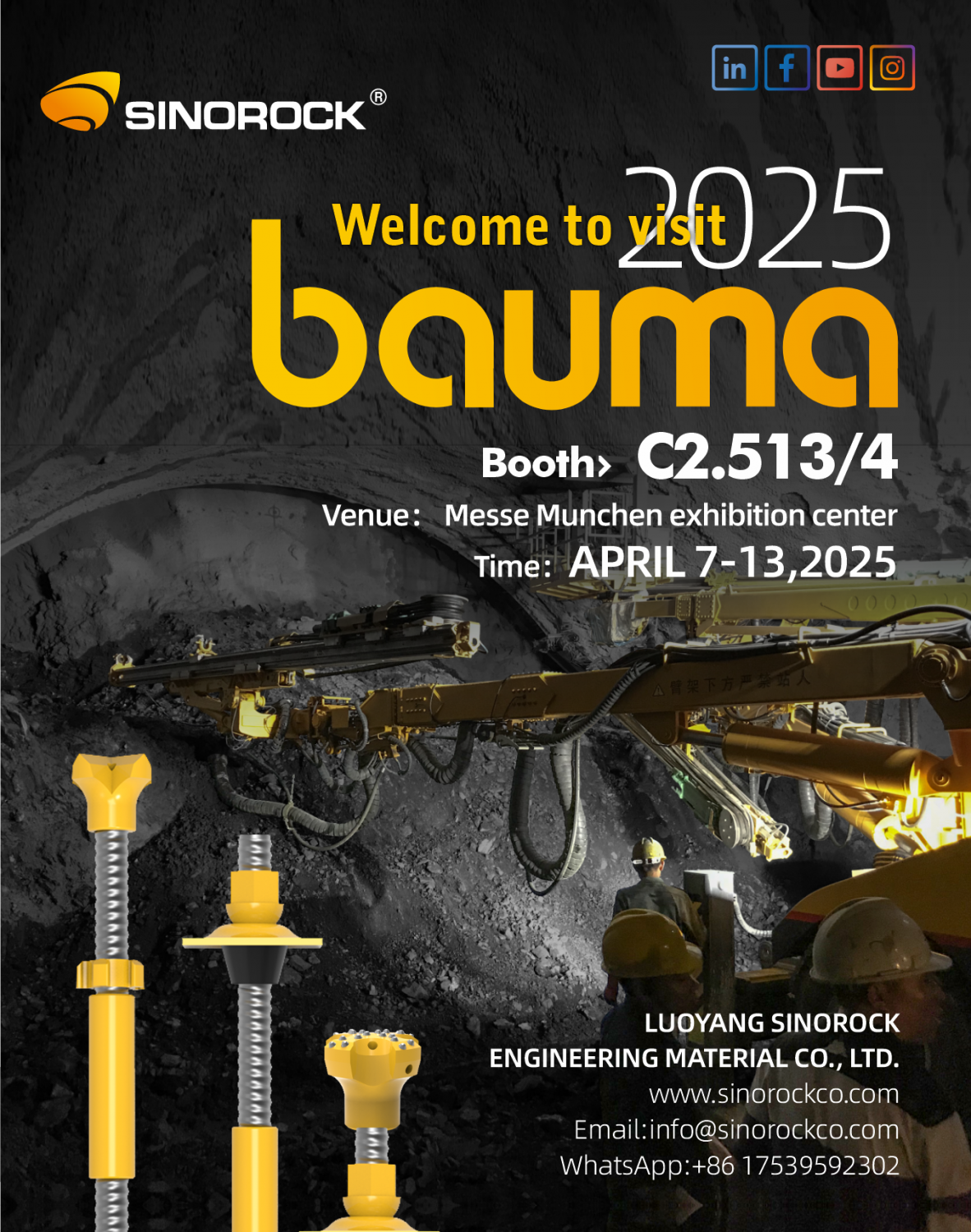
- Sinorock Invites You to Explore Proven Self-Drilling Anchor Bolt Solutions at bauma 2025
- Time:2025-03-07From:This Site
- From April 7–13, 2025, explore Sinorock’s Self-drilling anchor bolt solution at Booth C2.513/4 in Hall C2 of the Messe München Exhibition Center (Munich, Germany).
- View details