Download

Drilling and Anchoring Principles of Self-Drilling Micropiles
Time:2026-01-20From:sinorock View:
Self-drilling micropiles offer efficient and adaptable solutions for challenging soil conditions. These piles combine drilling, grouting, and reinforcement into a seamless process. In this article, we delve into the drilling principles, anchoring mechanisms, and diverse applications of self-drilling micropiles, shedding light on their advantages and functionality.
1. Drilling Principles of Micropiles
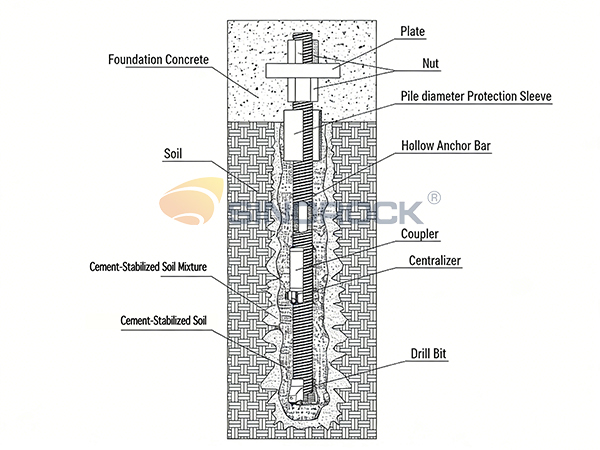
1.1 Integration of Drilling and Grouting
The hollow anchor bar in self-drilling micropiles serves multiple purposes: it acts as the drill rod, grout tube, and reinforcement element. This bar connects the drill bit and drilling machine, enduring torque during the drilling process. As the drilling progresses, the system injects grout simultaneously, using the hollow center of the anchor bar as the grout tube. Once installed, the hollow anchor bar bears the majority of the load, providing reinforcement to the pile.
The versatility of the self-drilling anchor system allows for the use of different drill bits tailored to various geological conditions. The drill bits either rotate or impact during drilling, forming a hole, and are left in place to maintain central alignment.
1.2 Preventing Hole Collapse
One of the key advantages of self-drilling micropiles is their ability to drill without casings. During the drilling process, water or air is used to flush the hole, while cement slurry interacts with the soil microstructure to create a mechanical interlock, forming a filter cake that prevents the collapse of the hole. The slurry is injected from the bottom of the hole upwards, effectively removing debris while stabilizing the borehole.
1.3 Hole Enlargement Mechanism
Pressure grouting plays a crucial role in the self-drilling micropile installation. As the slurry exits through the grout ports, it is directed at a certain velocity to wash the hole walls. This process enlarges the diameter of the drilled hole while removing soft soil and exposing more solid ground. The rough surface of the hole enhances the bond between the pile and the surrounding soil, improving frictional resistance.
2. Anchoring Mechanisms of Micropiles

2.1 End-Bearing and Friction Piles
Micropiles can be classified into two types based on the source of most of their load-bearing capacity:
End-Bearing Piles: Used in shallow soil layers, these piles are driven directly into bedrock to obtain most of their load-bearing capacity. Both end-bearing and friction piles share similar construction techniques, primarily utilizing cement grouting to transfer the load from the pile to the soil.
Friction Piles: Suitable for deep layers of low-bearing capacity soil, these piles transfer the load to surrounding soil through friction along the pile-soil interface. This transfer is typically achieved via cement grouting.
2.2 Full-Length and Soil Mechanical Interlock
During construction, the self-drilling hollow anchor bar is pressure grouted with a cement suspension that enhances soil interlock. The slurry forms a mechanical lock with the surrounding soil, which increases shear bonding strength. This mechanism ensures that loads are transferred from the bar to the grout and then to the surrounding soil. Even minimal displacement of the pile head activates the friction between the pile and the soil.
2.3 Corrosion Resistance Mechanism
Self-drilling micropiles use a one-time drill bit that remains in the hole, acting as a centralizer. This design ensures that the grout layer is at least 20mm thick around the pile. The cement slurry forms a filter cake with the surrounding soil, offering permanent protection against corrosion. In special cases, the hollow bars can undergo hot-dip galvanization or dual corrosion protection, further extending their lifespan. Stainless steel versions are also available for environments requiring higher corrosion resistance.
3. Applications of Micropiles
Micropiles are commonly used in construction and infrastructure projects. They are connected to buildings or other structures via pile caps and can be categorized based on their application principles.
3.1 Compression Piles
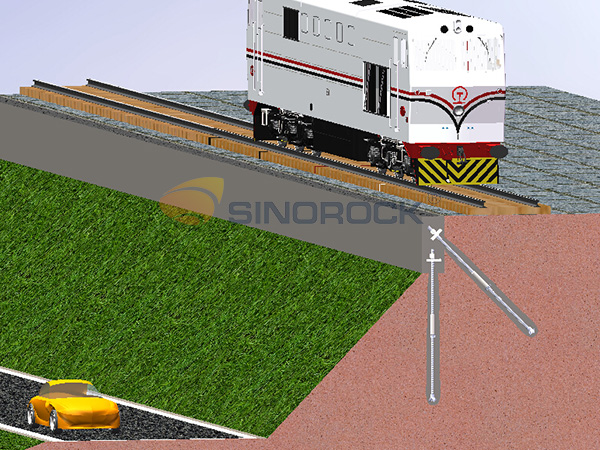
Compression piles are designed to bear vertical loads from structures, making them ideal for supporting buildings and other heavy structures.
3.2 Tension Piles
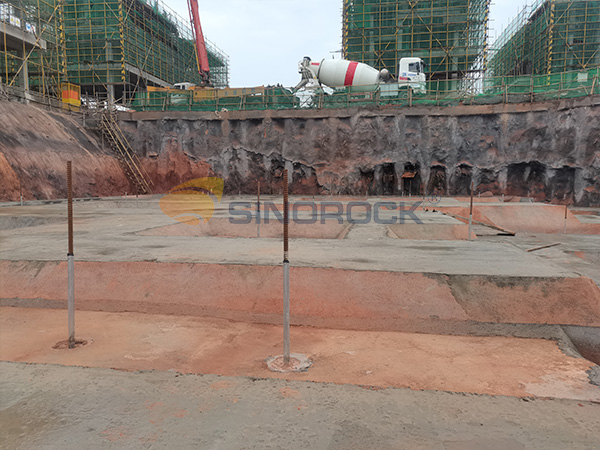
Tension piles, also known as uplift piles, are installed when the underground structure is located below the surrounding soil's water table. These piles counteract the uplift force exerted by groundwater on the structure. They are often used in large underground basements, offshore platforms, and dock foundations.
3.3 Alternating Load Piles
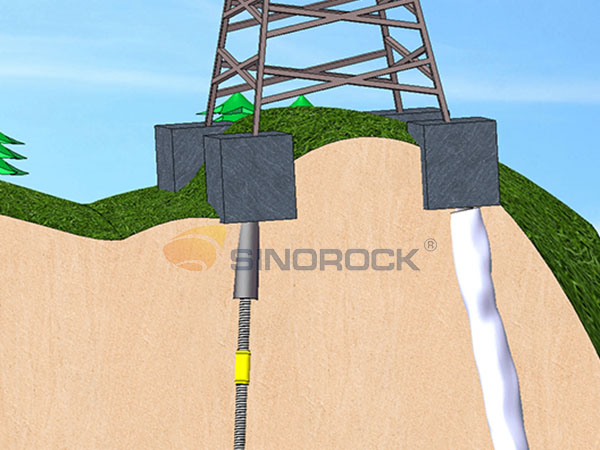
These piles are subjected to cyclic tensile and compressive loads. They are used to transfer loads deep into the soil and are typically employed for structures such as transmission towers and wind turbines, which are exposed to wind forces.
Conclusion
Self-drilling micropiles offer a versatile and effective solution for a wide range of geotechnical challenges. With their ability to drill, grout, and reinforce in one integrated system, these piles provide stability, adaptability, and corrosion resistance. Whether used for compressive, tensile, or alternating loads, micropiles continue to be a reliable foundation solution for modern construction projects. Their ability to be customized for varying geological conditions and applications makes them a critical tool in the engineering and construction industries.
latest news
-
- Mine Support and Stabilization Technology: Self-Drilling Anchor Bolt Systems
- Time:2026-04-23From:This Site
- Professional mine support solutions integrating drilling, pipe roof processes, and self-drilling anchors to ensure stable, safe, and efficient operations for both underground and open-pit mines.
- View details
-
- Self-Drilling Anchor Bolt Systems in Railway Tunnels: Applications and Standards
- Time:2026-04-21From:This Site
- Explore the applications and international standards of self-drilling anchor bolt systems in railway tunnels. Learn how they enhance slope, tunnel, and bridge stability for safer railway infrastructure.
- View details
-
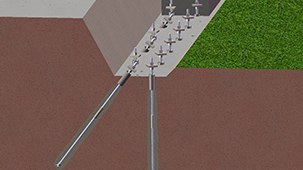
- Self-Drilling Anchor Bolts for Micropiles: Complete Geotechnical Engineering Guide
- Time:2026-04-18From:This Site
- Explore the benefits of SDA bolt micropiles for constrained construction sites, complex geology, and rapid installation. Case studies and practical guidelines included.
- View details
-
- Sinorock 2025 Quality Month | Strengthening Quality Foundations, Empowering Product Excellence
- Time:2025-08-13From:This Site
- Sinorock’s 2025 Quality Month, themed “Strengthening Quality Foundations, Empowering Product Excellence,” successfully concluded, reinforcing our commitment to superior product quality.
- View details
-
- Sinorock Safety Month 2025 | Everyone Speaks Safety, Everyone Can Respond
- Time:2025-07-03From:This Site
- Sinorock Safety Month 2025, centered on the theme "Everyone Speaks Safety, Everyone Can Respond - Spot Workplace Hazards," has wrapped up successfully!
- View details
-
- Quality Control: the Vital Factor of A SDA Bolt Factory
- Time:2025-01-09From:This Site
- Sinorock’s comprehensive quality control system, from supplier management to outgoing inspections, ensuring the highest standards for self-drilling anchor bolts in construction.
- View details
-
- Sinorock Invites You to Visit Us at CONEXPO-CON/AGG
- Time:2026-02-14From:This Site
- Sinorock Invites You to Explore Proven Self-Drilling Anchor Bolt Solutions at CONEXPO-CON/AGG –S63341.South Hall 1st Level
- View details
-
- SINOROCK to Showcase Innovative Mining Solutions at Mining and Metals Central Asia 2025
- Time:2025-09-09From:This Site
- We are pleased to share that SINOROCK will participate in the Mining and Metals Central Asia 2025, taking place from September 17 to 19 at the Atakent International Exhibition Centre in Almaty, Kazakhstan. You can find us at Booth 11-231.
- View details
-
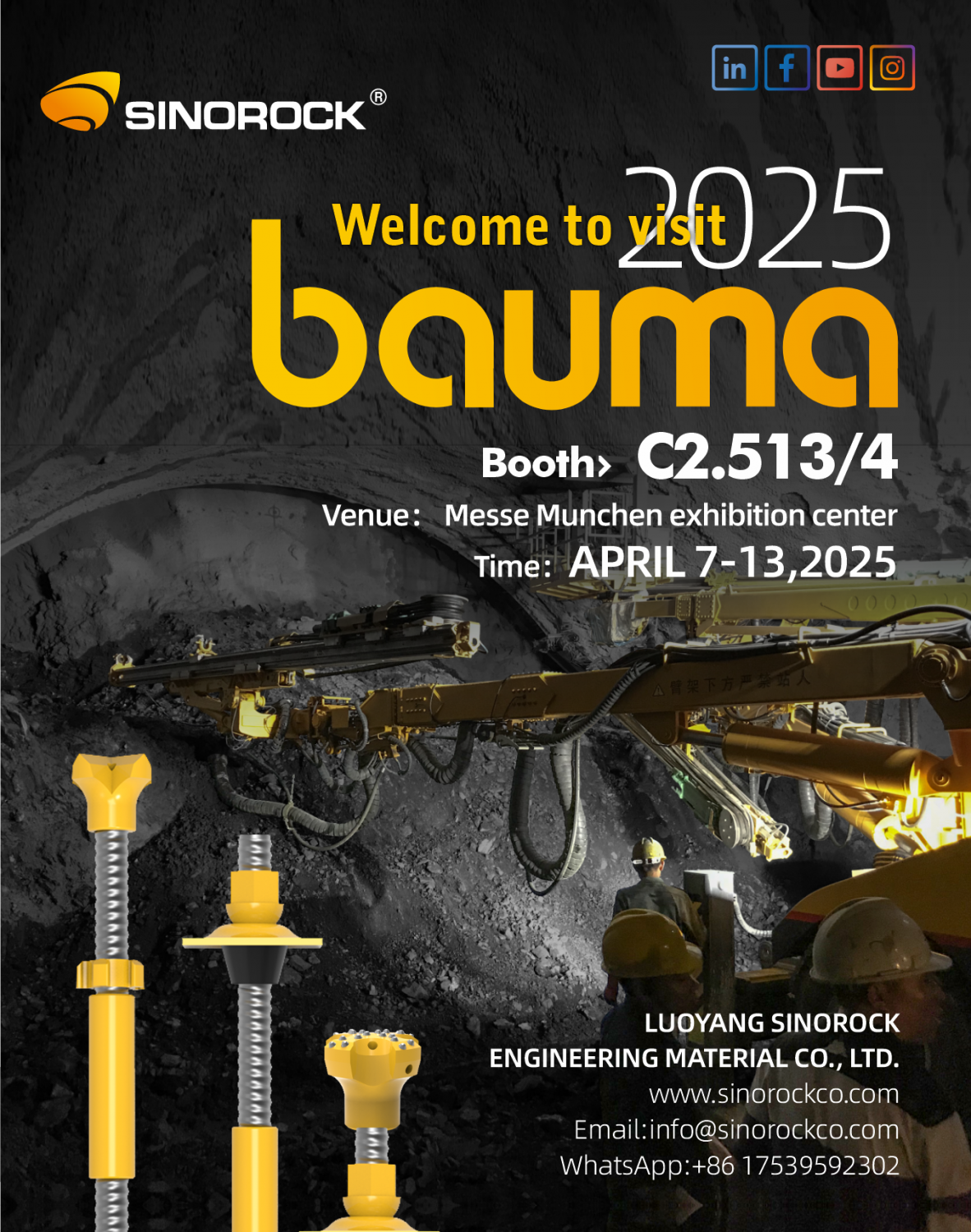
- Sinorock Invites You to Explore Proven Self-Drilling Anchor Bolt Solutions at bauma 2025
- Time:2025-03-07From:This Site
- From April 7–13, 2025, explore Sinorock’s Self-drilling anchor bolt solution at Booth C2.513/4 in Hall C2 of the Messe München Exhibition Center (Munich, Germany).
- View details